
A Voice Beyond Its Time, Patsy Cline’s Early
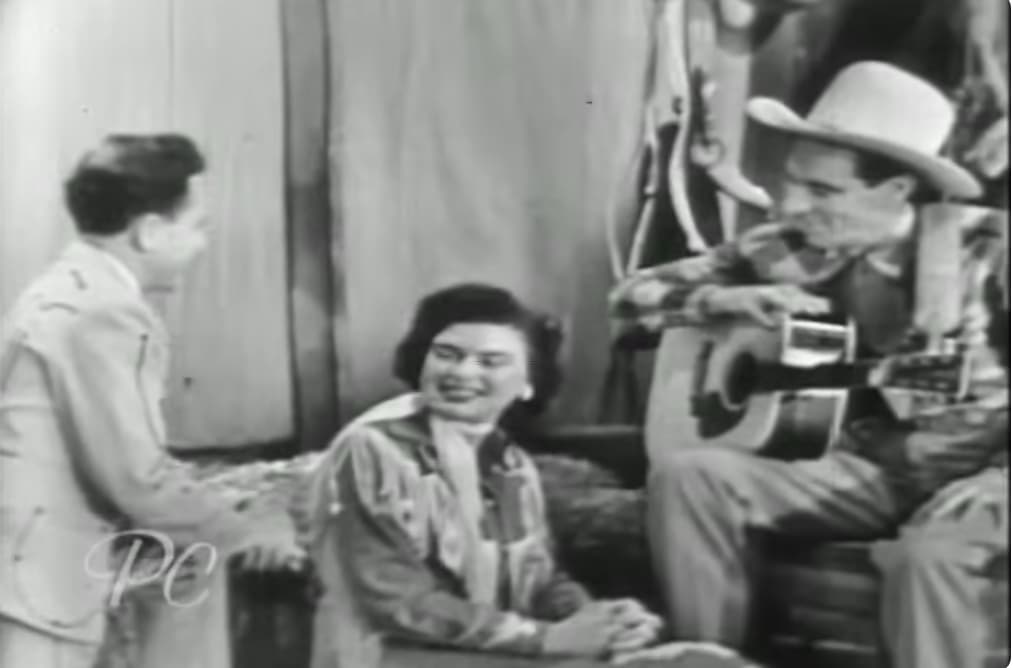
A recently resurfaced clip of Patsy Cline performing the song A Church, A Courtroom, Then Goodbye on live television in the 1950s is drawing renewed attention from music audiences across generations. The performance, stripped of modern production techniques, offers a clear reminder of the vocal precision and emotional clarity that defined Cline’s early career.
Recorded during a period when live broadcasts allowed little room for technical correction, the clip highlights the singer’s ability to deliver near flawless vocals in real time. There is no evidence of studio enhancement or post production editing. Instead, what stands out is the consistency of tone, control, and phrasing, qualities that have long been associated with Cline’s reputation as one of country music’s most technically gifted vocalists.
The song itself, released early in her career, reflects traditional country storytelling, centered on heartbreak and quiet resignation. In this televised rendition, Cline maintains a restrained stage presence, allowing the emotional weight of the lyrics to carry the performance. Her delivery avoids exaggeration, relying instead on subtle shifts in expression and vocal dynamics.
Beyond the performance itself, viewers have also revisited aspects of Cline’s image during this era. She appears in a simple cowgirl outfit, a style choice that has been noted by fans and historians as closely tied to her personal identity. Accounts suggest that many of these early stage outfits were influenced by her family, particularly her mother, and reflected Cline’s preference for an authentic country image rather than a polished, commercial persona.
As her career progressed, her visual presentation evolved under the influence of management and broader industry trends. However, this early footage captures a moment before that transition, when her artistic identity remained closely aligned with her roots. It is a detail that has added further depth to current discussions around the clip, particularly among audiences interested in the history of country music and artist branding.
Decades after it was first broadcast, the performance continues to resonate not because of spectacle, but because of its simplicity. In an era now defined by digital enhancement and production layering, the clip serves as a historical reference point, illustrating a time when vocal ability alone carried the full weight of a performance.