
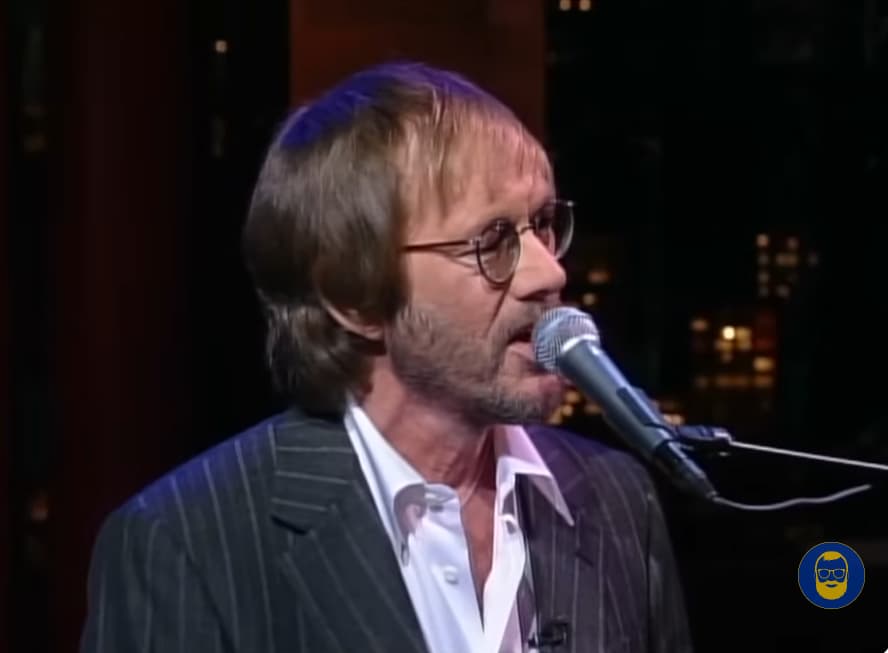
A Farewell Without Illusion: Warren Zevon’s Final Stand on Late Show
When Warren Zevon walked onto the stage of Late Show with David Letterman in October 2002, the mood was neither sentimental nor theatrical. It was direct, unsparing, and unmistakably human. Appearing with host David Letterman, Zevon delivered what would become his final performance on the program that had championed his music for decades. Months earlier, he had been diagnosed with inoperable lung cancer. That reality framed the evening, but it did not define its tone.
The interview portion was candid and often darkly humorous. Zevon acknowledged that he had avoided doctors for twenty years, joking that his only regular medical professional had been his dentist. When shortness of breath forced him to seek real medical advice, the diagnosis was advanced lung cancer. Yet throughout the conversation he remained composed, even playful. His now famous remark about learning to enjoy every sandwich distilled his perspective into a phrase that resonated far beyond the studio.
Letterman, visibly moved, treated the segment with unusual gravity. He later dedicated an entire episode to Zevon, underscoring the depth of their professional and personal relationship. On this night, however, the focus remained on the music.
Zevon performed three songs that reflected different facets of his catalog. The first was Mutineer, originally released on his 1995 album of the same name. Sparse and introspective, the song’s imagery of loyalty and quiet defiance took on added poignancy in light of his condition. Seated at the piano, Zevon delivered it without embellishment, allowing the melody and his weathered voice to carry the emotional weight.
He followed with Genius from his 2002 album My Ride’s Here. The song’s sardonic examination of fame and artistic ego echoed Zevon’s long standing fascination with the absurdities of the music industry. Even as he confronted mortality, his wit remained intact. The performance was energetic, reminding viewers that his creative drive had intensified since his diagnosis.
At Letterman’s urging, Zevon closed with Roland the Headless Thompson Gunner, his 1978 cult classic from Excitable Boy. The dark narrative ballad, long a fan favorite, brought the audience to its feet. It was a reminder of the sharp storytelling and literary ambition that distinguished his work from mainstream contemporaries.
There was no overt farewell speech. No swelling orchestration. Only a musician, a piano, and a body of songs that had always balanced fatalism with humor. Zevon would pass away in September 2003, but this appearance stands as one of the most remarkable final statements ever delivered on late night television. It was not tragic spectacle. It was craft, clarity, and courage under unalterable circumstances.