
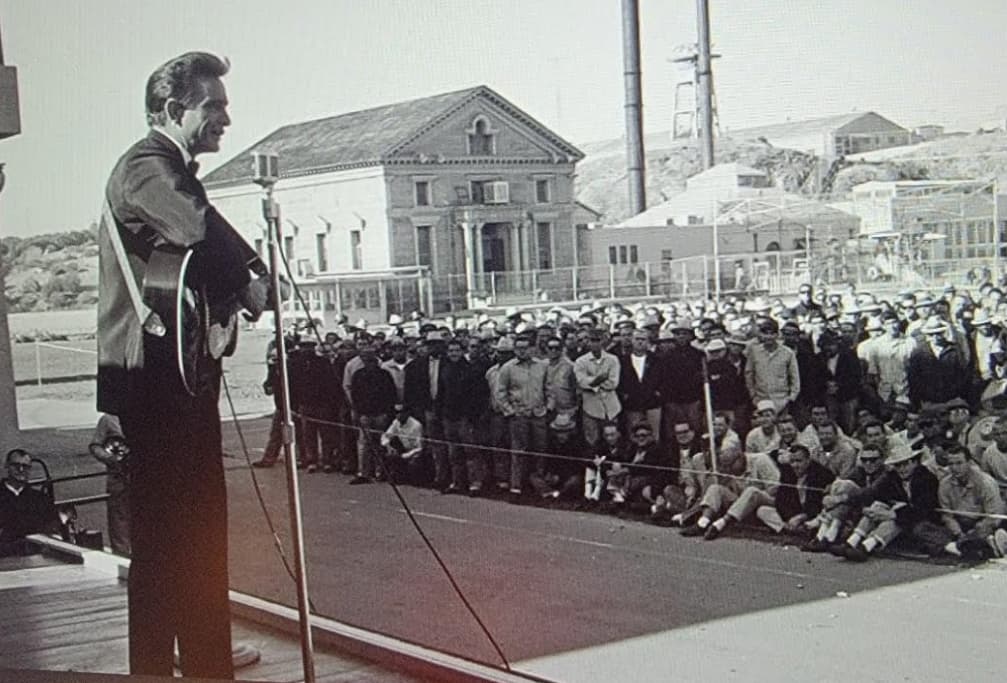
A Song of Absence Inside Prison Walls That Turned Johnny Cash Into a Legend
In January 1968, inside the stark confines of Folsom State Prison, a performance unfolded that would redefine not only a career but the emotional reach of country music itself. When Johnny Cash stepped onto the stage and greeted the room with his now iconic introduction, the atmosphere shifted instantly. This was not a typical concert. It was a confrontation between music and reality, between a man on the brink and an audience living in permanent consequence.
Among the setlist, one moment stood apart with quiet intensity. I Still Miss Someone was not delivered as a polished performance but as a confession. The song speaks of lingering love, of memories that refuse to fade, of a presence that remains long after someone is gone. In most venues, it is a familiar theme. Inside Folsom, it became something far more profound.
The audience was composed of men separated from the outside world, many of whom had lost relationships that could never be repaired. As Cash sang about absence and longing, the lyrics mirrored the lived experiences of those listening. This alignment between artist and audience created a rare authenticity. The song was no longer just heard. It was felt collectively.
What made this performance remarkable was not technical brilliance but emotional precision. Cash himself was emerging from a period of personal struggle and professional uncertainty. His decision to perform in a prison was seen as risky, even misguided. Yet it was precisely this risk that gave the moment its power. He was not standing above his audience. He was standing among them in spirit.
The broader concert would go on to become the legendary At Folsom Prison album, a release that revived Cash’s career and reshaped his public identity. But within that larger success, the performance of I Still Miss Someone remains a defining emotional core. It demonstrated how a simple song, when placed in the right context, can transcend entertainment and become a shared human experience.
Decades later, the recording still resonates. Not because of nostalgia alone, but because it captures something timeless. The persistence of memory. The weight of regret. The quiet truth that some people never truly leave us.