
A Glam Era Snapshot That Still Divides Viewers
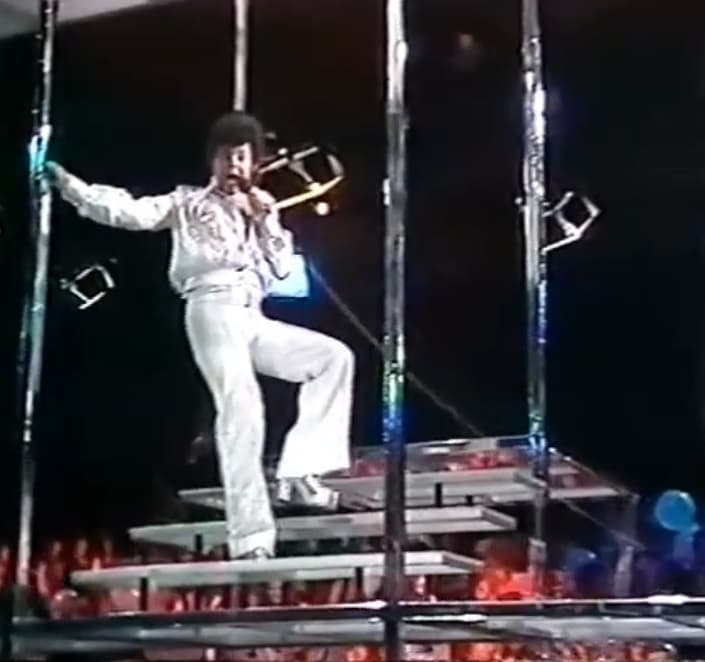
The March 1, 1975 appearance of Gary Glitter performing “The Wanderer” on Supersonic captures a moment when image, sound, and broadcast culture converged with striking clarity. More than a routine television slot, the clip reflects how glam rock translated its theatrical energy into the living rooms of a generation still discovering the power of televised music.
From the opening seconds, the performance establishes its intent. Glitter’s visual presence commands attention before a note fully lands. Sequins, posture, and direct engagement with the camera create an immediate sense of spectacle. Unlike a traditional concert setting, this is performance designed for the lens. Every gesture feels calibrated for viewers at home, reinforcing how television had become a crucial stage in shaping musical identity during the mid 1970s.
The song choice adds another layer of meaning. Originally associated with Dion, “The Wanderer” carried themes of independence and restless movement. In this reinterpretation, those ideas are reframed through a glam rock aesthetic. The narrative of a roaming outsider aligns seamlessly with Glitter’s larger than life persona. His version does not seek subtlety. It amplifies character and attitude, transforming a familiar composition into something more visually assertive and rhythmically driving.
Context is essential to understanding the performance’s impact. By 1975, glam rock was approaching a transitional phase. New genres were beginning to emerge, and the dominance of glitter driven theatrics was no longer guaranteed. This appearance stands as a vivid snapshot of that late peak period. Supersonic, known for its youthful audience and accessible format, provided an ideal platform for such expressions. It allowed artists to experiment with presentation while still reaching a broad viewership.
Audience reaction, though mediated through the television format, can be inferred through the performance’s intensity. Glitter’s constant engagement with the camera creates a sense of direct address, collapsing the distance between performer and viewer. It is less about communal crowd energy and more about personal connection, a technique that would later become standard in music broadcasting.
The clip also invites reflection and debate. Some viewers focus on the artistry of glam rock itself, questioning whether its emphasis on visual flair enhances or distracts from musical substance. Others consider the broader issue of how cultural memory interacts with complicated legacies, and whether performances like this can be appreciated independently of the individual behind them.
Ultimately, this rendition of “The Wanderer” endures because it represents more than a song. It documents a specific cultural moment when television amplified identity, when style became inseparable from sound, and when a performer could transform a three minute appearance into a lasting visual statement.