
From Street Anthem to Boogie Rock Revival: Status Quo Reimagine “The Wanderer” for a New Era
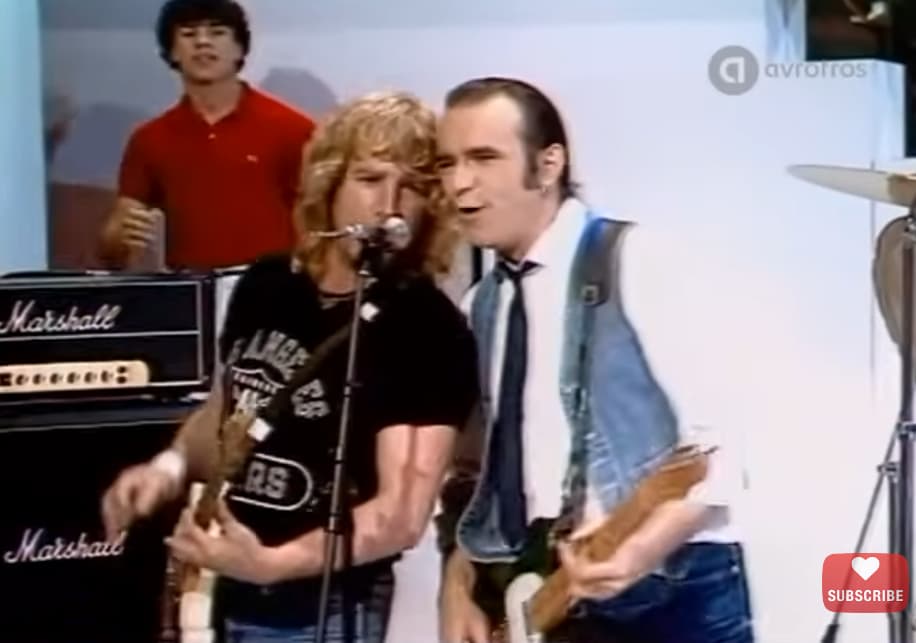
On October 29, 1984, Status Quo appeared on TopPop with a performance of “The Wanderer” that demonstrated their ability to reinterpret classic material for a contemporary audience. Originally written by Ernie Maresca and popularized by Dion DiMucci in 1961, the song had already secured its place in early rock and roll history. More than two decades later, Status Quo transformed it into a track that aligned with the sound and energy of mid nineteen eighties rock.
The band approached the song with a clear sense of identity. Rather than preserving the original arrangement, they introduced a faster tempo and a more pronounced rhythmic drive. This adjustment placed the composition firmly within their established style, known for its steady guitar patterns and accessible structure. The result is a version that feels both familiar and distinctly reinterpreted, allowing the song to reach a new generation without losing its core character.
The setting of TopPop adds an additional layer of significance. As one of Europe’s most influential music television programs, it provided a platform where artists could connect directly with a wide audience. Sharing space with major acts such as David Bowie and ABBA, Status Quo’s appearance reinforced their position within the mainstream European music scene. The format required a concise and visually engaging performance, shaping the way the band presented the track.
At the center of the performance are Rick Parfitt and Francis Rossi, whose interplay defines much of the band’s sound. Parfitt’s vocal delivery brings a stronger rock edge to the song, while Rossi’s guitar work maintains the consistent groove that underpins the arrangement. Together, they create a balance between energy and control, ensuring that the performance remains focused within the constraints of a television broadcast.
The structure of the performance reflects the demands of the medium. There is no extended improvisation or variation. Instead, the band delivers a direct and efficient rendition that emphasizes clarity and impact. The song concludes without elaboration, leaving a clean and immediate impression.
Viewed in retrospect, this performance highlights how Status Quo navigated the evolving musical landscape of the nineteen eighties. By reworking a well known classic, they demonstrated both respect for the past and an understanding of contemporary expectations. For modern audiences, the recording offers insight into how a familiar song can be reshaped to reflect a different time while maintaining its original spirit.