
“Angel Face”: A Glam Rock Anthem of Unrequited Affection and Magnetic Allure.
For those of us who recall the glitter-dusted, platform-booted spectacle that was the glam rock era of the early 1970s, certain songs instantly transport us back to a time of vibrant excess and unbridled pop energy. Among these dazzling artifacts, The Glitter Band’s “Angel Face” shines with a particular, almost irresistible, sparkle. Released in April 1974, this track isn’t just a catchy pop song; it’s a quintessential example of the genre, a propulsive, rhythm-driven ode to an unattainable figure, capturing the dizzying allure of infatuation. For older readers, it conjures vivid memories of youth, of dancing in dimly lit clubs, and the thrilling, sometimes heartbreaking, pursuit of an elusive crush.
Upon its release, “Angel Face” was an immediate and undeniable hit, solidifying The Glitter Band’s position as a major force in the burgeoning glam rock scene. It soared to number 4 on the UK Singles Chart in May 1974, becoming one of their signature tracks. While its chart performance in the United States was more modest (it did not chart on the Billboard Hot 100), its impact across Europe and Australia was significant, cementing its status as a glam rock staple. For many, hearing those iconic drum beats and horn blasts on the radio was an instant invitation to move, a jolt of pure, unadulterated excitement that defined the sound of the mid-70s. It was a song that you couldn’t help but sing along to, even if you were just mouthing the words in your bedroom.
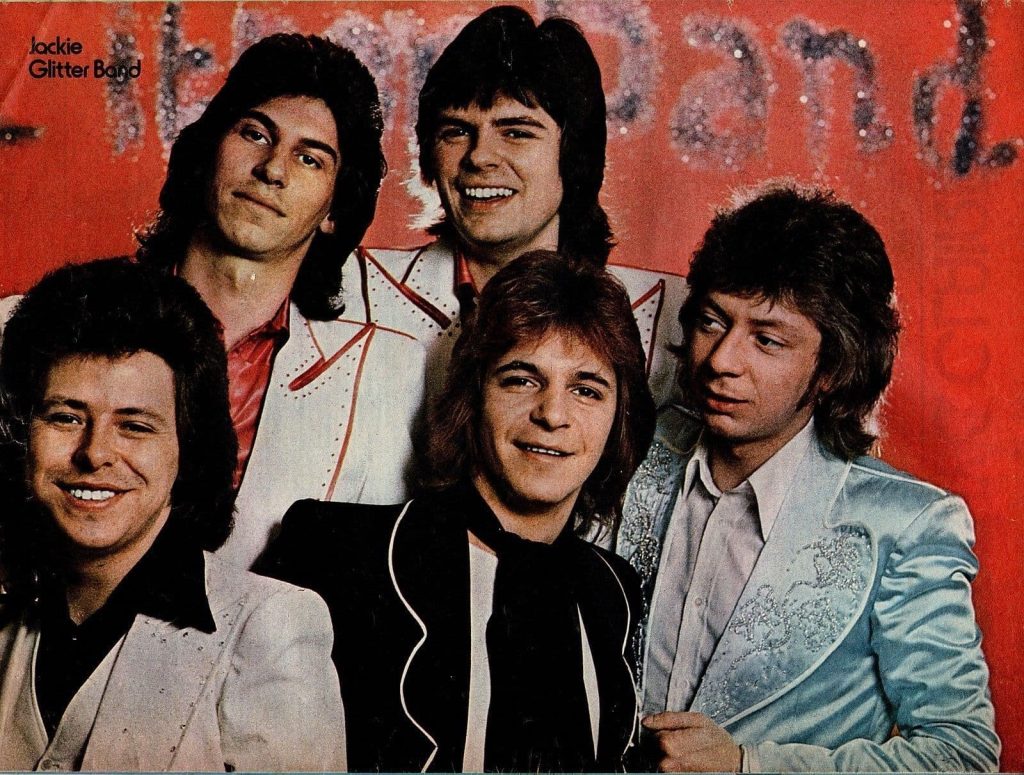
The story behind The Glitter Band and “Angel Face” is intricately linked to the complex, often controversial, figure of Gary Glitter. Originally conceived as Gary Glitter’s backing band, they quickly developed their own identity and sound. Comprised of John Springate (bass, vocals), Gerry Shephard (guitar, vocals), Pete Phipps (drums), Tony Leonard (drums), Harvey Ellison (saxophone), and Richard Jones (saxophone), The Glitter Band crafted a distinctive sound built around dual drums, powerful saxophones, and driving rhythms. While Gary Glitter was undeniably the face of the “Glitter” sound, The Glitter Band proved they could create infectious hits independently. “Angel Face” was written by John Rossall (a former member of the band who had left by this point but whose songwriting contributions remained) and Gerry Shephard, further showcasing the collective talent that propelled the group. The song’s genesis was rooted in the band’s desire to replicate and refine the formula that had made their work with Glitter so successful, adding their own unique flair to the powerful, dance-oriented sound.
The meaning of “Angel Face” is a classic tale of infatuation, particularly for someone who seems just out of reach. The lyrics describe a person utterly captivated by another’s beauty and charisma, despite the implied distance or lack of reciprocation. Phrases like “Angel Face, so good to me / But baby you just won’t be mine” convey a sense of longing and a touch of melancholy beneath the upbeat tempo. The “angel face” is an idealized figure, almost too perfect, whose allure is almost painful in its intensity. It’s a song that captures the universal experience of being utterly smitten, of being drawn to someone’s magnetic presence, even if the relationship remains purely aspirational. For older listeners, this resonates with the heady, often unrequited crushes of youth, the intense feelings that could consume you, and the almost painful beauty of someone who seemed like a vision.
The band’s signature sound, with its heavy, stomping beat and prominent saxophone riffs, amplifies this sense of dazzling, almost overwhelming, attraction. The dual drums create a hypnotic rhythm that mirrors the obsessive nature of the lyrics, while the bright, almost celebratory, horns give the song an undeniable sense of glamor and excitement. “Angel Face” isn’t a deep philosophical treatise; it’s a visceral, emotional experience that encapsulates the pure joy and aching desire of youthful infatuation. It remains a vibrant sonic time capsule, a testament to a flamboyant era and the enduring power of a catchy tune to stir memories of a time when everything felt a little brighter, a little louder, and a lot more dazzling.