A thunderous communion of sorrow and strength where hard rock meets fragile humanity
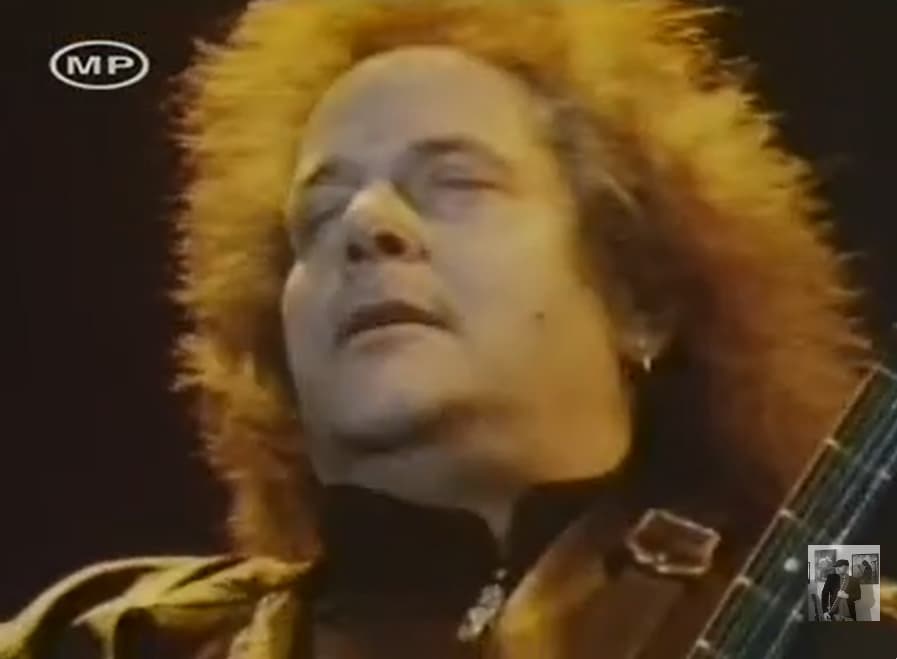
The 1988 live performance of “Imaginary Western” by Leslie West, captured at London’s Hammersmith, stands as one of the most powerful reinterpretations of a song originally written and recorded by Jack Bruce for his 1969 album Songs for a Tailor. While this live rendition was never tied to chart placement or a commercial single, its reputation has grown steadily among devoted listeners, who regard it as one of the finest recorded performances of the song. Removed from the charts and trends of its era, this version exists instead in the deeper currency of legacy, emotion, and interpretive authority.
Jack Bruce’s “Imaginary Western” was already a song steeped in melancholy and reflection, written during a period of personal and artistic upheaval following the dissolution of Cream. In Bruce’s original recording, the song feels inward and elegiac, a meditation on displacement, loss, and the quiet erosion of ideals. Leslie West approached the song from a different emotional terrain. By 1988, West was a survivor in every sense, a guitarist whose life and career had been shaped by excess, endurance, and reinvention. That history is audible in every note he plays on this stage.
Musically, West transforms “Imaginary Western” into something heavier yet more vulnerable. His guitar tone is thick and mournful, each sustained note carrying weight rather than speed. There is no attempt to modernize or embellish the song. Instead, he stretches its emotional center, allowing silence, feedback, and restraint to do the work. His playing does not decorate the melody, it grieves with it. The result is a version that feels carved from lived experience rather than composed in theory.
Vocally, Leslie West delivers the song with a cracked authority that suits its themes perfectly. His voice lacks polish, but it possesses truth. He does not sing as an observer of sorrow, but as someone who has walked alongside it. Lines that once sounded poetic in Bruce’s hands now feel confessional. The sense of a man standing at the edge of memory, looking back at what was lost and what remains unresolved, permeates the performance.
The setting matters deeply. Hammersmith, long associated with landmark rock performances, provides a reverent backdrop. The audience listens rather than roars, sensing that they are witnessing something intimate rather than theatrical. West does not command the room through volume or bravado. He holds it through gravity. The band supports him with subtlety, never overwhelming the song’s emotional arc.
What makes this performance endure is its honesty. Leslie West does not attempt to claim the song as his own, nor does he imitate Jack Bruce. Instead, he inhabits the song, allowing its themes of alienation and longing to pass through his own history. In doing so, he reveals the song’s timelessness. “Imaginary Western” becomes not just a relic of late 1960s introspection, but a universal lament for anyone who has outlived their illusions.
This 1988 live version remains a testament to the power of interpretation. It proves that great songs do not belong to a single voice or era. In Leslie West’s hands, “Imaginary Western” becomes a living, breathing elegy, one that speaks not only of the past, but of the quiet endurance required to carry it forward.
Video: