
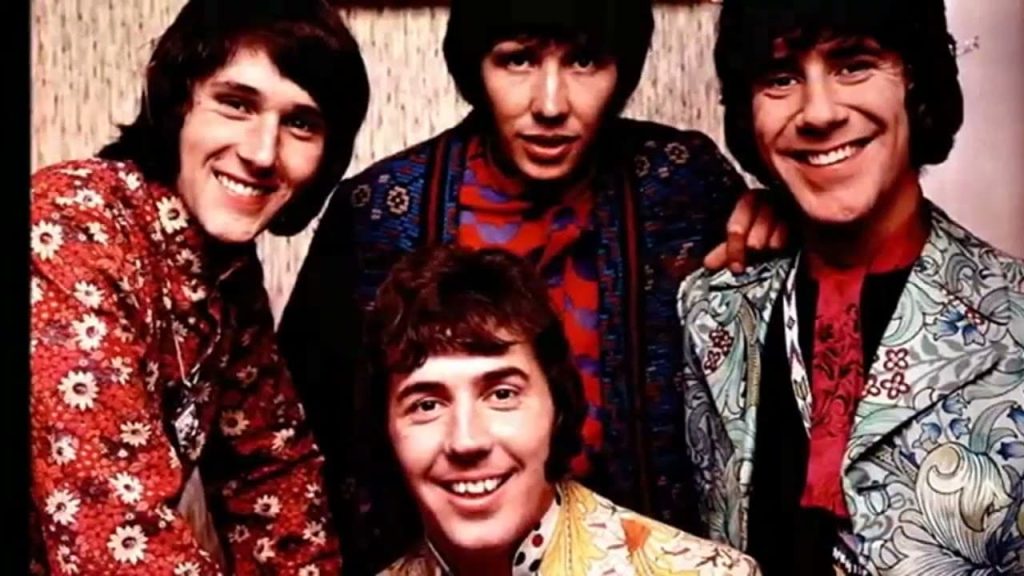
A Sweet and Somber Ballad of Quiet Despair, a Haunting Confession of Love and the Painful Truths Left Unsaid.
In the mid-1960s, a British beat group found themselves at a dramatic crossroads. After famously being chosen by Decca Records over a fledgling band called The Beatles, and following the high-profile departure of their lead singer Brian Poole, The Tremeloes were on a mission to prove their worth. They had to forge a new sound, a new identity, and rise above the doubt that had followed them. In 1967, they found their redemption in an unlikely place: a forgotten B-side by the American group The Four Seasons. That song was “Silence Is Golden.” With a deft touch, they transformed it into a global phenomenon, a towering testament to their resilience and artistic vision. The song’s journey was nothing short of a stunning triumph, soaring to a peak of number one on the UK Singles Chart and achieving remarkable success in the United States, where it reached number 11 on the Billboard Hot 100. It was a moment of true vindication, a sound of quiet, beautiful revenge against those who had doubted them.
The story of “Silence Is Golden” is a powerful testament to the emotional weight of unspoken words. Originally written by Bob Crewe and Bob Gaudio, the song’s central drama is a tragic, beautiful irony. The title suggests that silence is a virtue, something precious and peaceful. But the lyrics reveal a much darker, more painful truth. The narrator is in a relationship that has become a battlefield of cruel words and bitter truths. He realizes that speaking his mind would only lead to more pain and destruction. His silence is not a choice of peace, but a desperate act of self-preservation, a shield he puts up to protect the last fragile remnants of a dying love. It is the silence of a man holding back a storm, the quiet suffering of a heart that is being torn apart by the very love it so desperately wants to hold onto.
The song’s theatrical power lies in its masterful use of contrasts. The melody is gentle, almost lullaby-like, with a lush, harmonic arrangement that feels both comforting and deeply melancholic. The voices of The Tremeloes intertwine in a way that suggests a shared, communal sadness. This beautiful, sweet-sounding harmony stands in stark opposition to the song’s brutal emotional core. It’s a classic piece of musical drama: the beautiful surface masking a raw, unvarnished truth. The famous a cappella section, where the music drops away and only the voices remain, is a particularly powerful moment. It’s as if all the world’s noise has stopped, leaving the listener alone with the narrator’s quiet, devastating confession.
For those of us who remember this era, “Silence Is Golden” is more than a song; it’s a touchstone. It takes us back to a time when pop music could be both deeply catchy and profoundly sad, when a hit single could tell a story of quiet desperation and heartbreak. It’s a nostalgic reminder of the power of a perfectly crafted pop song to convey complex emotions with a simple melody. The song’s enduring power lies in its timeless message: that some truths are too painful to speak aloud, and that sometimes, the greatest act of love is to remain silent, even when your heart is screaming. It is a quiet masterpiece, a deeply emotional piece of music that continues to resonate with its raw honesty and its heartbreaking, beautiful sound.