
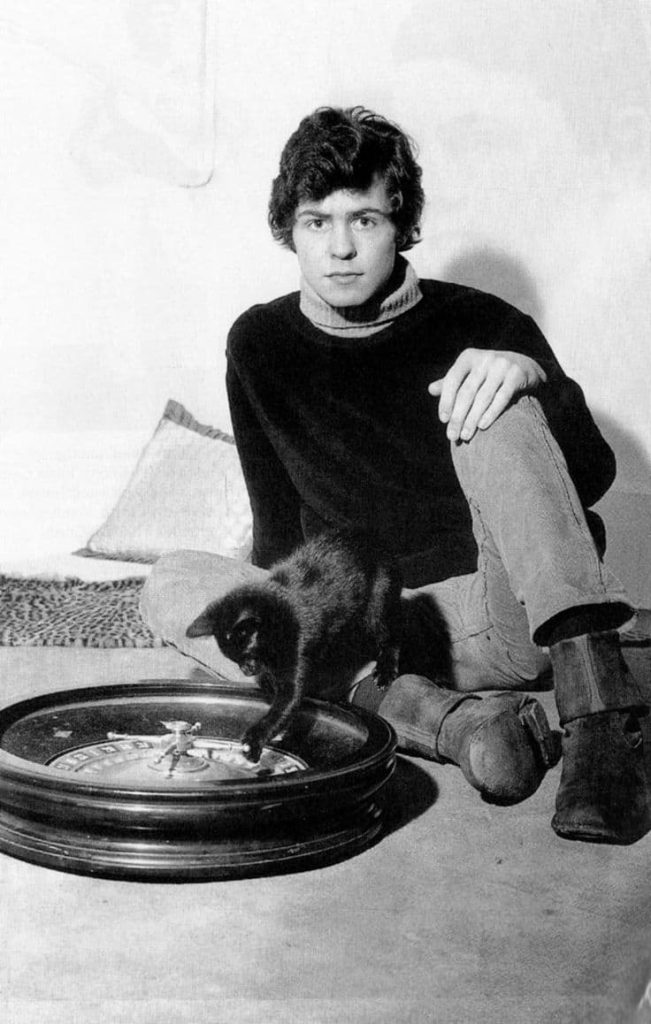
A Haunting and Magical Farewell, a Prophetic Glimpse of the Rock and Roll God Emerging From a Folky Past.
In 1969, the British music scene was a cauldron of psychedelic and folk-rock innovation. Standing at the very center of this mystical universe was Marc Bolan, the leader of the band Tyrannosaurus Rex. With his poetic lyrics, ethereal voice, and intricate acoustic arrangements, he had cultivated a devoted cult following. His fourth album, Unicorn, was a pivotal work, a beautiful bridge between his mystical folk-bard identity and the glam-rock superstar he was soon to become. The album itself was a solid success, reaching number 12 on the UK Albums Chart. Within its tracklist lay a song that perfectly captured the essence of this dramatic transition. That song was “Cat Black.” It was never released as a single and did not chart, but its power lay in its status as a hidden, almost ceremonial, gem—a final, magical incantation before the dawn of a new era.
The story of “Cat Black” is the story of an artist in the midst of a profound transformation. The drama is entirely internal, a quiet struggle between the man Marc Bolan was and the rock god he was destined to be. At this point in his career, he was beginning to incorporate electric instruments, and his songwriting was moving towards the simpler, more direct rock and roll that would define his later work. The song, with its cryptic, fantastical lyrics, feels like a final poetic flourish from the old Bolan, a last burst of his mystical identity before he shed it entirely. It’s a theatrical monologue from an artist who is aware he is standing on a precipice, not knowing if he will fall or fly. The song is a haunting farewell to the past and a prophetic glimpse into the future.
The lyrical drama of “Cat Black” is not a linear narrative, but a symbolic, dreamlike journey. It is a series of poetic spells and vivid images—a “moon silver,” a “star black,” a “cat black.” The cat itself is a powerful figure of mystery and independence, a perfect metaphor for the unknowable path that lay ahead for Bolan. The song’s sound, with its simple, rhythmic bongos and acoustic guitar, adds to the ritualistic atmosphere, as if he is casting a spell over his own destiny. The vulnerability in his voice, so raw and unadorned, is a powerful contrast to the theatrical rock anthems that would come just a year or two later. It is a final, tender confession from the artist to his most devoted followers, a quiet promise of a brilliant new world.
For those who came of age with this music, “Cat Black” is more than an album track; it’s a historical document. It takes us back to a time before the glitter and the top hats, before the global stardom, to a moment of quiet, magical creation. It’s a nostalgic reminder of the raw, unpolished beginnings of a legend. The song remains a timeless and essential piece of Bolan’s artistic journey, a beautiful and poignant echo of the magic that made him a legend. It stands as a profound testament to the fact that even in an artist’s quietest moments, the seeds of their greatest destiny are being sown.