
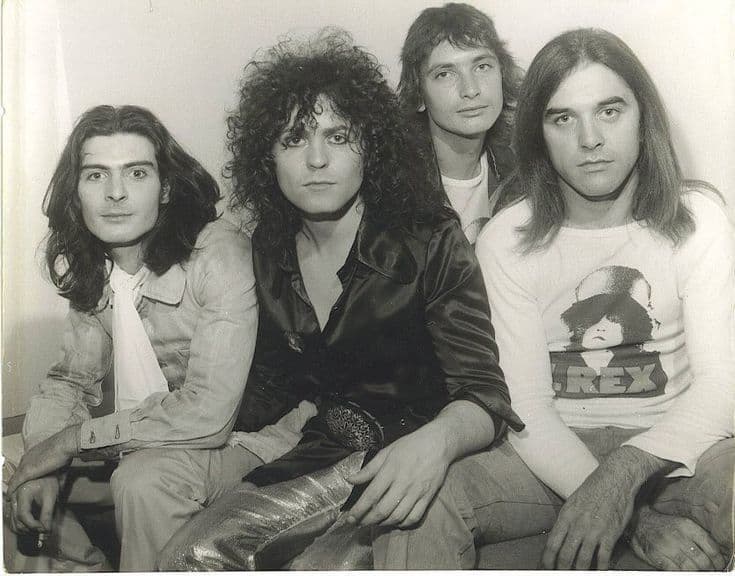
A Heartbreaking Farewell to Youth and Innocence, a Poignant Acknowledgment of a Fading Dream.
By 1974, the flamboyant, glitter-strewn empire that Marc Bolan had so brilliantly built was starting to show its cracks. The unstoppable force of T. Rex, which had defined the early years of the glam rock movement, was losing its commercial momentum. The joyous, unburdened singles that once rocketed to number one were no longer guaranteed to find their home at the top of the charts. It was in this dramatic, deeply uncertain moment that T. Rex released the album Zinc Alloy and the Hidden Riders of Tomorrow. This record was a tumultuous, experimental affair, a reflection of the creative and personal chaos surrounding Marc Bolan at the time. From it came the single “Teenage Dream.” While it managed to reach a respectable number 13 on the UK Singles Chart, this was a clear and painful signal of a star on the wane, a sharp decline from the eight consecutive top-five hits that had defined his career.
The story behind “Teenage Dream” is a tragic, beautiful drama. After years of explosive success, Marc Bolan’s personal life was in turmoil. His marriage was crumbling, and his long and fruitful creative partnership with producer Tony Visconti had come to an end. Bolan was navigating this new, lonely reality while trying to hold on to his artistic identity. The song itself is a direct, unflinching piece of autobiography. Unlike the fantasy-laden narratives and joyous boogies that had made him famous, “Teenage Dream” is a raw and somber lament for a past that had vanished forever. It is a musical monologue, where a once-youthful icon confronts the pain of lost innocence and the end of an era.
The song’s theatrical power lies in its profound shift in tone. It’s not a celebration but a melancholy farewell. The music is a radical departure for Bolan—it’s not a stomping rhythm but a quiet, almost mournful ballad, with a lush string arrangement that gives it a cinematic, haunting feel. The lyrics are a series of heartbreaking confessions and questions. “Just a teenage dream, just a teenage dream, don’t want to live that teenage dream no more” is not just a line; it’s a cry from the soul. It reveals an artist wrestling with his own legacy, with the burden of fame, and with the cruel reality that the simple, unburdened days of his youth were gone. The song is a dramatic acknowledgment of his transformation from a boy with a dream to a man grappling with a shattered reality.
For those of us who came of age with this music, “Teenage Dream” is a powerful and poignant time capsule. It’s a reminder of a time when the rock gods we idolized were just as vulnerable as we were. It speaks to the universal experience of looking back on our own youthful innocence and mourning its passing. The song is a testament to Bolan’s courage to be vulnerable, to show his audience not just the glitz and glamour, but the sadness that lay beneath it. “Teenage Dream” stands as a timeless and deeply emotional song, a vital, if melancholic, chapter in the incredible story of a man who lived and died for rock and roll.