
“I Talk to the Wind”: A Hauntingly Beautiful Elegy to Disconnection and the Search for Understanding.
There are moments in music that transcend mere sound, offering a profound glimpse into the depths of the human condition, inviting introspection and a gentle melancholy. For many who journeyed through the complex, often challenging, yet ultimately rewarding soundscapes of progressive rock in the late 1960s and early 1970s, King Crimson’s “I Talk to the Wind” stands as a hauntingly beautiful beacon. Released in 1969 on their groundbreaking debut album, In the Court of the Crimson King, this song is not just a track on an album; it’s a poetic lament, a delicate sigh amidst a storm of sonic innovation, exploring themes of isolation, miscommunication, and the quiet yearning for connection in a world that often feels deaf to one’s voice. For older, well-informed readers, it evokes a powerful sense of reflection on life’s profound questions and the universal experience of feeling unheard.
Upon its initial release in October 1969, “I Talk to the Wind” was not issued as a single and therefore did not chart on mainstream pop or rock singles charts. Its significance, however, is inextricably linked to the monumental success and critical acclaim of its parent album. In the Court of the Crimson King was an instant sensation, a truly revolutionary work that is widely regarded as one of the foundational albums of progressive rock. It reached an impressive number 5 on the UK Albums Chart and number 28 on the Billboard 200 album chart in the United States. Within this seminal work, “I Talk to the Wind” served as a crucial, ethereal counterpoint to the album’s more aggressive or complex compositions like “21st Century Schizoid Man” or “Epitaph.” It became a cherished piece for listeners who appreciated the album’s nuanced emotional range, a gentle interlude that offered a moment of poignant beauty amidst the intellectual ferocity.
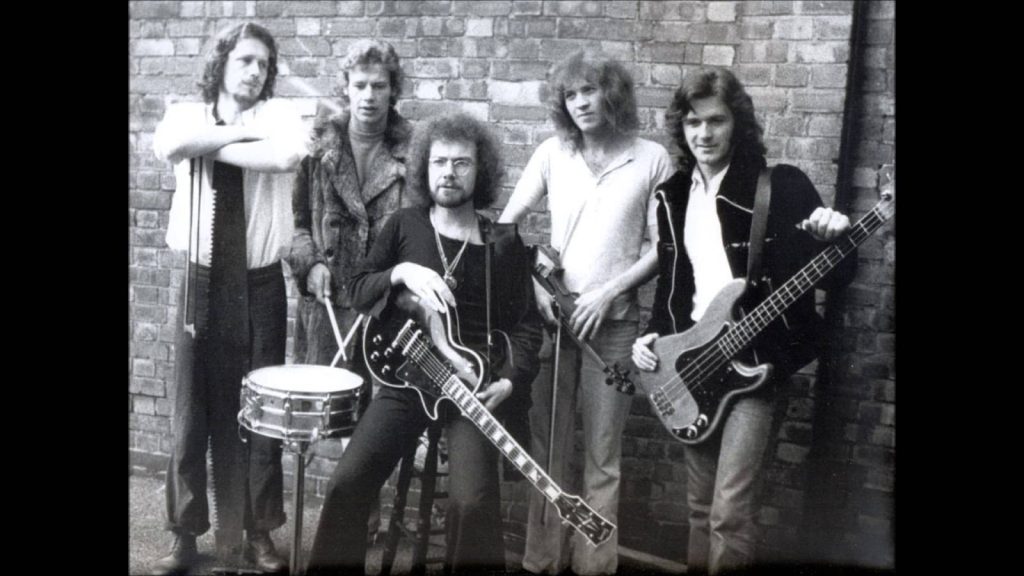
The story behind “I Talk to the Wind” is deeply intertwined with the early, fertile creative period of King Crimson. The song was co-written by the band’s lyricist Peter Sinfield and multi-instrumentalist Ian McDonald, who played flute on the track. Sinfield’s evocative, often mystical, lyrics were a hallmark of early King Crimson, and “I Talk to the Wind” perfectly showcases his poetic sensibility. The band at this time was a groundbreaking ensemble: Robert Fripp (guitar), Greg Lake (bass, vocals), Ian McDonald (woodwind, keyboards, mellotron), Michael Giles (drums), and Peter Sinfield (lyrics, illumination). McDonald’s flute playing is particularly central to the song’s melancholic charm, weaving a delicate, almost mournful melody that carries the weight of the lyrics. Lake’s tender, expressive vocals further amplify the song’s sense of gentle sorrow and resignation.
The meaning of “I Talk to the Wind” is a poignant exploration of themes of alienation and the profound difficulty of communicating one’s inner world to others. The central metaphor of “talking to the wind” powerfully conveys the futility of expressing oneself when there is no one truly listening or understanding. The lyrics speak of a feeling of being out of sync with the world, of having thoughts and feelings that simply dissipate into the air, unheard and unacknowledged: “I talk to the wind / My words are all carried away / I talk to the wind / The wind does not hear the things I say.” It paints a picture of a soul adrift, observing the world from a distance, perhaps preferring the company of the natural elements over the often superficial interactions of human society.
For older readers, this song resonates with a profound sense of shared human experience. It evokes memories of moments of loneliness, of feeling misunderstood, or of struggling to convey deep emotions that seem to fall on deaf ears. It speaks to the quiet introspection that comes with age, the realization that not every thought needs to be spoken, and that sometimes, the most profound communication is found in solitude or in the silent understanding of nature. “I Talk to the Wind” is a timeless, atmospheric piece that reminds us of the delicate balance between connection and isolation, and the enduring human search for meaning in a world that often feels indifferent. It remains a tender, almost fragile, jewel in King Crimson’s formidable crown, a testament to the band’s unparalleled ability to craft music that is both intellectually stimulating and deeply, beautifully emotional.