
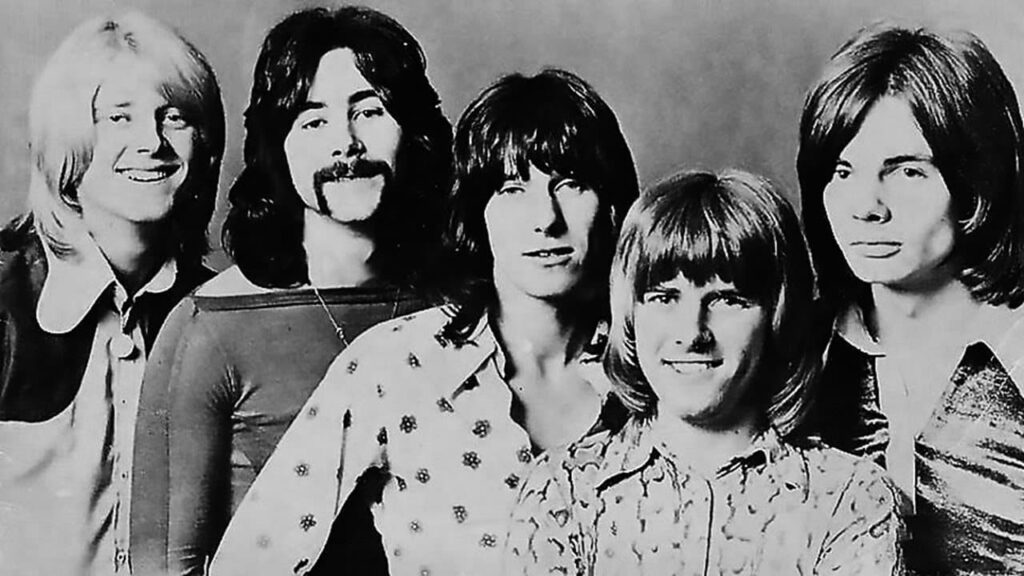
A cheerful and infectious ode to an unconventional love, “Love Grows (Where My Rosemary Goes)” propelled the fleeting lineup of Edison Lighthouse to the top of the charts with its simple charm.
Released in January 1970, “Love Grows (Where My Rosemary Goes)” was the debut single for the hastily assembled studio band Edison Lighthouse, fronted by session singer Tony Burrows. Despite Burrows never intending to be a permanent member and the band’s lineup being somewhat fluid, this catchy tune, penned by the prolific songwriting duo Tony Macaulay and Barry Mason, shot straight to number one on the UK Singles Chart, where it remained for five weeks, becoming the first UK chart-topper of the 1970s. It also enjoyed success in the US, peaking at number five on the Billboard Hot 100. The song’s simple, upbeat melody and endearing lyrics about an offbeat but beloved girl made it an instant and enduring pop sensation.
The story behind “Love Grows (Where My Rosemary Goes)” is somewhat unusual. Songwriter Tony Macaulay had just signed a lucrative deal and, wanting a simple, “nursery rhyme-like” song to establish his new label, quickly penned the track with Barry Mason. Session singer Tony Burrows, known for his involvement in several one-hit wonders of the era, was brought in to record the lead vocals with a group of session musicians. The band name Edison Lighthouse was chosen somewhat randomly, after a mishearing of a story about the Eddystone Lighthouse. Despite the somewhat manufactured nature of the band, the song’s infectious quality was undeniable. Interestingly, US hitmakers The Grass Roots were offered the song but reportedly turned it down.
The meaning of “Love Grows (Where My Rosemary Goes)” is a sweet and lighthearted celebration of love for someone who might not fit conventional standards. The lyrics describe Rosemary as someone who “ain’t got no money,” whose “clothes are kinda funny,” and whose “hair is kinda wild and free.” She “talks kinda lazy” and is even considered “crazy” by some. However, the narrator is completely smitten, declaring that “love grows where my Rosemary goes, and nobody knows like me.” The song champions an acceptance of individuality and finds charm in what others might perceive as flaws. Rosemary remains somewhat enigmatic, with her “life’s a mystery,” but this only adds to her allure in the narrator’s eyes. It’s a testament to a unique and personal connection that blossoms regardless of external judgment.
For those who remember the bubblegum pop of the early 1970s, “Love Grows (Where My Rosemary Goes)” is an instantly recognizable and joyfully nostalgic tune. Its simple melody and catchy chorus made it an earworm that dominated the airwaves. The song’s enduring appeal lies in its celebration of unconventional affection and the idea that love can flourish in unexpected places and for unexpected people. Despite the somewhat artificial origins of Edison Lighthouse, their debut hit remains a charming and timeless slice of pure pop, a testament to the power of a simple, feel-good song to capture the hearts of a generation.
 Great Songs