
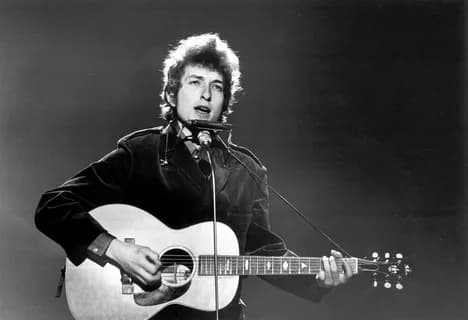
“Tangled Up in Blue”: Bob Dylan’s Shifting Canvas of Love and Memory
For those of us who have journeyed through the expansive, ever-evolving landscape of Bob Dylan’s lyrical genius, few songs capture his narrative mastery and the elusive nature of memory quite like “Tangled Up in Blue.” Emerging from the raw, emotionally charged sessions of his legendary 1975 album, “Blood on the Tracks,” this song isn’t merely a recounting of a past love; it’s a kaleidoscopic tapestry of shifting perspectives, time, and identity, inviting listeners to piece together a story that is as much their own as it is Dylan’s. It’s a testament to his unparalleled ability to blend the personal with the universal, creating an enduring anthem of fleeting connections and the bittersweet echoes of a life lived.
“Tangled Up in Blue” was released as the opening track on Bob Dylan’s seminal album, “Blood on the Tracks,” which hit shelves on January 20, 1975. The album itself was an immediate and overwhelming commercial success, soaring to number 1 on the Billboard 200 chart in the United States, as well as number 1 in Canada and New Zealand. It also performed exceptionally well in Europe, peaking at number 4 on the UK Albums Chart and number 2 in Norway. While “Tangled Up in Blue” was released as a single, it achieved modest chart success, reaching number 31 on the Billboard Adult Contemporary chart in the US, and was often paired as a B-side. However, its true significance lies not in its individual chart performance, but as the iconic opening statement of one of Dylan’s most acclaimed albums. Its profound impact as a narrative and musical cornerstone of “Blood on the Tracks” has cemented its status as one of his most beloved and dissected compositions.
The story behind “Tangled Up in Blue” is as intricate and elusive as the song itself. Like much of the “Blood on the Tracks” album, it is widely believed to be a deeply personal reflection on the breakdown of Bob Dylan’s marriage to Sara Lownds, though Dylan has always maintained a degree of distance from this autobiographical interpretation. What sets “Tangled Up in Blue” apart is its unique narrative structure. Dylan famously rewrote large portions of the lyrics even after the initial recording sessions in New York, leading to a significant lyrical overhaul during the Minneapolis re-recording sessions in December 1974. This constant revision, a process Dylan reportedly continued to tinker with even in live performances for years, reflects the song’s core theme: the fluid, often unreliable nature of memory and how past events are reinterpreted through the lens of time and experience. The song’s composition, often performed with just an acoustic guitar, feels intimately conversational, pulling the listener directly into the narrator’s unfolding recollections.
The meaning of “Tangled Up in Blue” is a masterclass in shifting perspectives and the elusive nature of romantic history. It chronicles a relationship, from its passionate beginnings to its eventual dissolution, not in a linear fashion, but through fragmented vignettes and changes in narrative voice (switching between first and third person). This deliberate ambiguity reflects how memories are recalled—not as a perfect sequence, but as a collection of intense, often contradictory, moments. The “blue” in the title can signify sadness, but also the deep, pervasive nature of the connection that, even when broken, remains “tangled up” in the fabric of one’s being. It’s a song about two souls continually crossing paths, learning from each other, and moving on, only for their stories to intertwine once more, forever connected by the profound experiences they shared. It’s a testament to the enduring power of love and loss to shape identity, even when the specifics become blurred by time.
For those of us who have found ourselves lost and found again in the intricate lyrical mazes of Bob Dylan, “Tangled Up in Blue” evokes a profound sense of recognition and empathy. It brings to mind the bittersweet process of looking back on past loves, understanding how those relationships shaped who we are today, and acknowledging that some connections, no matter how fleeting, remain “tangled up” in our emotional fabric. It’s a reminder of Dylan’s unparalleled poetic prowess, his ability to craft narratives that are both deeply personal and universally resonant. Even now, decades later, the mesmerizing flow of its storytelling and the aching beauty of its melody continue to captivate, pulling us back into a lyrical journey where love, memory, and identity are forever “tangled up in blue.”
 Oldies Songs