
A Synth-Driven Surge: The Electronic Dawn of Pop’s Unforgettable Earworm
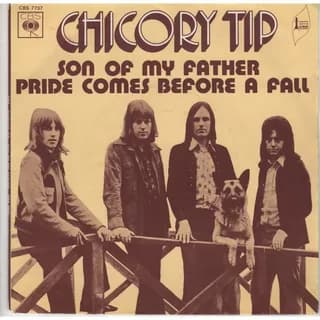
The early 1970s was a vibrant and eclectic period for pop music, a dynamic transition from the psychedelic experimentation of the late sixties towards more polished, often electronically-infused sounds. It was a time when new technologies were beginning to reshape the sonic landscape, pushing boundaries and bringing fresh textures to the charts. Amidst this evolving soundscape, a British band with an undeniably quirky name and an ear for innovative arrangements emerged to capture the public’s imagination, delivering a track that would become a landmark in the history of electronic pop: “Son Of My Father” by Chicory Tip.
Released in 1972, “Son Of My Father” was far more than just a catchy tune; it was a groundbreaking moment that brought a distinct European electronic sensibility squarely into the British and international pop charts. While Chicory Tip had released earlier singles, it was this song that propelled them into the stratosphere of pop stardom. The track rocketed to an astonishing number 1 on the UK Singles Chart, holding that coveted position for three consecutive weeks in February 1972. Its immense popularity wasn’t confined to the UK; it also achieved significant chart success across Europe, including reaching number 1 in Germany and cracking the Top 10 in various other countries. This widespread appeal underscored the song’s undeniable hook and its pioneering sound, establishing Chicory Tip as a significant, albeit briefly luminous, force in the pop world.
For those of us who remember the bright, often experimental sounds that filled the airwaves in the early 70s, “Son Of My Father” evokes an immediate sense of novelty and infectious energy. It conjures images of early 70s television pop shows like “Top of the Pops,” with bands performing against colorful, often surreal backdrops, showcasing a future-facing sound. The story behind the song is a fascinating one, rooted in European pop ingenuity. The track was originally written and performed by the prolific Italian composer Giorgio Moroder, often hailed as the “Father of Disco,” who released it in Germany in 1971. Moroder’s original version, “Nachts Scheint Die Sonne” (meaning “At Night the Sun Shines”), already featured the prominent synthesizer hook. Chicory Tip’s version, however, took Moroder’s instrumental track, added English lyrics by Pete Bellotte (another frequent Moroder collaborator), and delivered it with a distinctly British pop flair. The band’s decision to feature the then-novel Moog synthesizer so prominently was a bold and ultimately successful move, giving the song its unique, futuristic edge and making it instantly recognizable.
The meaning of “Son Of My Father” is relatively straightforward and perhaps a touch enigmatic, fitting for the pop sensibilities of the era. The lyrics speak of the protagonist acknowledging his lineage and the influence of his father, almost as if grappling with identity and the path laid out before him. Lines like “I am the son of my father / My heart is a son of a gun” combine a sense of inherited traits with a rebellious, independent spirit. However, the true genius and lasting impact of the song lie less in its lyrical depth and more in its revolutionary sound. The relentless, bubbling synth riff is the undeniable star of the show, a hypnotic, driving force that was incredibly distinctive for its time. It showcased the potential of electronic instruments not just as novelty, but as a core element of pop arrangements, laying foundational groundwork for future synth-pop and electronic music genres. The vocals, delivered with an earnest pop sensibility by Peter Freestone, complemented the electronic backbone, creating a seamless, irresistible package.
For older listeners, “Son Of My Father” is more than just a catchy memory; it’s a nostalgic trip back to a pivotal moment in pop music history. It evokes memories of discovering new sounds, of the sheer excitement when electronic elements started to dominate the airwaves, and of the innocent joy of a perfectly crafted pop hit. It stands as a vibrant testament to Chicory Tip’s foresight and ability to deliver a groundbreaking record, proving that sometimes, the most memorable songs are those that dare to sound just a little bit different, paving the way for the future of popular music.