
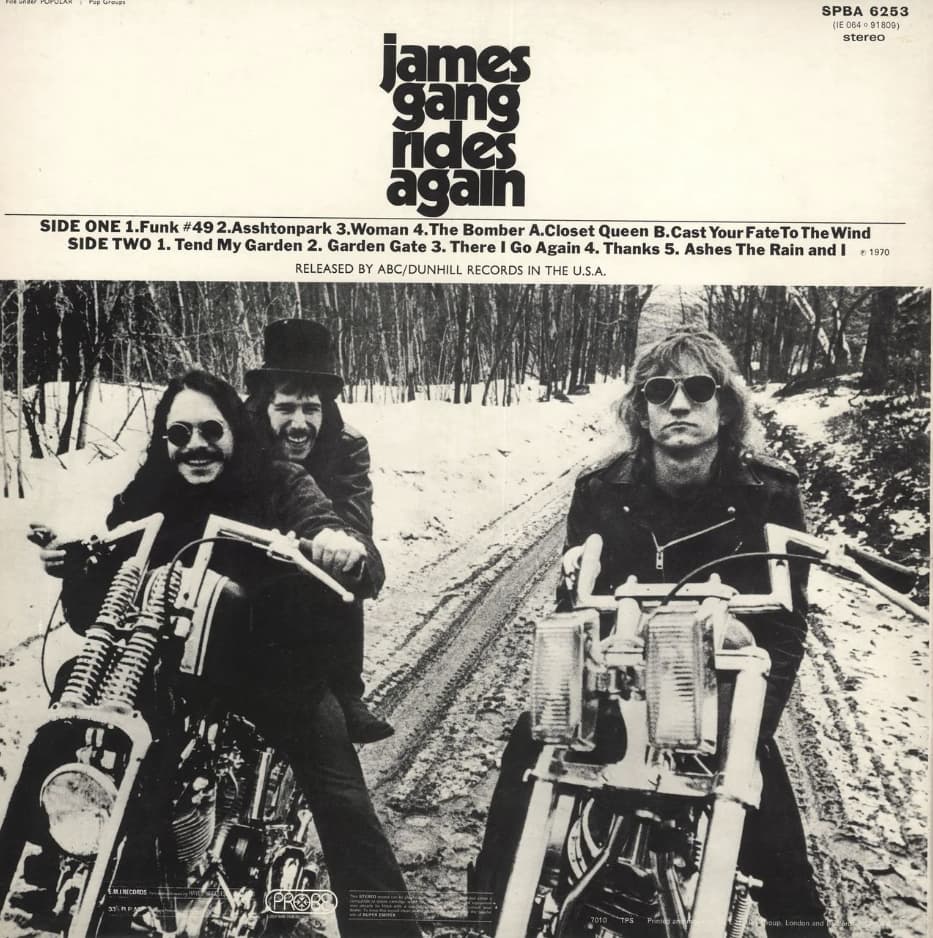
James Gang – Midnight Man: A Journey Through the Night’s Solitude
In the early 1970s, a time of profound musical exploration and cultural upheaval, James Gang emerged as one of the era’s quintessential rock bands. Their song “Midnight Man,” from the album Thirds released in 1971, is a reflective ode that captures the essence of introspection and solitude, evoking memories of quiet nights and contemplative moments.
Upon its release, “Midnight Man” did not storm to the top of the charts with immediate fanfare. However, it carved out a respectable position within music rankings and has since become a cherished classic among rock aficionados. The track resonates deeply with those who find solace in solitude and seek meaning in life’s quieter moments. It’s this enduring quality that makes “Midnight Man” a timeless piece, transcending generations and continuing to speak to listeners even today.
At its heart, “Midnight Man” is a journey through night-time reflections—a narrative woven with soulful melodies and poignant lyrics penned by Joe Walsh. The story behind this song is as intriguing as its sound; it’s said that Joe Walsh, who was at the helm of James Gang during this period, crafted this piece while grappling with his own sense of isolation amidst fame’s glaring spotlight. This personal struggle imbues the track with an authenticity that echoes through each chord and verse.
The lyrical content delves into themes of loneliness and self-discovery—universal experiences that resonate profoundly with listeners who have walked similar paths under moonlit skies. The opening chords set a somber yet inviting tone, drawing you into an introspective realm where time seems to slow down just enough for contemplation. As Walsh’s vocals weave through the melody, there’s an undeniable sincerity in his delivery—one that speaks directly to anyone who has ever found themselves alone in their thoughts after midnight.
Musically, “Midnight Man” showcases James Gang‘s ability to blend rock’s raw energy with softer acoustic elements seamlessly. The guitar work is both intricate and soothing, providing a backdrop against which Walsh’s reflective lyrics shine brightly. Each note feels deliberate, contributing to an atmosphere rich with emotion—perfectly capturing those quiet moments when night gives way to dawn.
For older audiences especially, “Midnight Man” serves as more than just a song—it becomes a portal back to times when life felt both simpler yet infinitely complex under starlit skies. There’s something profoundly nostalgic about revisiting such tracks; they remind us not only of our past selves but also how far we’ve traveled on our individual journeys since then.
In conclusion, James Gang‘s “Midnight Man” stands as testament to music’s power—to capture fleeting emotions so vividly they remain etched in memory long after first being heard. It invites listeners old and new alike on nocturnal voyages filled with reflection—a timeless reminder that sometimes it takes embracing silence fully before truly hearing what lies within our hearts’ deepest corners.
 Oldies Songs