
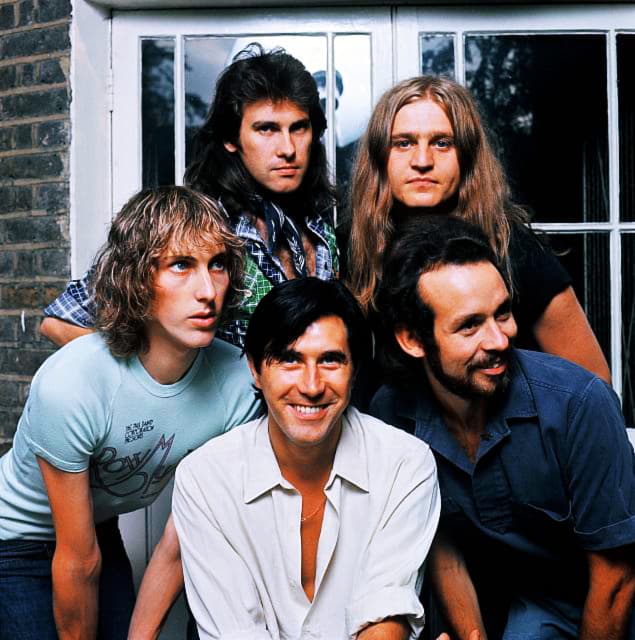
“Avalon”: A Seductive Whisper of Idealized Romance and Elusive Paradise.
There are songs that don’t merely play; they envelop you, drawing you into a world shimmering with elegance, longing, and a profound sense of romantic yearning. For those who came of age amidst the sophisticated soundscapes of the early 1980s, Roxy Music’s “Avalon” stands as a quintessential masterpiece, a track that transcended the pop charts to become a timeless anthem of refined melancholy and idealized love. Released in 1982 as the title track from their eighth and final studio album, this song is more than a catchy tune; it’s a dreamscape woven from shimmering synthesizers, subtle rhythms, and the inimitable, crooning voice of Bryan Ferry, inviting us into a realm where beauty and desire intertwine with an almost ethereal grace. For older, well-informed listeners, it evokes a powerful sense of nostalgia for an era of stylish sophistication and deeply felt, yet often unspoken, emotions.
Upon its release, “Avalon” proved to be a significant commercial success, both as a single and as the keystone of its eponymous album. The single itself reached a highly respectable number 13 on the UK Singles Chart in July 1982, demonstrating its broad appeal. More importantly, the album Avalon was a global phenomenon, soaring to number 1 on the UK Albums Chart and remaining there for three weeks, while also achieving considerable success internationally, reaching number 53 on the Billboard 200 in the United States and earning Platinum certification in both the UK and the US. This widespread success underscored the song’s captivating allure and the album’s status as a sophisticated artistic statement that marked the culmination of Roxy Music’s illustrious career. For many, the track was a constant presence on airwaves, a smooth, seductive sound that defined a particular mood of elegant detachment and romantic introspection.
The story behind “Avalon” is steeped in the evolution of Roxy Music from their avant-garde art-rock origins to the polished, sophisticated sound that defined their later work. By the early 1980s, the band, fundamentally driven by the vision of lead vocalist and principal songwriter Bryan Ferry, had shed much of their early experimentalism in favor of a more refined, atmospheric approach. The Avalon album itself was the product of meticulous crafting, with Ferry seeking a sound that was both luxurious and emotionally resonant. The inspiration for the song’s title and thematic undercurrents comes from the legendary island of Avalon, a mythical paradise often associated with Arthurian legend, a place of peace, healing, and spiritual renewal. This mythical reference imbues the song with a sense of the unattainable, the idealized haven that one yearns for but can never quite reach. Ferry has spoken about the song’s creation, often citing influences from traditional Latin American music, particularly a trip he took to the Caribbean that subtly informed the track’s distinctive rhythmic feel.
The meaning of “Avalon” is multifaceted, shimmering with layers of romantic longing, idealized beauty, and an almost spiritual quest for a perfect, tranquil sanctuary. The lyrics, though sparse and evocative, paint a picture of waiting, of watching, and of a deep yearning for a beloved figure to arrive, bringing with them a sense of completeness and peace. Lines like “I’ve been searching for a while / For the one to make me smile / And I think I’ve found her” blend seamlessly with the mythical overtones, suggesting that the “Avalon” being sought is perhaps less a physical place and more a state of mind, an idealized love, or even a sense of ultimate belonging. It’s a song about the human desire for connection and the elusive nature of true paradise, whether it be a person or a state of being.
For older listeners, “Avalon” resonates deeply with the complexities of long-term relationships, the enduring nature of hope, and the persistent human quest for an elusive ideal. It evokes memories of quiet evenings, profound introspection, or perhaps the contemplation of a love that feels like a sacred, almost mythical, refuge. The song’s serene yet subtly melancholic atmosphere provides a perfect backdrop for reflecting on life’s journey, the dreams pursued, and the enduring beauty found in both the tangible and the imagined. It stands as a pinnacle of Roxy Music’s refined artistry, a sophisticated elegy to romance and the timeless allure of an unreachable, perfect haven.