
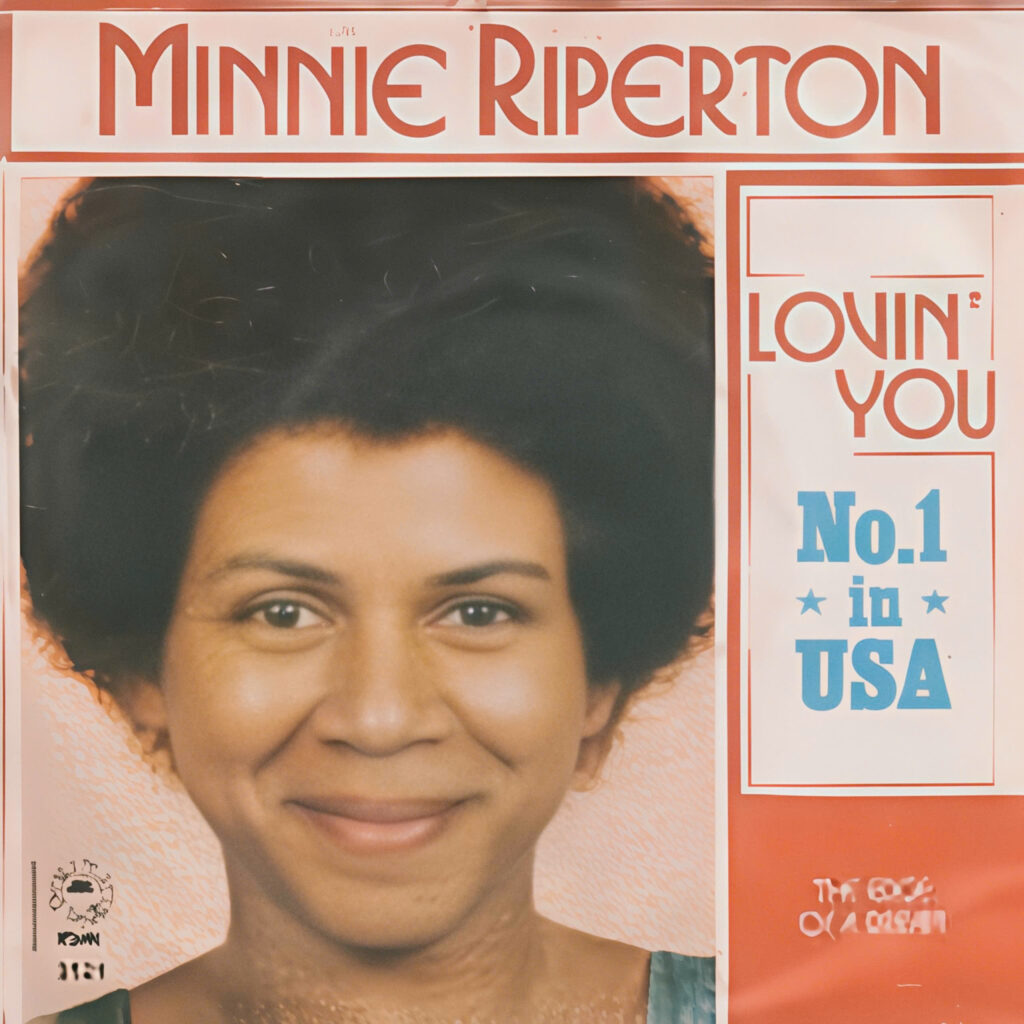
“Lovin’ You”: An Ethereal Celebration of Unconditional Love and Pure Devotion.
There are voices that simply transcend the ordinary, touching something deep within the soul with their clarity, range, and profound emotion. For many, the name Minnie Riperton is synonymous with such a voice, a vocal instrument of unparalleled beauty and agility. Her iconic 1975 single, “Lovin’ You,” is not merely a song; it is a weightless journey, a delicate declaration of love that floats on an ethereal melody and a singular, unforgettable vocal performance. Released at a time when funk, soul, and disco were beginning to dominate the airwaves, this tender ballad offered a refreshing, almost otherworldly, counterpoint, becoming an instant classic that continues to captivate generations. For older readers, it conjures memories of intimate moments, quiet affection, and the sheer wonder of discovering a voice so utterly unique it felt like a gift.
Upon its release in January 1975, “Lovin’ You” quickly became a global phenomenon, catapulting Minnie Riperton to international stardom. It soared to the coveted number 1 position on the Billboard Hot 100 chart in the United States in April 1975, holding the top spot for one week. Its success wasn’t confined to the US; it was a massive hit worldwide, reaching number 2 in the UK, number 3 in Canada, and performing exceptionally well across Europe, Australia, and New Zealand. The song was featured on her critically acclaimed 1974 album, Perfect Angel, which itself peaked at number 4 on the Billboard Top R&B/Hip-Hop Albums chart and number 5 on the Billboard 200. The ubiquity of “Lovin’ You” on radio during that spring and summer of 1975 was undeniable, its gentle melody and Riperton’s astonishing vocal acrobatics becoming instantly recognizable and deeply cherished.
The story behind “Lovin’ You” is as charming and intimate as the song itself, rooted in a very personal and tender inspiration. The song was co-written by Minnie Riperton and her husband, Richard Rudolph, who also co-produced the track alongside the legendary Stevie Wonder (credited as “El Toro Negro” due to contractual obligations at the time). Riperton and Rudolph initially conceived the song as a lullaby for their daughter, Maya Rudolph (who would later become a renowned actress and comedian). They wanted to create a gentle, soothing melody that would comfort and express their deep love for her. The famous high-pitched vocalizations at the end of the song, often referred to as “whistle tones” or “flute register,” were initially improvised by Riperton to keep their daughter’s attention during the recording sessions, knowing that Maya (then just a toddler) would smile and giggle in response. This spontaneous, heartfelt addition became the song’s most distinctive and celebrated feature, showcasing Riperton’s extraordinary five-and-a-half-octave vocal range.
The meaning of “Lovin’ You” is a pure, unadulterated expression of unconditional love and adoration. The lyrics are simple, direct, and incredibly heartfelt, focusing solely on the depth of affection for another person: “Lovin’ you is easy ’cause you’re beautiful / And every single day of my life, I want to be lovin’ you.” There’s no complex narrative or hidden agenda; it’s a straightforward declaration of devotion, filled with warmth and tenderness. The song’s gentle, almost minimalist instrumentation – primarily an acoustic guitar played by Richard Rudolph and a subtle bass line – allows Riperton’s unparalleled vocal performance to take center stage, creating an atmosphere of ethereal beauty and profound intimacy.
For older readers, “Lovin’ You” evokes a powerful sense of nostalgia for moments of pure connection, whether with a romantic partner, a child, or a cherished family member. It recalls a time when emotions were perhaps expressed with more gentle sincerity, and when a voice like Riperton’s felt like a true marvel. The song’s enduring legacy lies not just in its musical brilliance or its chart success, but in its ability to consistently touch the heart, reminding us of the simplest yet most profound human emotion. It’s a timeless lullaby of the soul, a gentle whisper that continues to celebrate the boundless, beautiful power of love.