
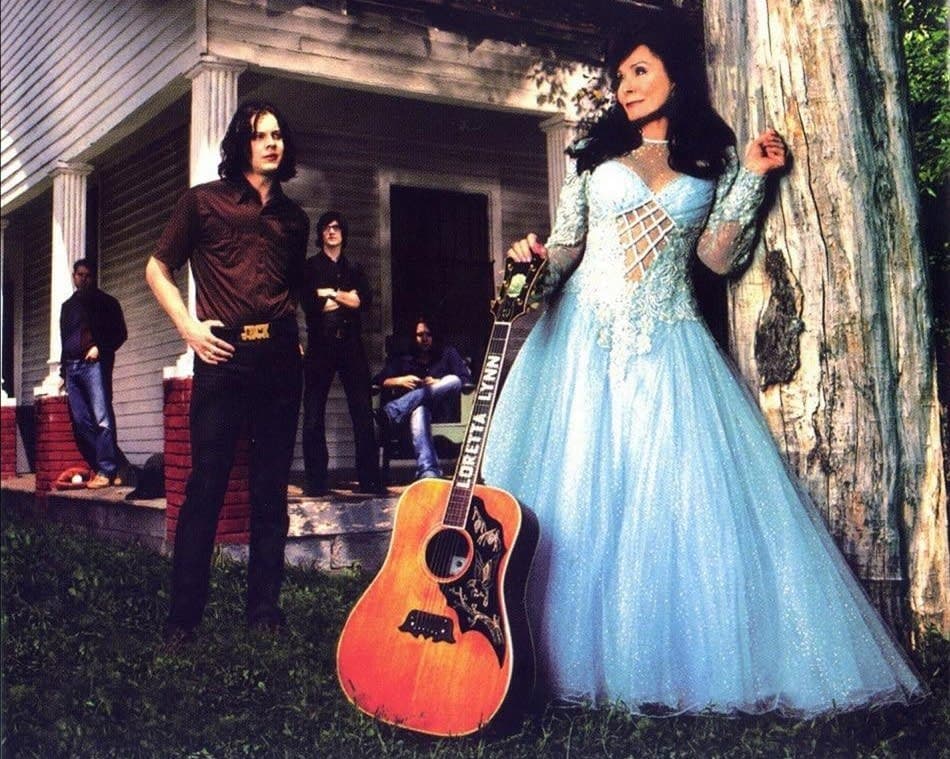
Van Lear Rose is a tribute to Loretta Lynn’s working-class roots and the enduring spirit of her mother, a “diamond in the coal.”
In the hallowed halls of country music, certain voices resonate not just with melody but with the echoes of a life lived. Few have done so more poignantly than Loretta Lynn, and her 2004 album, Van Lear Rose, is a testament to this truth. It was a late-career masterpiece that defied expectations, proving that a diamond, even when covered in the coal dust of time, can still shine with a breathtaking brilliance. Produced by the unlikely champion of raw, authentic sound, Jack White of the White Stripes, the album was a stunning collaboration that introduced the “Coal Miner’s Daughter” to a new generation of fans.
Upon its release on April 27, 2004, the album was met with universal critical acclaim, a chorus of praise that placed it among the year’s best. More than just a critical darling, Van Lear Rose was a commercial triumph, especially for an artist in her seventies. It debuted at an impressive No. 2 on the US Billboard Top Country Albums chart and No. 24 on the Billboard 200, marking it as the most successful crossover album of Lynn’s long and storied career. This wasn’t just a record; it was a revival, a potent reminder that genius has no expiration date. The album’s success was solidified by two Grammy Awards, including Best Country Album, and a win for Best Country Collaboration with Vocals for the duet “Portland Oregon” with Jack White.
The story behind Van Lear Rose is as rich and layered as the life it celebrates. The album’s title track, and the album itself, is a deeply personal tribute to Lynn’s mother, Clara Marie “Clary” Webb. Loretta was born in Butcher Hollow, Kentucky, and the album’s title references the nearby Van Lear coal camp where her father, Melvin “Ted” Webb, was a miner. The song paints a portrait of her mother, a beautiful and strong woman who was a “Van Lear Rose,” a “diamond in the coal.” This is not just a song about a family; it is a meditation on the strength of a woman who faced hardship with grace and resilience. It’s a love letter to the people and places that shaped her, a nostalgic journey back to a time and place that, for many, exists only in faded photographs and cherished memories. Lynn’s spoken-word track, “Little Red Shoes,” is a prime example, where she recounts a harrowing childhood story of being turned away from a hospital because her parents couldn’t afford to pay, only to have her mother steal a pair of red shoes to make her feel better. It’s a moment of breathtaking vulnerability that encapsulates the emotional core of the entire album.
The meaning of Van Lear Rose goes far beyond its chart positions and critical accolades. It’s a raw, unvarnished look at a life lived to the fullest, filled with love, loss, and the unyielding spirit of a working-class woman. The album is a collection of songs penned entirely by Loretta Lynn—a first in her career—and it’s a testament to her unparalleled skill as a storyteller. From the feisty, hard-bitten “Family Tree” to the heart-wrenching widow’s lament “Miss Being Mrs.” (a song about the loss of her husband, Oliver “Doo” Lynn), the album is a mosaic of emotions. It’s a record that confronts pain, celebrates love, and reflects on the passing of time with a dignity that is uniquely hers. It’s a sonic conversation between a country legend and a rock and roll disciple, where both found common ground in the pursuit of truth and authenticity. The result is an album that feels both timeless and startlingly new, a powerful statement that reminds us that some stories are so universal, they will always find a way to be heard.
 Oldies Songs