
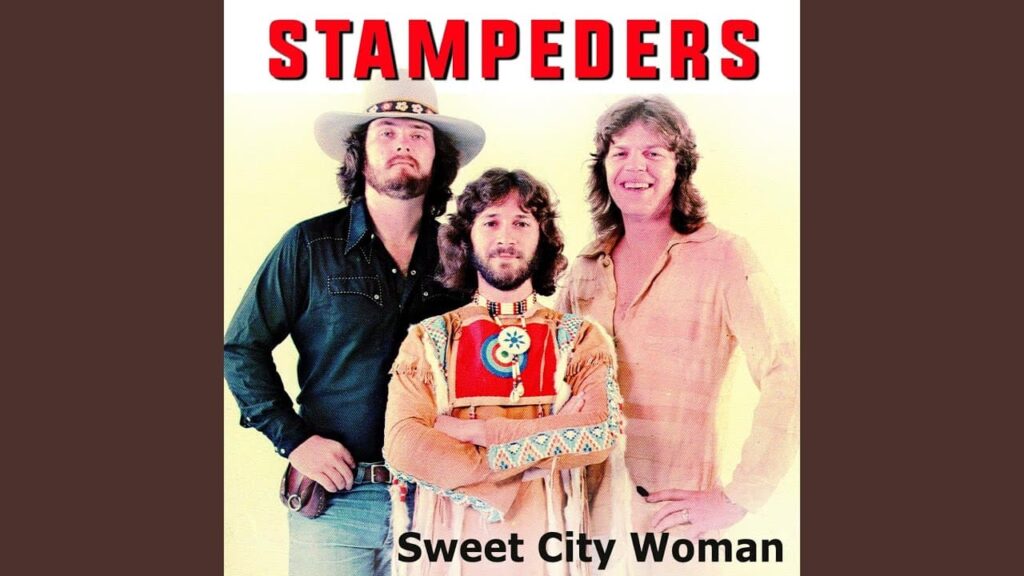
An Unforgettable Ode to the Lure of the Open Road and the Enduring Pull of Home.
In the vast and ever-shifting landscape of rock music, some songs arrive not with a bang, but with a banjo. The sound of that distinctive, rolling riff is all it takes to transport a generation back to a simpler time, a moment when the airwaves were filled with a vibrant blend of country, folk, and rock. “Sweet City Woman” by the Canadian trio The Stampeders is one of those timeless tracks, a song that perfectly captured a unique moment in musical history and became an anthem for a generation on the move. Released in 1971, this infectious and effortlessly cool single became the band’s biggest hit, a global phenomenon that proved you could be both a little bit country and a whole lot of rock and roll.
Upon its release, the song soared to the top of the charts, cementing its place in the annals of classic rock. In their native Canada, it peaked at an impressive number 1 on the RPM 100 Singles chart. Its success wasn’t limited to their homeland; it was a bona fide smash hit in the United States, reaching a remarkable number 8 on the Billboard Hot 100 and earning them a Gold certification. Its international appeal was equally strong, hitting number 6 in Australia, making it a truly global success story for a band that had been tirelessly touring for years. The song’s success was a direct result of its undeniable charm, a feel-good anthem from a time when feel-good anthems were a precious commodity.
The story behind the creation of “Sweet City Woman” is as charming as the song itself. Written by the band’s guitarist and vocalist, Rich Dodson, the inspiration came from the classic push-and-pull between the life of a touring musician and the desire for a stable home. The “sweet city woman” of the title is a classic romantic ideal, a person waiting patiently back home while the singer travels the world. The song’s most iconic element, the banjo riff, was a last-minute addition. Dodson, who was primarily a guitarist, picked up a banjo and, with a bit of experimentation, stumbled upon the lick that would define the track. The spontaneity of this moment shines through in the final recording, giving the song a fresh, live-in-the-studio feel. That unexpected banjo, combined with the a cappella harmonies in the bridge, created a sound that was utterly unique and instantly recognizable.
For those of us who came of age with this song, it evokes a flood of memories. It’s the soundtrack to long, aimless drives on dusty roads, to late-night radio sessions, and to a time when life felt full of both adventure and promise. The lyrics speak to a universal truth: the dual pull of wanderlust and the comfort of love. The chorus—”I’m on my way back to you, babe / Gonna find a place where we can make a new life”—is a powerful statement of purpose, a promise whispered from a payphone somewhere on the highway. This wasn’t just a song about a woman; it was a song about finding your way back to what truly matters, a message that resonated deeply in a transient era. “Sweet City Woman” isn’t just a nostalgic throwback; it’s a testament to the fact that the most enduring music is often the kind that is the most honest, a perfect blend of joyful energy and heartfelt emotion.