
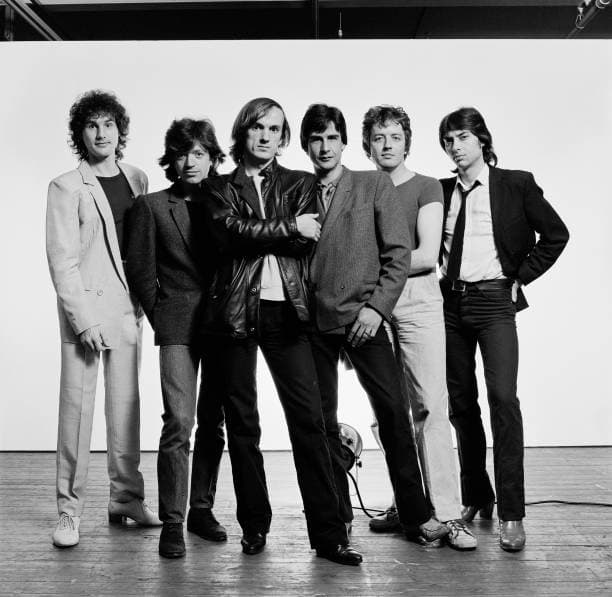
An Unforgettable Ode to the Quiet Desperation of a Fading Romance, a Timeless Lament of Love Lost and Regrets Found.
In the late 1970s, as disco’s hypnotic thump began to wane and punk’s furious energy splintered into a thousand new directions, a song emerged that seemed to belong to another time entirely. It was a sound steeped in melancholy, propelled by a deceptively simple guitar riff that was both hook and heartbeat. “Driver’s Seat”, the debut single by the British band Sniff ‘n’ The Tears, was a quiet storm that, upon its release, took a slow, deliberate journey to become a global hit, etching its place in the emotional landscape of a generation. This wasn’t a song of rebellion or celebration; it was a profound and deeply relatable meditation on the quiet ache of a relationship reaching its inevitable end.
Released in 1978, “Driver’s Seat” was the lead single from the band’s 1979 debut album, Fickle Heart. Its success was a slow burn, not an explosion. While it didn’t immediately set the charts ablaze in the UK, it found a powerful resonance elsewhere. The song reached the top 20 in Australia, Canada, and New Zealand, and it even climbed into the top 10 in the Netherlands. Its most significant, and perhaps most surprising, success came much later. Belatedly issued in the United States during the summer of 1979, the track steadily climbed its way to a peak position of number 15 on the prestigious Billboard Hot 100 chart. This late-blooming triumph was a testament to the song’s enduring power and a clear indication that its emotional message transcended borders and musical trends.
The story of “Driver’s Seat” is a deeply personal one, rooted in the creative vision of the band’s frontman, Paul Roberts. A talented painter and songwriter, Roberts had spent years pursuing his dual passions. After the dissolution of his previous band, he was on the verge of giving up on the music industry altogether. The core inspiration for the song, as Roberts has explained, came from a moment of introspection while sitting in his car. The title itself is a metaphor for control—or, more accurately, the loss of it. The song’s meaning is a poignant exploration of a love that has drifted apart, a realization that one’s partner is no longer fully engaged, no longer in the metaphorical “driver’s seat” of the relationship. It’s about being in a car with someone you once knew so well, only to find they have become a stranger, their mind and heart already somewhere else. The lyrics, “She gave me a smile as she walked on by / ‘Cause she knows that I got the driver’s seat,” are not a statement of triumph but a moment of bittersweet and painful irony, a recognition that while he may be in control of the vehicle, he has lost control of the one thing that truly mattered.
For older listeners, the opening keyboard line and that iconic guitar riff are an instant, visceral trigger, a portal back to a time of mixtapes and long car rides. The song’s moody, atmospheric feel captures the perfect late-night feeling of reflection and longing. It speaks directly to the universal experience of a love that has soured, to the quiet, dignified sorrow that follows the end of a long relationship. “Driver’s Seat” is a song that doesn’t scream; it sighs, it laments, it mourns. It’s the sound of a heart breaking slowly, a testament to the quiet desperation that can fill the space between two people who were once everything to each other. In an era often defined by its bombastic sounds, this track offered a moment of sincere vulnerability, proving that sometimes the most powerful emotions are the ones that are whispered, not shouted. It remains a timeless classic, a beautiful and melancholic reminder of the loves we’ve lost and the wisdom we’ve gained.