
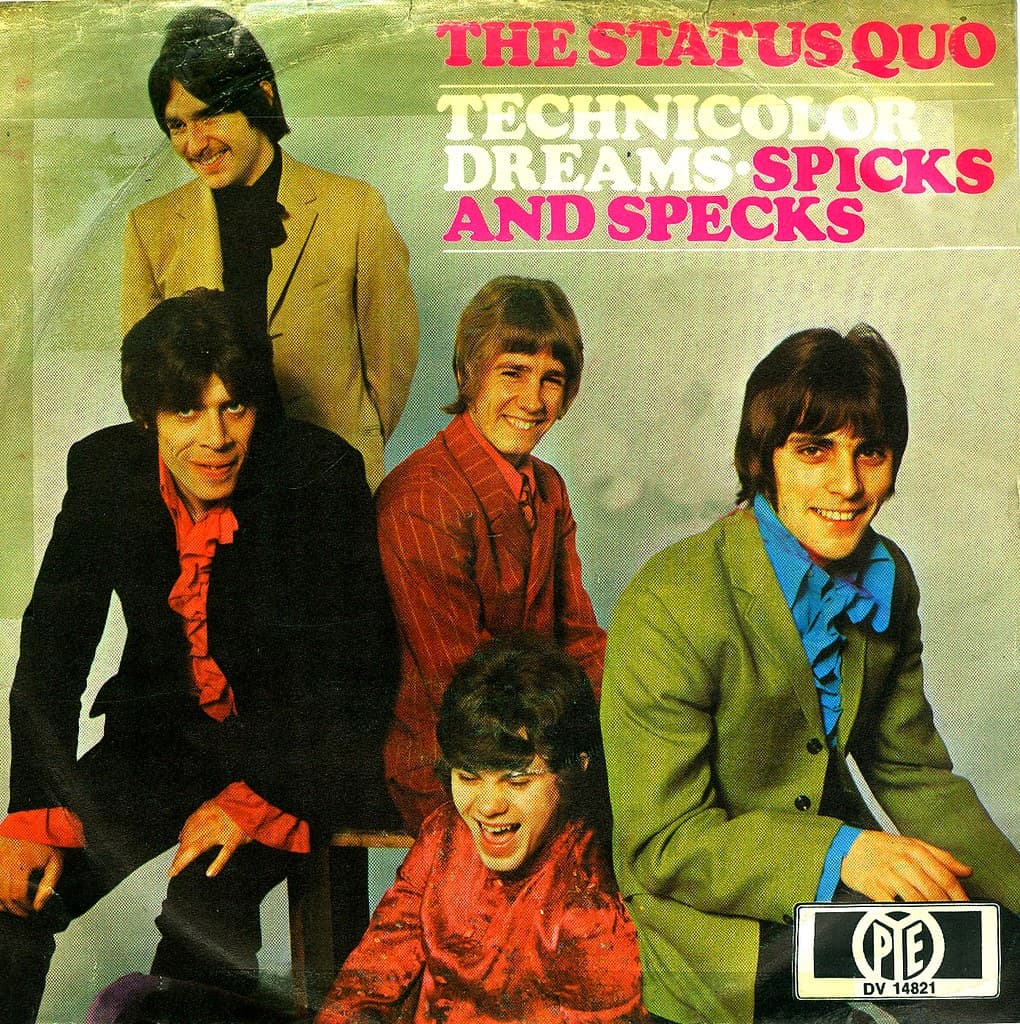
Before the Boogie Empire: Status Quo and the Psychedelic Echo of “Technicolour Dreams”
https://youtube.com/watch?v=joVV9W_fFl4%3Frel%3D0%26playsinline%3D1%26origin%3Dhttps%253A%252F%252Fchatgpt.com%26enablejsapi%3D1%26widgetid%3D1%26forigin%3Dhttps%253A%252F%252Fchatgpt.com%252Fc%252F6999057e-ade4-8321-9a1f-dfb74d834ba3%26aoriginsup%3D1%26vf%3D1
Long before they became one of Britain’s most recognizable boogie rock institutions, Status Quo were experimenting with the colourful sounds of late 1960s psychedelia. One of the most intriguing glimpses into that early chapter of the band’s history is the delicate and atmospheric song “Technicolour Dreams.” Released during the group’s formative years, the track captures a moment when the future rock powerhouse was still searching for its musical identity.
The band’s roots stretch back to 1962, when school friends Francis Rossi and Alan Lancaster formed a group called The Spectres. Over the next several years the lineup evolved, and the arrival of guitarist Rick Parfitt in 1967 helped shape the band’s early sound and chemistry. By the end of the decade the group had adopted the name Status Quo, marking the beginning of a professional recording career that would eventually span decades.
“Technicolour Dreams” emerged from the same creative environment that produced the band’s 1968 debut album Picturesque Matchstickable Messages from the Status Quo. That record reflected the strong influence of psychedelic rock and pop that dominated the British music scene at the time. Unlike the driving guitar rhythms that would later define the band’s signature boogie style, the song presents a softer and more reflective atmosphere built around melodic vocals, gentle instrumentation, and dreamy arrangements.
Musically, “Technicolour Dreams” stands apart within the band’s catalogue. The composition leans into a fragile, almost wistful mood that mirrors the experimental spirit of the late 1960s. Its layered arrangement and introspective tone illustrate how many British rock groups of that era explored psychedelic textures before settling into the heavier rock sounds that defined the 1970s.
Although the single did not achieve major chart success in the United Kingdom, it remains an important historical piece for fans and music historians. The track represents the final phase of Status Quo’s psychedelic period before the group gradually moved toward the more straightforward rock direction that would later bring them international fame.
In the years that followed, Status Quo would become one of the most successful British rock bands, scoring more than sixty hits on the UK charts and appearing frequently on the influential television program Top of the Pops. Their enduring popularity was highlighted in 1985 when they opened the legendary charity event Live Aid at Wembley Stadium with the anthem “Rockin’ All Over the World.” Later recognition included receiving the Brit Award for Outstanding Contribution to Music in 1991.
Today, revisiting “Technicolour Dreams” offers listeners a fascinating perspective on a band still discovering its voice. It is a quiet reminder that before the stadium tours and chart domination, Status Quo were part of the vibrant psychedelic wave that shaped the sound of late 1960s British rock.