
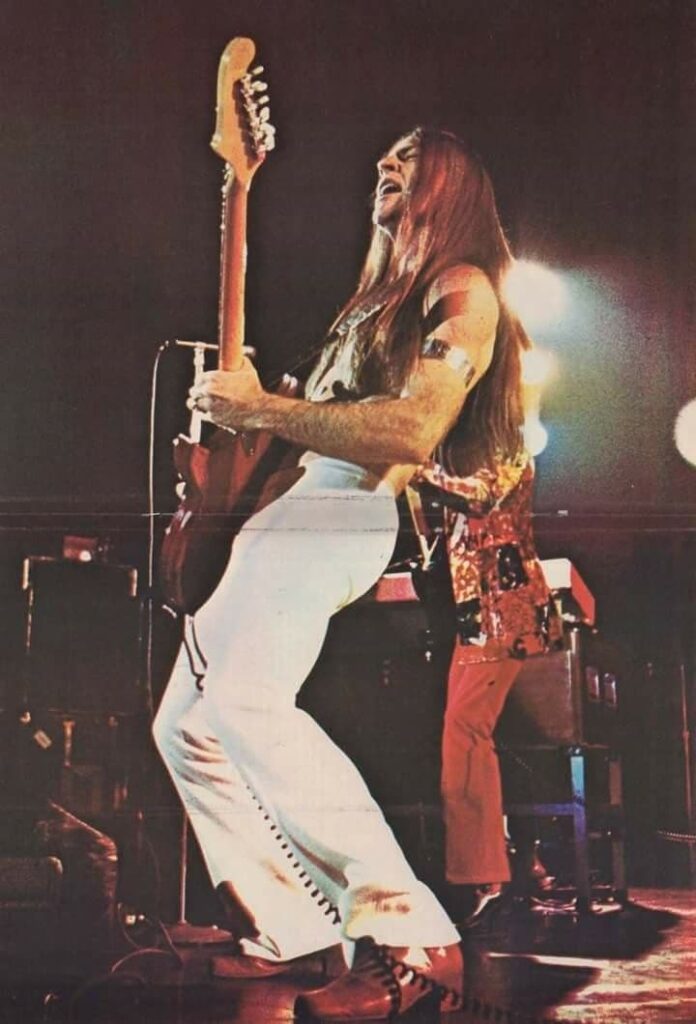
A Heartbreaking and Vulnerable Confession of Solitude, a Profound Look at the Loneliness Within a Rock and Roll Superstar.
In 1971, Grand Funk Railroad was at the absolute peak of their power. They were an unstoppable force, a band of working-class heroes who sold out stadiums and commanded a following that was more like a religion than a fanbase. Their album E Pluribus Funk was a commercial juggernaut, a statement of their raw, unapologetic hard rock that reached a peak of number 5 on the Billboard 200. But amidst the thunderous anthems and explosive riffs, there was a song that was unlike anything else in their catalog, a profound and deeply personal ballad that revealed a side of the band their audience had never seen. That song was “Loneliness.” It was never released as a single and never charted, a fact that only deepens its allure as a cherished, intimate masterpiece. Its power lies not in fleeting popularity, but in its dramatic, emotional honesty—a stark confession of isolation in the face of immense fame.
The story of “Loneliness” is a tragic, yet universal, one. The drama is a deeply internal paradox: the more famous Grand Funk became, the more their world expanded, the more isolated their members felt. Mark Farner, the band’s songwriter and frontman, was the voice of a generation, a charismatic figure who played to tens of thousands of screaming fans night after night. Yet, when the stadium lights went down and the crowds dispersed, he was left in a quiet hotel room, grappling with the profound sense of emptiness that often accompanies success. The song is a theatrical monologue, an unvarnished admission of this internal conflict. It’s the sound of a man standing on a peak, surrounded by people, yet feeling utterly and completely alone. It is a moment of raw, human vulnerability that makes the listener feel a deeper connection to the artist than any rock anthem ever could.
The lyrical drama is a painful and honest chronicle of this emotional state. The song is a heartbreaking cry from the heart, with lyrics that paint a picture of a soul adrift. Phrases like “The only friend I have is my own shadow on the wall” or “I was so tired of watching my heart bleed” are delivered with a raw, unpolished emotion that makes the song feel incredibly personal. The music itself is a character in this drama, perfectly amplifying the sense of despair. It’s a slow, mournful blues ballad, a stark contrast to their usual sound. The somber piano and a quiet, weeping guitar provide a delicate backdrop that allows Farner’s voice to take center stage, full of a pain and honesty that is palpable. The song builds with a powerful, emotional crescendo, as if the narrator is struggling to break free from his solitude. The final, soaring guitar solo, full of a raw, beautiful agony, is a cinematic expression of the soul’s fight against despair.
For those of us who came of age with this music, “Loneliness” is more than a song; it’s a profound reminder of the humanity behind the rock and roll machine. It’s a nostalgic echo of a time when album tracks could be as powerful and meaningful as the biggest hits. It is a testament to the fact that even the most powerful and successful among us can feel a deep sense of isolation. The song endures because the emotion it portrays is timeless and universal. It remains a beautifully raw and profoundly emotional piece of rock history, a quiet masterpiece that proves that true strength often lies not in power and volume, but in the courage to reveal your deepest vulnerability.