
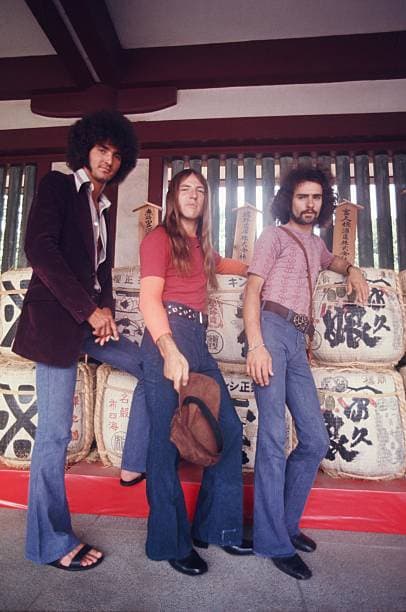
A Gritty and Urgent Plea for Environmental Action, a Timely and Powerful Warning from the Heart of Hard Rock.
In 1971, the music world was a battlefield of ideologies, and Grand Funk Railroad was a hard-rocking force of nature, a band that sold out stadiums and commanded a following that was more like a religion than a fanbase. Their fifth album, E Pluribus Funk, was a testament to their raw, unapologetic power, a commercial juggernaut that stormed its way to a peak of number 5 on the Billboard 200. Amidst its thunderous anthems and raw riffs, there was a song that stood apart, a powerful and urgent message that revealed a deep sense of social consciousness beneath the band’s hard-rocking exterior. That song was “Save the Land.” It was never released as a single, a fact that only adds to its mystique as a cherished, intimate masterpiece. Its power lies not in fleeting popularity, but in its dramatic, emotional honesty—a stark and timely warning about the impending environmental crisis.
The story of “Save the Land” is one of profound and unexpected drama. By the early 1970s, the nascent environmental movement was just beginning to take hold, and the rock world, for the most part, was more concerned with love, peace, and rebellion. Grand Funk Railroad was an unlikely voice for such a cause. They were the champions of the working class, a band whose sound was as raw and industrial as the very landscape they were now pleading to save. The drama of the song lies in this powerful paradox. Mark Farner, the band’s songwriter and frontman, penned the lyrics not from a place of abstract idealism, but from a genuine, heartfelt concern for the world he saw around him. The song is a theatrical monologue, an unvarnished and urgent cry from a man who was growing tired of seeing the land he loved being choked by pollution.
The lyrical drama of “Save the Land” is a painful and honest chronicle of this emotional state. It’s a plea for humanity to wake up and take action before it’s too late. Farner’s voice, full of a raw, almost desperate passion, delivers the message with a gut-wrenching urgency. Phrases like “Poisoned air and rivers so dirty” and “When will you listen, when will you learn?” are not just lyrics; they are a direct and confrontational call to action. The music itself is a character in this drama, perfectly amplifying the sense of impending doom. It begins with a somber, almost militaristic beat, as if a soldier is marching into a war against the forces of destruction. As the song progresses, the full band enters with a powerful, emotional crescendo, the full force of their hard-rocking sound now channeled into a message of universal importance. The emotional climax, with the guitar solo weeping with a raw, desperate agony, feels like the last cry of a dying world.
For those of us who came of age with this music, “Save the Land” is more than a song; it’s a profound reminder of the humanity behind the rock and roll machine. It’s a nostalgic echo of a time when a band’s message could be as powerful as their sound. It is a testament to the fact that even the most powerful and successful among us can be moved by a cause that is bigger than themselves. The song endures because the emotion it portrays is timeless and its message, unfortunately, is still tragically relevant. It remains a beautifully raw and profoundly emotional piece of hard rock history, a quiet masterpiece that proves that true strength often lies not in power and volume, but in the courage to use your voice for a cause you believe in.