
A Dark and Haunting Tale of Moral Decay, a Cinematic Warning Against the Sinister Forces Lurking Within.
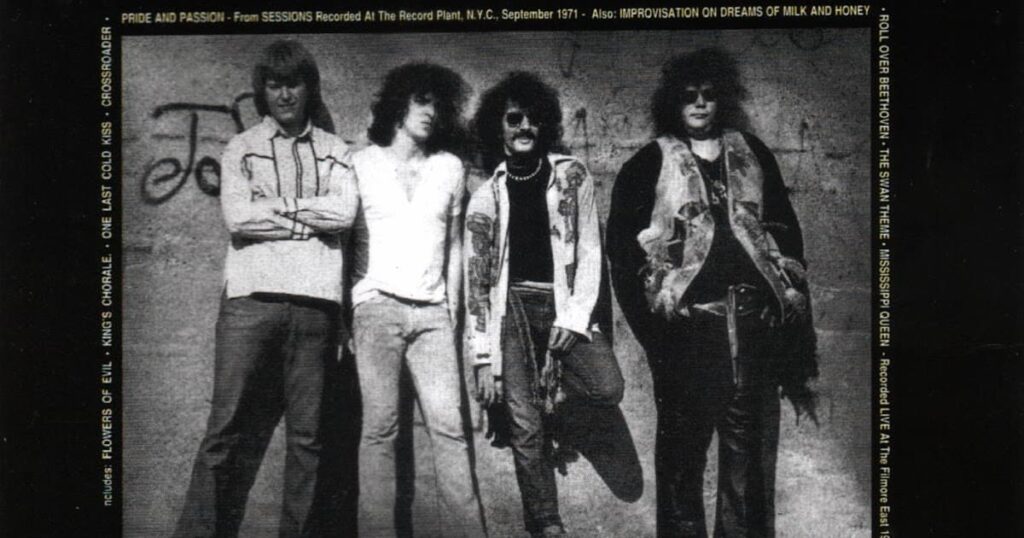
In 1971, Mountain had already established themselves as titans of the heavy rock world, a power trio whose sheer volume and blues-infused riffs were as towering as their name. With Leslie West’s signature guitar tone, Felix Pappalardi’s melodic bass and masterful production, and Corky Laing’s thunderous drums, they were a force of nature. Their album, fittingly titled Flowers of Evil, was a unique beast, a hybrid record containing both blistering live tracks and a handful of haunting studio recordings. The album was a commercial success, reaching number 31 on the Billboard 200, but its true power lay in its artistic depth. At the heart of this record was a title track that was never a single and never graced the charts. Instead, “Flowers of Evil” became a cult classic, a deep cut whose power lay in its chilling, theatrical, and deeply philosophical drama.
The story behind “Flowers of Evil” is a tragic, literary one. The title itself is a direct reference to the classic collection of French poems by Charles Baudelaire, signaling a dark, intellectual sensibility far beyond the typical hard rock fare of the era. The song is a powerful, theatrical narrative that explores the insidious nature of corruption and moral decay. The “flowers of evil” are not literal; they are a metaphor for the sinister forces that can grow and fester within a person’s soul or society at large. The drama is the inevitable descent into madness and moral ruin, a chilling cautionary tale set to a menacing rock and roll beat. It is a grim fairy tale for adults, a cinematic journey into a world where a beautiful facade hides a monstrous core. The lyrics, written by Felix Pappalardi and his wife, Gail Collins, are a haunting testament to the darkness that can infect even the most unsuspecting of souls.
The true genius of “Flowers of Evil” lies in how the music itself tells this grim story. The song begins with a clean, almost spooky guitar line that immediately sets a foreboding, atmospheric tone, like the quiet before a storm. Then, the full band enters, and the atmosphere becomes thick with dread. Leslie West’s iconic, heavy blues riff is not just a musical element; it is a character in the drama, a heavy, plodding force that feels like an inescapable march towards a tragic end. His mournful, soulful vocal delivery, full of a world-weary sorrow, brings the protagonist’s quiet desperation to life. The guitar solo that follows is not a triumphant moment of glory, but a cry of despair, a raw, bluesy scream that expresses all the pain and frustration of a soul trapped by its own darkness.
For those of us who came of age with this music, “Flowers of Evil” is more than just a heavy rock song; it’s a profound, emotional piece of art. It’s a nostalgic reminder of a time when even the most thunderous rock bands were willing to explore intellectual and deeply emotional themes. It’s a timeless and haunting piece of music that speaks to the universal struggle against inner darkness and the sad, but inevitable, consequence of losing that battle. The song continues to resonate with its raw, unflinching honesty and its beautifully grim cinematic drama.