
A Raw and Furious Anthem of Class Division, a Powerful Accusation Against Those Who Profit from the Blood of the Working Man.
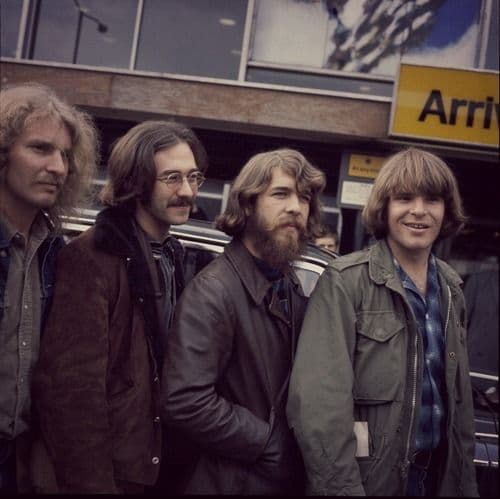
In 1969, America was a nation at war with itself. The ongoing conflict in Vietnam had become a source of profound social and political division, fueling a raging class war that was felt in every corner of the country. In the midst of this turmoil, Creedence Clearwater Revival, a band of swamp-rock prophets, spoke with a directness and fury that few could match. Their album, Willy and the Poor Boys, was a chronicle of the era, and within its tracklist lay a song that would become the definitive anthem of the anti-war movement. That song was “Fortunate Son.” Released as a double A-side single with “Down on the Corner,” it was a commercial success, reaching a peak of number 14 on the Billboard Hot 100. But its power was never about its chart position; it was about its raw, unfiltered message, a dramatic accusation against a system that sent some to war and gave others a free pass.
The story behind “Fortunate Son” is a visceral, personal drama born from a moment of profound anger and injustice. The song was written by frontman John Fogerty, who was inspired by a single image that crystallized the nation’s hypocrisy: he saw a picture of President Nixon’s son-in-law, David Eisenhower, and felt a surge of rage at the idea that the wealthy and politically connected were immune to the bloodshed. The song is a powerful, theatrical monologue from the perspective of a working-class man who knows he is being sent to fight a war he didn’t start, while the “fortunate sons” of senators and millionaires remain safely at home. It’s an accusation against a system that asks for sacrifices from the poor while the rich reap the rewards. The song’s drama is the stark, heartbreaking contrast between the lives of those who pull the strings and the lives of those who pay the ultimate price.
The lyrics of “Fortunate Son” are a masterclass in direct, emotional storytelling. John Fogerty’s raw, furious vocal delivery is the perfect vehicle for the song’s rage, a guttural, defiant cry that feels like a punch to the gut. The famous opening lines, “Some folks are born, made to wave the flag / Ooh, they’re red, white and blue,” are a chilling piece of dramatic irony, as the lyrics then peel back the layers to expose the truth of class division. The song’s furious, relentless energy is a character in its own right, a driving drumbeat and a blistering guitar riff that feels like a march into battle. The iconic refrain, “It ain’t me, it ain’t me, I ain’t no fortunate son,” is not just a lyric; it’s a desperate plea, a statement of defiance, and a rallying cry for an entire generation.
For those who came of age with this music, “Fortunate Son” is more than a protest song; it’s a time capsule, a powerful reminder of an era when rock and roll was a direct reflection of a nation’s soul. It’s a song that gave a voice to the voiceless, a timeless anthem of social justice that remains painfully relevant. Its enduring power lies in its raw honesty and its unflinching look at the uncomfortable truth of class and privilege. It stands as a profound and emotional piece of rock history, a song that proves that sometimes, the most powerful and enduring art is born from a single moment of righteous anger.