
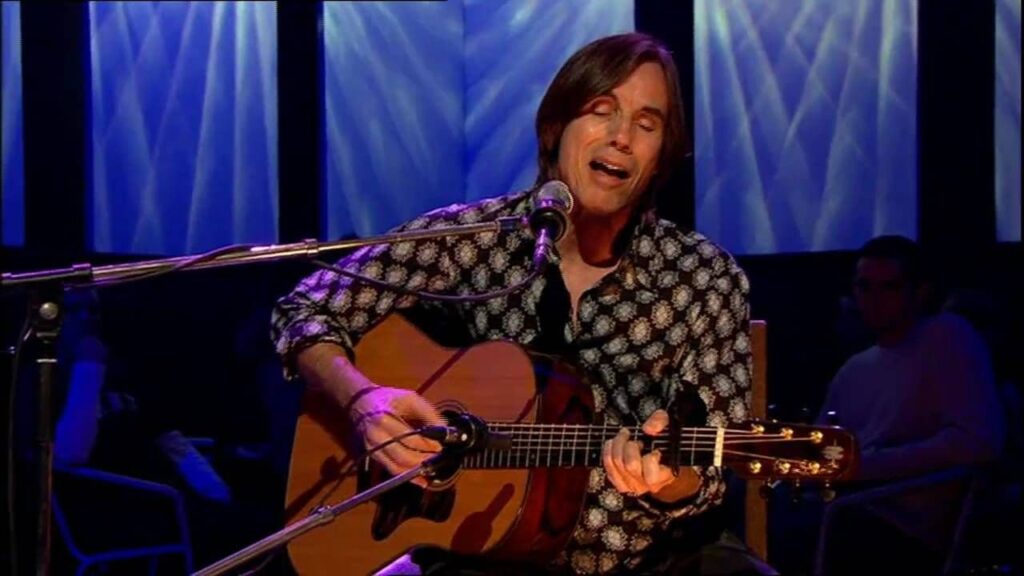
A Timeless and Heartbreaking Meditation on the Passage of Youth, a Poignant Farewell to a Past Love and a Previous Self.
In the early 1970s, as the optimism of the previous decade gave way to a more introspective and somber mood, a new kind of troubadour emerged. The singer-songwriter became the new poet, unafraid to bare their soul with an acoustic guitar and a painful, beautiful honesty. At the forefront of this movement was Jackson Browne, a young man with the weary wisdom of an old soul. His 1973 album, For Everyman, was a masterpiece of melancholic introspection, and at its core lay a song that would become a cornerstone of his legacy, a powerful and timeless lament for the passage of time. That song was “These Days.” While the album itself was a commercial success, reaching a respectable number 43 on the Billboard 200, “These Days” was never released as a single. Its power lies not in fleeting chart success, but in its quiet, heartbreaking drama and its profound, enduring resonance.
The story of “These Days” is a dramatic one of artistic maturation. The song was written by a teenage Jackson Browne in the mid-1960s, an almost unbelievable fact given its profound, world-weary lyrical content. The song’s first life was a different emotional beast, given to German singer Nico for her 1967 debut album, Chelsea Girl. With its delicate harpsichord and orchestral strings, her version felt like a fragile, ethereal lament. But Jackson Browne’s decision to reclaim his own song six years later for For Everyman was a powerful dramatic act. He returned to the piece with the lived experience of a young man who had truly walked a few more miles down the road. His version is a raw, unvarnished confession, stripped of the baroque instrumentation and delivered with a directness that makes the emotional pain palpable. He was no longer a teenager writing about a hypothetical future; he was a man living the very “these days” he had once imagined.
The lyrical drama of “These Days” is a powerful, internal monologue, a quiet goodbye to a past self and a past love. It is a song about the painful, bittersweet process of moving on. The lyrics are a series of poignant, almost cinematic vignettes that capture the sense of a life in transition. “I’ve been out walking / I don’t do that much talking these days” and “I’ll keep on moving / And I’ll be seeing you” are not just words; they are the quiet, resigned farewells of a person who has to let go in order to survive. The music perfectly complements this sorrowful narrative. A simple, melodic acoustic guitar and a gentle, steady rhythm section create a space of quiet introspection. The addition of David Lindley’s mournful pedal steel guitar is a stroke of pure genius, adding a layer of country-tinged melancholy that weeps alongside the vocal, a perfect embodiment of the song’s profound sadness.
For those of us who have lived long enough to look back on our own youth, “These Days” is more than a song; it’s a mirror. It’s a timeless and deeply emotional anthem that speaks to the universal experience of growing up, of losing innocence, and of the ghosts of the past that we carry with us. It’s a nostalgic reminder that the most powerful songs are often the ones that are never hits, but that speak a universal truth that gains more meaning with every passing year. It remains a beautiful, heartbreaking, and profound piece of art, a quiet masterpiece of cinematic drama that feels as relevant and as powerful now as it did over fifty years ago.