
A Blues Soaked Journey of Restlessness and Escape Carried on the Rails of American Rock
When Leslie West performed “Southbound Train” with Mountain at Woodstock in 1969, the song itself was still an emerging piece, not yet attached to a chart position or a formal studio release. Its definitive studio version would arrive the following year on Climbing!, Mountain’s 1970 debut album, which climbed to number 17 on the Billboard 200 and firmly established West as one of the most formidable guitar voices of the era. Heard in the context of Woodstock, however, “Southbound Train” exists in a rawer, more elemental state, shaped by volume, urgency, and the restless spirit of the late 1960s.
This performance captures Leslie West at a crucial intersection. Having already left his mark with the band The Vagrants and the explosive Mississipi Queen, West stood on the Woodstock stage not as a virtuoso chasing precision, but as a blues storyteller channeling emotion through sheer force. “Southbound Train” unfolds like a slow burn, its structure rooted in classic blues phrasing but amplified through the muscular weight that would become Mountain’s signature. The riff is heavy yet patient, allowing space for West’s guitar to breathe, bend, and moan with unmistakable authority.
Lyrically, the song taps into one of American music’s oldest metaphors. The train heading south becomes a symbol of escape, longing, and movement away from emotional confinement. There is no romantic gloss here, only a weary determination to leave something behind. West’s delivery carries the ache of a man who has stayed too long and knows it. His voice, thick and gravelly, feels lived-in, as though every line has already been proven true through experience rather than imagination.
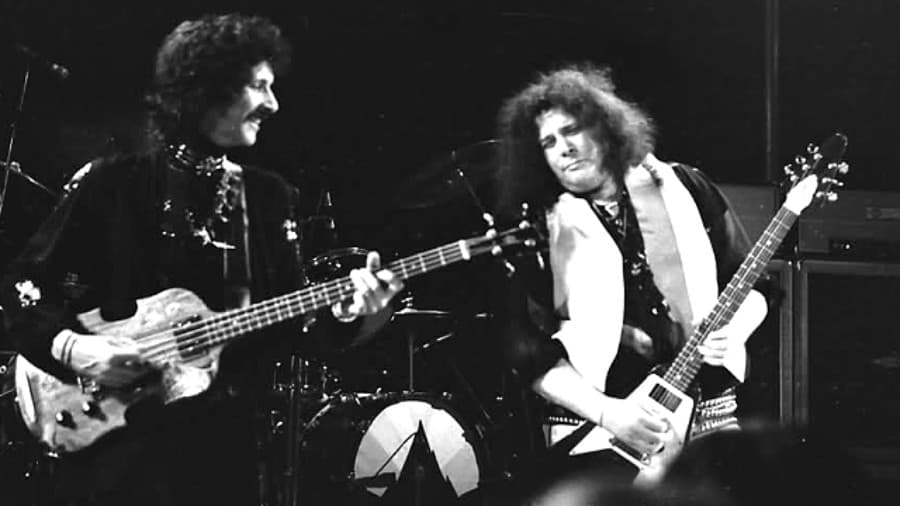
What makes the Woodstock rendition especially powerful is its lack of polish. This is not the controlled environment of a studio, but a vast open field filled with mud, bodies, and anticipation. West responds to that atmosphere instinctively. His guitar tone is saturated and confrontational, yet never reckless. Each note lands with purpose, reinforcing the emotional gravity of the song rather than overpowering it. Felix Pappalardi’s bass anchors the performance with a steady, almost hypnotic pulse, while the rhythm section allows the song to stretch and contract naturally, following West’s phrasing rather than a rigid structure.
In the broader cultural moment, “Southbound Train” at Woodstock reflects the collective mood of a generation on the move. The late 1960s were marked by disillusionment, upheaval, and the search for personal freedom. West does not preach or protest here. Instead, he internalizes that unrest, turning it inward and expressing it through the language of blues rock. The song becomes less about geography and more about emotional survival.
Looking back, this performance stands as a testament to Leslie West’s unique power. He did not rely on speed or complexity to command attention. His strength lay in tone, timing, and emotional honesty. “Southbound Train” from Woodstock remains a vivid document of that approach, a reminder that sometimes the most enduring journeys in music are not about arriving somewhere new, but about finally finding the courage to leave.