
A Surreal and Humorous Meditation on Mortality, a Cinematic Fable of Anxiety, Aging, and the Approach of Final Change.
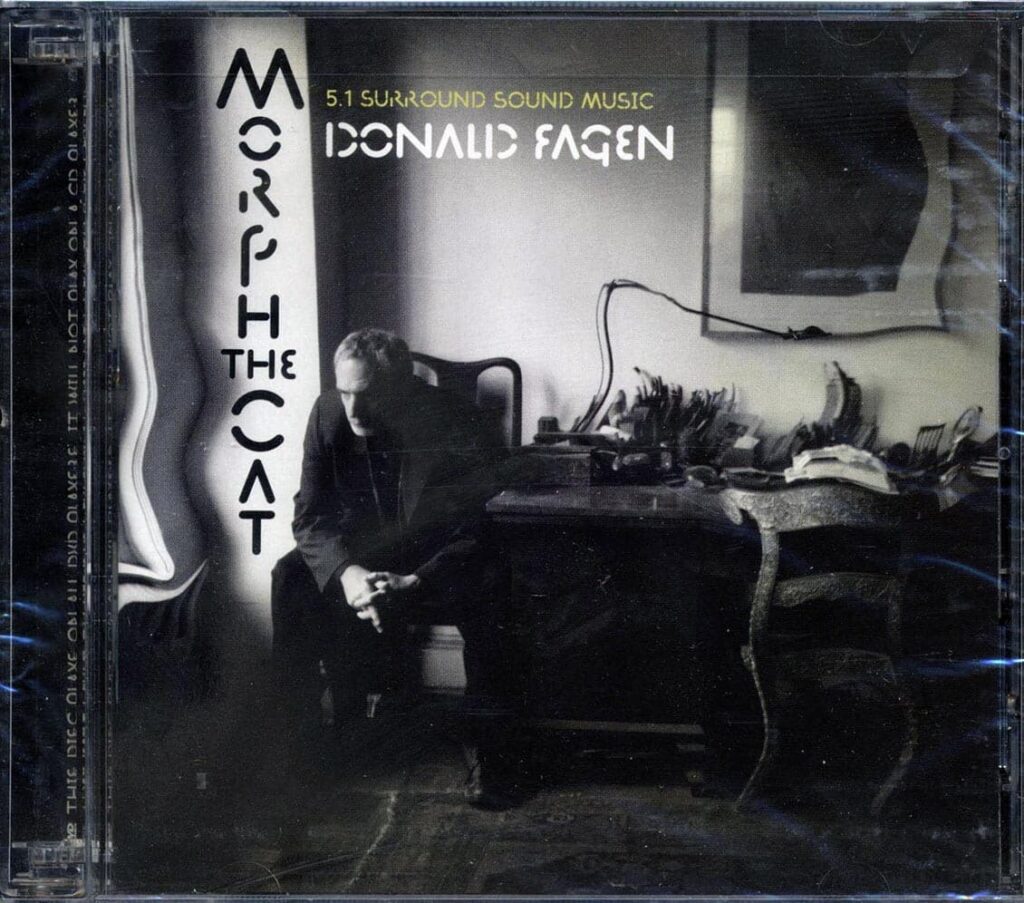
By 2006, Donald Fagen had cemented his place in the pantheon of music legends. His legacy, built first on the foundation of Steely Dan and later defined by his meticulously crafted, highly anticipated solo albums, was one of unparalleled sophistication. With the release of his third solo album, Morph the Cat, Fagen completed what many fans consider his thematic trilogy, a masterful set of records exploring his past, present, and eventual mortality. The album was a late-career triumph, resonating deeply with critics and fans alike, soaring to a peak of number 6 on the Billboard 200 and later earning a Grammy Award for Best Contemporary Jazz Album. Amidst this celebration of craftsmanship was the strange, brilliant, and deeply profound title track, “Morph The Cat.” It was never a charting single, but it served as the conceptual heart of the album, a piece of musical drama that only a mind as complex as Fagen’s could conceive.
The story behind “Morph The Cat” is a piece of surreal mythology, a theatrical narrative born from the anxieties of the early 21st century. The drama is built around a truly bizarre character: a spectral, colossal cat that flies over the city to “clear the air.” Fagen has noted that the song is an artistic response to the post-9/11 environment, the pervasive, abstract fears of modern life, and his own contemplation of aging and the inevitable. The Cat, therefore, becomes a powerful, ambiguous symbol—it is the lurking anxiety of a nation, the strange hand of bureaucracy, or, most profoundly, the very spirit of death itself, approaching slowly and majestically to claim its due. The song is a powerful, emotional monologue from the perspective of an aging man, observing this strange phenomenon and trying to process the great, unknowable forces at work.
The musical structure of “Morph The Cat” is the perfect sonic landscape for this noir-like fable. It’s a slow-burn funk, a sophisticated groove that is both irresistibly smooth and subtly unsettling, creating a mood of anxious contemplation. The intricate chord progressions and the use of the full jazz ensemble—horns, keyboards, and precise percussion—are not just accompaniment; they are a dramatic score, building a sense of suspense and late-life reflection. Donald Fagen’s vocal delivery, with its signature detached cynicism, is the perfect mask for the profound vulnerability beneath. He delivers this absurd narrative with a deadpan seriousness that only intensifies the song’s emotional impact. The song’s ultimate meaning is one of resigned acceptance—the understanding that the Morph The Cat will eventually come for us all, and the only true dignity lies in observing its approach with clear eyes and a hint of dark humor.
For those of us who have followed the long, winding road of Fagen’s career, “Morph The Cat” is more than just a song; it’s a testament to the enduring power of his artistic vision. It’s a nostalgic echo of a time when albums were works of literature, and when a single track could hold an entire world of mystery and profound, late-life reflection. It stands as a timeless, deeply emotional, and magnificent piece of musical drama, a brilliant final chapter in a celebrated thematic saga.