
A Bleak and Beautiful Elegy to Finality, the Poignant Closing Scene of a Love Story That Simply Ran Out of Time.
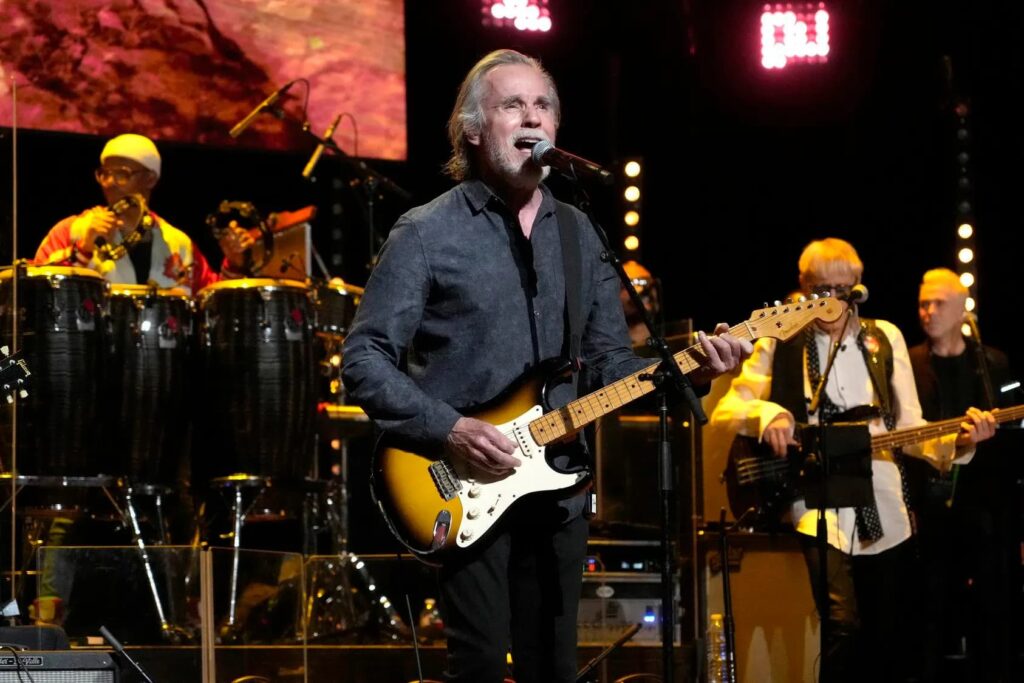
The year 1974 gifted the world a masterpiece of existential melancholy: Jackson Browne’s third album, Late for the Sky. This record was not merely a collection of songs; it was a deeply unified dramatic work, a breathtaking meditation on the crumbling of youthful idealism and the difficult acceptance of mortality. The album achieved significant commercial success, reaching number 14 on the Billboard 200, but its deepest resonance lies in its emotional honesty. The final, devastating track that brought the curtain down on this sublime saga was “The Late Show.” Never released as a single and therefore never charting, its power is purely thematic, serving as a heartbreaking period at the end of a long, painful sentence. The fact that a newer generation of musicians, such as the Watkins Family Hour, chose to honor this track through their own tender collaborations with Browne, is a testament to its enduring, timeless dramatic weight.
The story behind “The Late Show” is the emotional curtain call of a dying relationship, a concept that was central to Browne’s writing at the time. The title itself is a perfect metaphor for being left behind—the character is waiting in the dark, watching the final, desolate show that no one else is left to see. The drama is the internal monologue of a man grappling with finality, realizing that the dream is over, the house lights are coming up, and he is standing alone in the empty theatre of his own life. The lyrics are a raw chronicle of emotional exhaustion, detailing the futility of clinging to a ghost of a commitment and the crushing realization that he has to leave the comfort of the past simply to survive. It is the sound of a sensitive soul confronting the empty space left by lost love and choosing, however painfully, to step into the uncertain light of a new day.
The meaning of “The Late Show” is rooted in the tragic inevitability of endings. It’s an acknowledgment that not every love story gets a happy, or even a decisive, conclusion; sometimes, things just run out of steam, leaving behind a confusing, painful mess. Musically, the song is a slow, deeply somber piece of folk-rock. The entire arrangement is designed to convey a sense of melancholic finality. Jackson Browne’s vocal delivery is weary, carrying the full weight of the album’s preceding disillusionment. The instrumentation is sparse, but every note counts: the acoustic framework is shadowed by the beautiful, weeping counterpoint of David Lindley’s slide guitar, which sounds like an empathetic, shared sorrow. The song’s deliberate, unhurried pace forces the listener to sit in the painful quiet of the conclusion, denying any easy escape and forcing a confrontation with the difficult truth that the journey is over.
For older readers, “The Late Show” is more than a song; it is a profound dose of nostalgia, a reminder of a time when we first grappled with the devastating finality of a deeply felt love. The enduring collaborations, such as the tender, respectful version with Watkins Family Hour (featuring Sara and Sean Watkins), confirm the track’s status as a core piece of the American emotional songbook. It stands as a timeless, deeply emotional, and profoundly dramatic elegy—a perfect, haunting reminder that the hardest scene in any life is the one where you finally have to walk away.