
A Defiant and Gritty Anthem of Resurrection, a Powerful Declaration That the Past is Over and the Fight Continues.
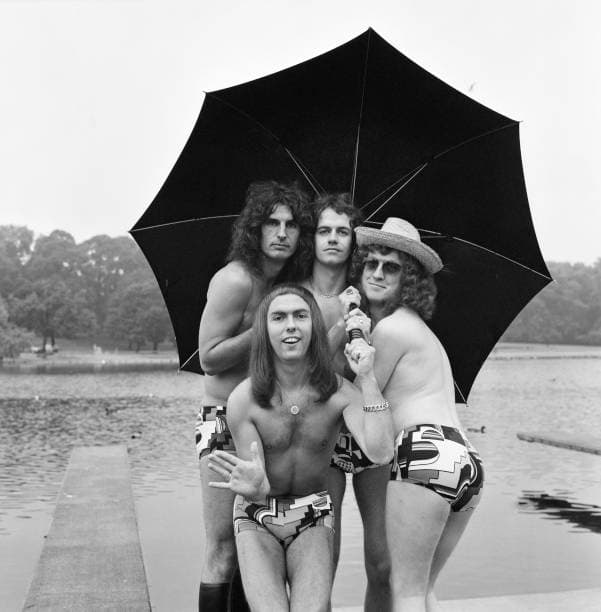
By 1981, the iconic British band Slade was deep into the most dramatic phase of their career—a hard-fought, defiant resurrection. The joyous, glitter-strewn days of their 1970s glam-rock dominance had faded into commercial wilderness, a period of soul-searching and struggle. It was only after their thunderous, unbilled appearance at the Reading Festival in 1980 that they violently thrust themselves back into the consciousness of a new generation of heavy rock fans. Their album Till Deaf Do Us Part (1981) was a crucial declaration of intent, a commitment to a heavier, tougher sound that signaled they were far from a nostalgia act. While the album itself was a moderate success, reaching number 68 on the UK Albums Chart—a hard-won victory after years of commercial silence—the song that crystallized their new philosophy was a deep album cut that was never released as a single: “O.K. Yesterday Was Yesterday.” Its drama is the emotional tension of a band forcing themselves to move on from their own legendary past.
The story behind “O.K. Yesterday Was Yesterday” is a piece of raw, self-aware autobiography. For years, the music press and a segment of their audience had trapped Slade in a time capsule of platform boots and smash-hit singles. This song is the band’s defiant scream of rejection against that confinement. It is an internal monologue, a command to themselves and to their long-time fans: stop living in the reflection of past glory. The lyrics, penned by the songwriting duo of Noddy Holder and Jim Lea, are a stark, resolute statement of survival. The drama is the sheer psychological weight of telling yourself and your audience that the glorious past must be put to rest so that the present, more difficult, future can be embraced. It’s an anthem of renewal, a hard-fought battle cry against the easy comfort of nostalgia.
The meaning of the song is a profound rumination on relevance and the necessity of change. The title itself is a thesis: acknowledging the triumphs of the past while firmly closing that chapter to face the realities of the present. It’s a surprisingly moving statement on aging and maintaining artistic integrity in a youth-obsessed industry. Musically, the song is a dramatic departure from the joyous singalongs of the glam era. It features a tougher, almost metal-tinged riff and a driving, relentless rhythm that anchors it firmly within the burgeoning New Wave of British Heavy Metal (NWOBHM) scene. Noddy Holder’s voice, here, is imbued with a palpable, determined grit rather than the purely celebratory shout of their youth. The music’s unrelenting pace is a metaphor for the band’s sheer will to survive, with every chord change pushing them further away from the ghosts of their glittering past.
For those of us who lived through the complex transition of the late 70s and early 80s, “O.K. Yesterday Was Yesterday” is a powerful, nostalgic jolt of reality. It is a testament to the resilience of a band that refused to quit and chose the hard road of creative evolution over the soft path of the reunion circuit. The song stands as a timeless, deeply emotional, and profoundly dramatic piece of musical truth, a reminder that the true measure of a band’s legacy is not just in their biggest hits, but in their courage to adapt and move forward.