
An emotional reflection on the wild, surreal distance fame can create.
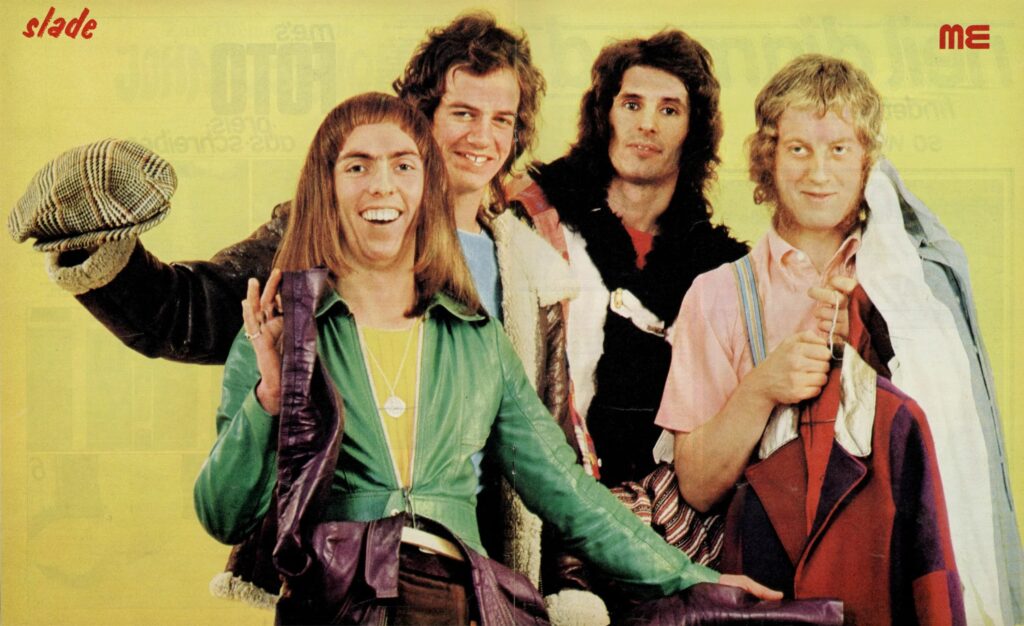
The year was 1974. For those of us who lived through the glorious, glitter-drenched, yet strangely grounding era of glam rock, the name Slade was synonymous with sheer, unadulterated euphoria. They were a band of working-class lads from Wolverhampton who, through their relentless touring, infectious sing-alongs, and distinctive misspelled titles, had captured the heart of Britain and much of Europe. Albums like Slayed? and Cum On Feel the Noize dominated the charts, each new single a guaranteed shot of energy that sent the youth—and even some of their wary elders—into a stomping, shouting frenzy.
Yet, amid this dazzling run of hit singles that consecutively shot to the top of the charts, the Slade we thought we knew began to show intriguing, more complex facets. The 1974 album, Old New Borrowed and Blue (released in the US as Stomp Your Hands, Clap Your Feet), was a pivotal, slightly reflective record that hinted at the enormous pressures and surreal existence the band was living. This album itself, a monument to their enduring popularity, reached Number 1 on the UK Albums Chart. But not every track was destined for the blinding spotlight of a single release. The song “Miles Out to Sea”, buried deep within the tracklist, never received a charting position as a single itself, remaining a deeper cut that speaks volumes about the band’s state of mind during their stratospheric rise.
This is the very essence of the song’s emotional resonance for those of us looking back: it is a haunting, almost wistful glimpse behind the curtain of chaos. The early to mid-70s saw Slade attempt to crack the notoriously difficult American market. It was a time of endless travel, cultural dislocation, and a lifestyle that felt increasingly unmoored from reality. The story behind “Miles Out to Sea” is a dramatic anecdote that perfectly encapsulates this feeling of bewildering separation. Noddy Holder, the band’s charismatic frontman and co-songwriter, penned the lyrics following a particularly surreal and “traumatic” party held for the group after a show at the legendary Winterland Ballroom in San Francisco.
Imagine this: you’re one of the biggest rock stars in the world, accustomed to the gritty pubs and rowdy concert halls of Britain, suddenly thrown into the bizarre opulence of a wealthy, ‘freaked-out’ San Francisco citizen’s home—a converted synagogue, no less, where a rope dangled invitingly from the dome for guests to swing from. It’s a scene ripped straight from a fever dream, and it crystallised for Holder the feeling of being utterly adrift.
The song’s meaning, therefore, is an evocative metaphor for the bewildering life of super-fame. The lines, “We were miles out to sea, did we float, you and me? Maybe one day we’ll go back for more. We were miles from the bay, did we float? I should say. Maybe next time we’ll leave from the shore,” speak to the profound sense of being set loose from safe harbour. It’s a beautifully melancholic narrative about losing one’s bearings in the ocean of celebrity, where the familiar ‘shore’—the real world, normality—is barely visible on the horizon. The music, driven by Jim Lea‘s refined keyboard and a clean, swinging guitar sound, as critics of the time noted, is more melodic and nuanced than their signature stomp, giving the track a psychedelic, almost Beatlesque circa ’68 feel, reinforcing its dreamy, disconnected mood.
For those of us who bought the album the week it came out, this track offered a moment of quiet reflection amidst the joyous noise. It was a pause where the sheer fun of Slade met the emotional cost of their success. It’s a testament to the songwriting partnership of Holder and Lea that they could so powerfully convey both the high-octane thrill of their world and its isolating strangeness. Today, hearing “Miles Out to Sea” is like finding a faded, deeply personal postcard from a friend who was traveling too fast, too far away, and it brings with it a surge of complicated nostalgia. It’s a reminder that even the kings of glam could feel utterly alone, lost in the glittery, endless sea of their own making.