
A Deceptively Tender Serenade to Man’s Best Friend
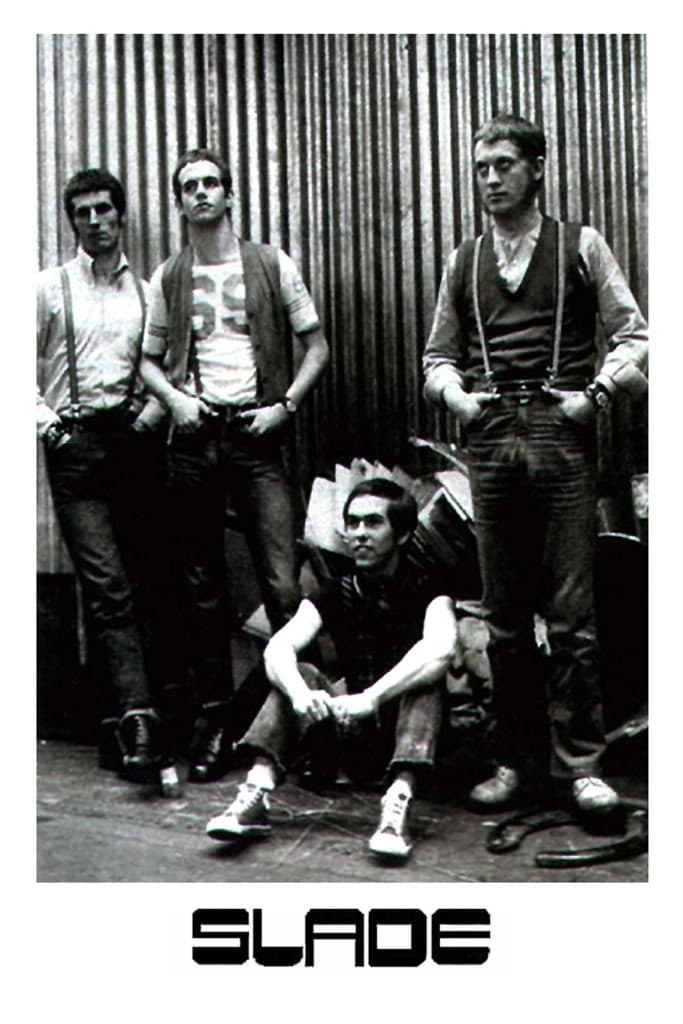
There are songs that wear their hearts on their sleeves, and then there are those that hold a secret, a private joke shared between the artist and the universe, only revealed to those who lean in close enough to listen. Martha My Dear is one such masterpiece, a song that, on the surface, shimmers with all the ornate longing of a classic love ballad, but whose true inspiration is a tale of far more unconditional, and decidedly furrier, affection. While forever etched in history as a gem from The Beatles‘ 1968 self-titled “White Album,” a fascinating and often overlooked chapter of its life was written just a year later, when a raw, hungry band from the Black Country, then known as Ambrose Slade, took it on for their debut album, Beginnings.
Let us be clear from the outset, for those who measure a song’s impact by its climb up the charts: neither version of Martha My Dear was ever released as a single, and therefore, it never held a chart position. It was a deep cut, an album track for the connoisseurs. For Slade, their entire album Beginnings suffered a similar fate, failing to trouble the charts and giving little hint of the glam rock juggernaut they were destined to become. But its value was never in sales figures; it was in its audacious choice of material, a statement of musical intent.
The story, the very soul of the song, begins not in a tumultuous romance, but in the pastoral quiet of Paul McCartney’s life in the late 1960s. The “Martha” of the title was not a human muse, not a fleeting affair or a lifelong partner, but his beloved Old English Sheepdog. It’s a revelation that transforms the song from a sophisticated plea to a lover into something altogether more tender and poignant. Imagine McCartney at the piano, his fingers dancing across the keys in that complex, almost ragtime progression, looking over at his shaggy companion. The lines, “Martha my dear, you have always been my inspiration / Please be good to me, Martha my love,” take on a new, beautifully innocent meaning. It’s a chronicle of the pure, uncomplicated bond between a man and his dog, dressed up in the finest clothes of baroque pop. He wasn’t begging a woman not to forget him; he was speaking to his faithful friend, the one constant in a world spiralling into the madness of global fame.
When Slade tackled this song in 1969, they were a world away from the polished art-pop of Abbey Road. They were a gritty, powerhouse live act, honing a sound that was loud, bluesy, and drenched in working-class sweat. Their decision to cover Martha My Dear was a masterstroke of subversion. Where McCartney’s version is elegant and layered with brass and strings, Slade’s interpretation is heavier, more muscular. The intricate piano is still there, but it’s underpinned by a driving rock rhythm section. And then, there is Noddy Holder’s voice—that unmistakable, paint-stripping rasp—singing McCartney’s delicate words. Hearing him roar, “You’re a silly girl,” is to hear two worlds collide: the sophisticated London pop scene and the smoke-filled pubs of Wolverhampton. It was Slade tipping their hats to the masters while simultaneously tearing the song down to its studs and rebuilding it in their own image, a fascinating glimpse of the raw power that would soon make them superstars.