
The Cynical Eclipse of Romance: A Groovy, Dystopian Warning About Marital Malaise and the Call of the Wild
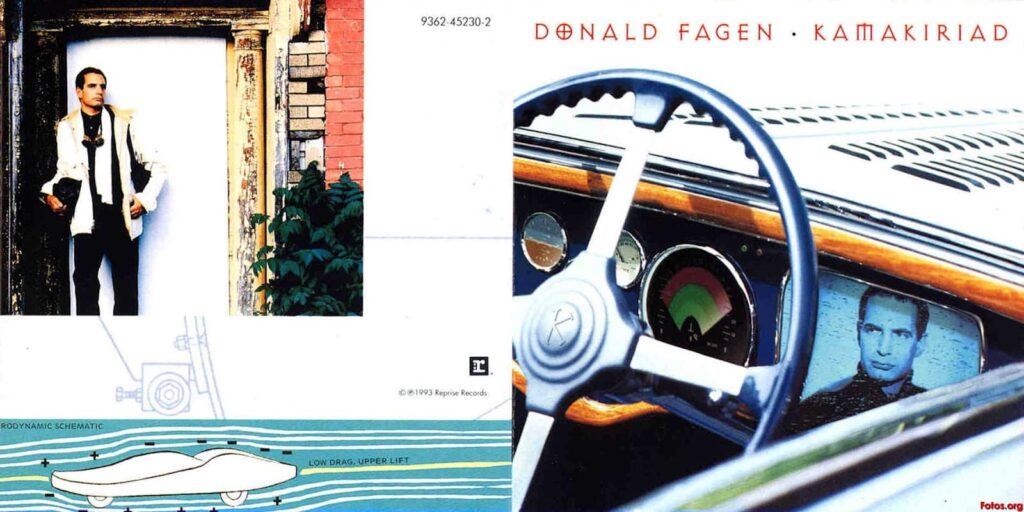
The year 1993 felt like a sudden shift in the tectonic plates of pop culture. Grunge was king, but for those of us who had spent the seventies and eighties decoding the labyrinthine brilliance of Steely Dan, the return of Donald Fagen—with his long-awaited second solo album, Kamakiriad—was the true event. This album, a conceptual journey produced by long-time partner Walter Becker, was a sleek, futuristic travelogue. Tucked into this narrative of a drive across a dystopian landscape in a super-advanced car, the Kamakiri, is the track that delivers one of the album’s most chilling, yet undeniably groovy, domestic dramas: “Countermoon.”
While the album Kamakiriad was a commercial and critical success, earning a Grammy nomination for Album of the Year and peaking at No. 10 on the US Billboard 200 chart and No. 3 on the UK Albums Chart, its singles focused on the more easily digestible tracks like “Tomorrow’s Girls” and “Trans-Island Skyway.” “Countermoon” itself was not released as a commercial single and, therefore, did not earn a place on the major singles charts. This lack of mainstream chart success is entirely in character for a Donald Fagen track of such lyrical density—it’s an esoteric, complex piece designed for the discerning listener, not the mass market.
The story of “Countermoon” is where the familiar, cynical heart of Fagen’s genius truly beats. The Kamakiriad album is a concept piece about the narrator taking his hyper-tech roadster on a journey of self-discovery, encountering various strange characters and surreal situations along the way. “Countermoon” drops our protagonist right into the middle of a domestic catastrophe driven by a mysterious, supernatural—or perhaps purely symbolic—celestial event. The “Countermoon” is depicted as a moment of cosmic misalignment, an eclipse of common sense and commitment that causes spouses and lovers to suddenly—and without apparent reason—doubt and abandon their partners.
The meaning is a masterful blend of sci-fi dystopia and a painfully relatable critique of mid-life marital disenchantment. It’s the dark side of a mid-life crisis given a sinister, space-age rationale. The song’s narrator watches in bewildered horror as fidelity evaporates under the influence of this strange, celestial body. Lines like, “Last night you loved her / Tonight you wonder why,” and the utterly desolate image of “At every payphone there is somebody crying / The streets are slick with tears,” capture the sudden, irrational collapse of love. The song is a darkly comedic, yet poignant, exploration of how easily we can lose sight of what we cherish, trading a lifetime of commitment for the fleeting, ill-defined promise of something else. The “Countermoon” is the ultimate scapegoat for the protagonist’s own failings, or simply the inescapable gravitational pull of boredom.
For older, well-informed readers, “Countermoon” is a visceral blast of recognition. It’s the exquisite agony of watching the sophisticated, jazzy structure—the signature Fagen groove—carry a lyric so relentlessly cynical about the persistence of love. It evokes that specific, nostalgic thrill of realizing that the same brilliant mind that gave us Steely Dan’s cryptic puzzles was back, older but no less acerbic, still soundtracking the drama of human folly with impeccable, smooth-as-silk jazz-rock. It is a cautionary tale, delivered in the funkiest of grooves, that reminds us that even the purest commitment is vulnerable to the inevitable, cyclical madness of the “Countermoon.”