
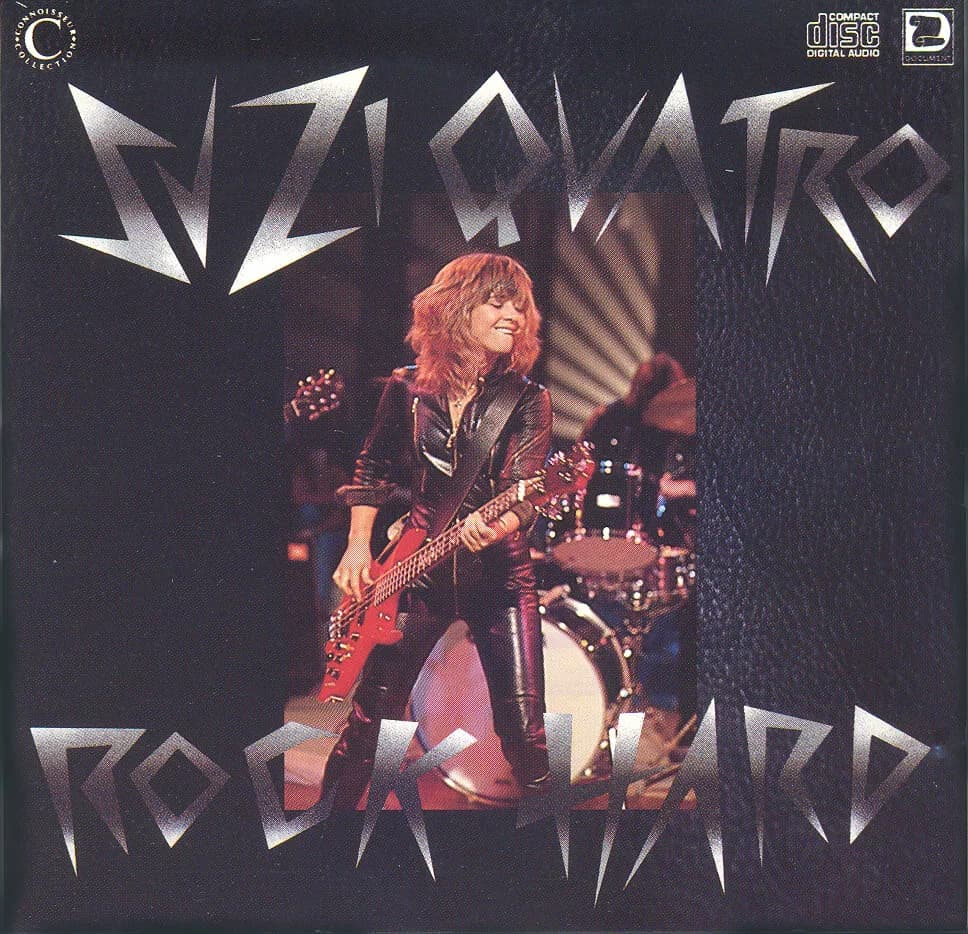
The Leather-Clad Queen’s Final Fists-Up Against the Dawn of a New Decade, Asserting That True Rock-and-Roll Power is Eternal.
For those of us who lived and breathed the electric pulse of the 1970s, the name Suzi Quatro evokes an immediate, visceral image: the tiny, leather-clad Detroit powerhouse, slinging a bass guitar that looked bigger than she was, shattering the glass ceiling of rock music with every defiant snarl and bass-line. By 1980, the musical landscape was shifting dramatically—glam was fading, punk had exploded and fractured, and the New Wave was marching in on sharp angles. It was in this transitional, uncertain moment that Suzi Quatro delivered “Rock Hard,” the title track and lead single from her 1980 album of the same name.
This song is a moment of pure, dramatic defiance—a thunderous declaration that the Queen of Noise was not going gently into the synth-pop night. Its chart performance, however, tells the complex story of that cultural pivot. In her primary market, the UK, the single only managed a modest peak of No. 68 on the Official Singles Chart. In Germany, it fared better at No. 26, but it was in Australia where the track resonated most powerfully, climbing to an impressive peak of No. 9 and helping the Rock Hard album achieve Platinum status there. This mixed reception perfectly encapsulates the song’s position: a global hit for those nations loyal to the raw power of her sound, yet struggling to find a footing in the rapidly evolving UK and US markets.
The story behind “Rock Hard” is deeply intertwined with a cinematic moment that briefly reignited Quatro’s visibility in her native America. The track was prominently featured on the soundtrack to the 1980 cult film, Times Square. This film, centered on two rebellious teenage girls in New York, encapsulated the gritty, uncompromising spirit of late 70s/early 80s youth culture, and Suzi Quatro’s brand of unapologetic rock was a perfect fit. Penned once again by her iconic powerhouse writing team, Mike Chapman and Nicky Chinn—the architects of her massive ’70s hits like “Can the Can” and “Devil Gate Drive”—the song was a deliberate return to her signature sound: driving, aggressive, and built on a foundation of theatrical glam-rock swagger, but with a punchier, late-decade production polish.
The true meaning of “Rock Hard,” however, is a metaphorical battle cry. The lyrics are not complex, but they don’t need to be; their power is in their sheer attitude: an insistence on uncompromising authenticity. The phrase “Rock Hard” is a double-edged declaration, signifying both the musical style she refuses to abandon and a personal state of being—a resolve to remain tough, real, and unbreakable in a world desperate to soften or categorize her. It’s an assertion of self, a commitment to her own truth: “I play it hard, I live it hard, I am hard.” For those of us who followed Quatro’s career from the beginning, this song felt like a necessary transfusion of grit, a reassurance that the woman who smashed gender barriers with a bass guitar was still fully engaged in the fight.
Listening to it today, it’s impossible not to feel a surge of nostalgia for the dramatic intensity of that era, when an artist could simply roar their identity over three minutes of crushing guitar chords. “Rock Hard” is more than just a song; it’s a defiant bookmark in the tumultuous diary of rock history, marking the moment when a genuine pioneer refused to concede to the changing tides, choosing instead to double down on the ferocity that made her a legend. It’s the sound of a Queen, standing firm on her throne, daring the new decade to knock her off.