
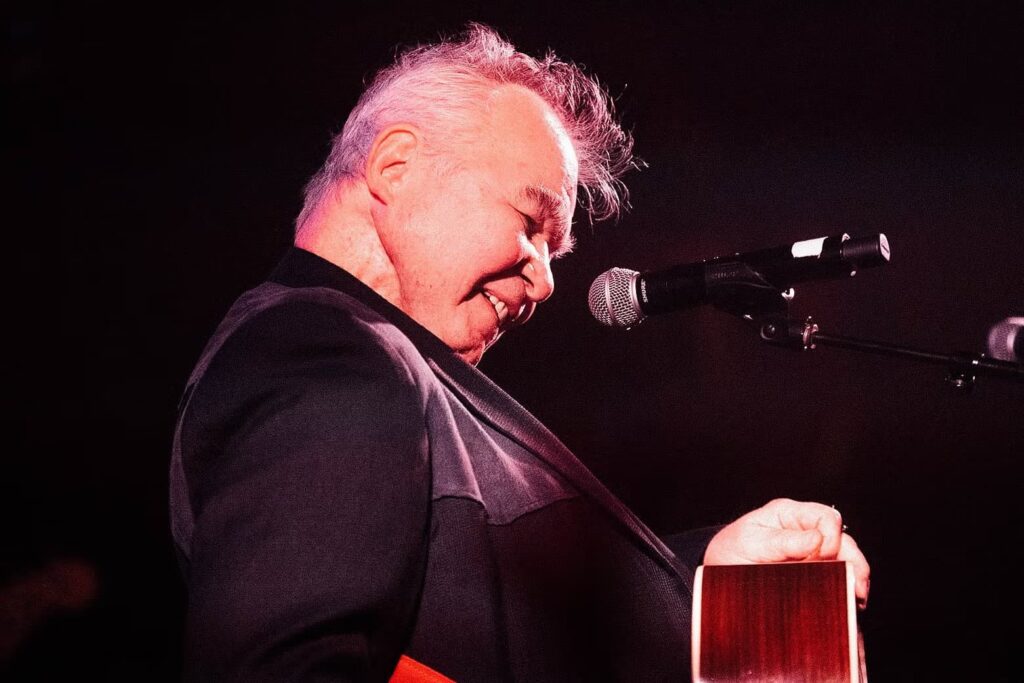
The Black Hole in a Purple Heart: A Devastating, Unflinching Folk Ballad That Gave Voice to the Vietnam Veteran’s Invisible Trauma.
The year is 1971. American music is caught between the fading echoes of Woodstock idealism and the grim reality of the ongoing war in Vietnam. Into this tense, emotionally complicated atmosphere stepped John Prine, a Chicago mailman turned songwriter, whose self-titled debut album was an immediate, critical revelation. But it was the song “Sam Stone,” a haunting, plain-spoken account of a drug-addicted veteran, that delivered a punch straight to the conscience of a nation struggling to reconcile its values with its veterans’ fate.
Key Information: “Sam Stone” is a cornerstone track from John Prine’s 1971 eponymous debut album. Although the album was a critical success—hailed by figures like Kris Kristofferson and Bob Dylan—it did not achieve massive mainstream chart dominance, but became an underground classic. “Sam Stone” itself was never released as a single and thus holds no individual chart position. However, its influence was immense and immediate. It was one of the very first songs to address the devastating and largely hidden phenomenon of heroin/morphine addiction among returning Vietnam veterans, whose chemical dependency was often acquired while treating war injuries overseas (a grim parallel to the Civil War’s “Soldiers’ Disease”).
The story behind “Sam Stone” is one of profound empathy, drawn not from a single person, but from Prine’s keen observations of his peers. Prine, who served in the Army in Germany during the Vietnam era, witnessed the toll military life took on those around him. He consciously created the character of Sam Stone—a veteran who comes home “after serving in the conflict overseas” with a Purple Heart and a “monkey on his back”—to cut through the simple protest songs of the era. He wasn’t writing about the war; he was writing about the soldier.
The dramatic nucleus of the song is its utterly devastating chorus: “There’s a hole in Daddy’s arm where all the money goes / Jesus Christ died for nothin’ I suppose.” Prine envisioned a little girl watching her father destroy himself, the money—a rainbow—disappearing into the “hole.” This image is the song’s emotional core: the loss isn’t just financial or personal; it’s a terrifying, existential vacuum that consumes everything, including faith. The phrase “Sweet songs never last too long on broken radios” is the final, heartbreaking metaphor—a weary admission that hope and beauty struggle to survive when life itself is damaged and chaotic.
The meaning of “Sam Stone” remains a stark, timeless commentary on the societal cost of war. It is a challenge to the patriotic narrative, reminding the listener that a Purple Heart is a poor exchange for a shattered mind and a deadly addiction. For the older, well-informed reader, hearing this simple, acoustic song today is a deeply nostalgic and emotional experience. It triggers memories of that conflicted era, forcing a reflection on how easily society forgets the warriors once the flags are put away. The song is a devastating piece of musical drama, a folk masterpiece that forced America to look at the collateral damage of its conflicts, not just on the battlefield, but at the kitchen table.