
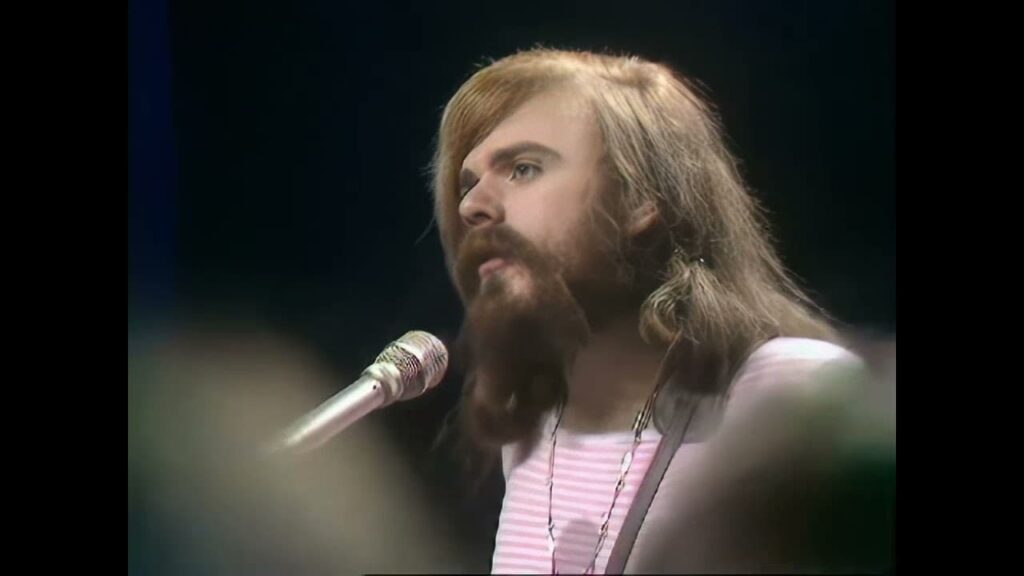
A Joyful Hymn to Solitude and Creation: Roy Wood’s Songs of Praise and the Ecstatic Freedom of the Self
When Roy Wood released Boulders in July 1973, the eccentric founder of The Move, Electric Light Orchestra, and Wizzard stood at a curious crossroads in British rock. His first solo album climbed modestly on the UK Albums Chart, peaking at No. 15, but its artistic statement was something chart numbers could never quite capture. Among its most luminous moments, Songs of Praise gleams like a stained-glass window in Wood’s peculiar cathedral of sound—a jubilant, homemade anthem to joy, faith, and creative independence. Written, produced, and performed entirely by Wood himself—he played every instrument, recorded the vocals, and even painted the album cover—the song is an effervescent celebration of being alive, of finding divinity not in organized religion, but in the sheer act of creation.
There is a kind of pastoral exuberance to Songs of Praise. It bursts forth with a buoyant gospel swing, a radiant brass section, and multi-tracked choirs that sound like a congregation of one man multiplied into infinity. Wood, ever the musical craftsman, built his arrangements as if assembling a toy orchestra—playful, yet meticulous. Beneath the joyful surface, however, lies something more profound: a sense that this “praise” is not directed outward, toward a traditional deity, but inward, toward the very spark of artistic energy that defined his career. In this sense, the song becomes a personal creed—a declaration of freedom from both commercial and spiritual orthodoxy.
Boulders was recorded mostly at Wood’s home studio in Birmingham, years before DIY production became fashionable. He labored on the album intermittently between 1969 and 1971, often recording on primitive equipment that forced him to improvise. The results are gloriously idiosyncratic: warped tape speeds, rough edits, and joyous imperfections that only deepen the humanity of the work. Songs of Praise, sitting midway through the album, captures this spirit perfectly. It feels spontaneous yet precise, naive yet knowing—a song that believes in music itself as a divine language.
Lyrically and sonically, it channels a kind of English whimsy that places Wood somewhere between Brian Wilson’s symphonic innocence and the eccentric inventiveness of Syd Barrett. Yet unlike Wilson’s California sunshine or Barrett’s dreamlike melancholy, Wood’s world is resolutely Midlands-born—earthy, communal, slightly absurd. Songs of Praise is the sound of an artist looking at his own reflection in the puddle and seeing both God and the fool smiling back.
In a decade dominated by grand rock statements and cynical self-awareness, Songs of Praise feels almost radical in its sincerity. It’s a one-man gospel—a Technicolor hymn recorded in solitude, where joy itself becomes the act of worship. In Roy Wood’s hands, praise isn’t about doctrine or dogma. It’s about sound. It’s about color. It’s about the miraculous noise one man can make when he believes, for a few perfect minutes, that music alone might just be enough.