
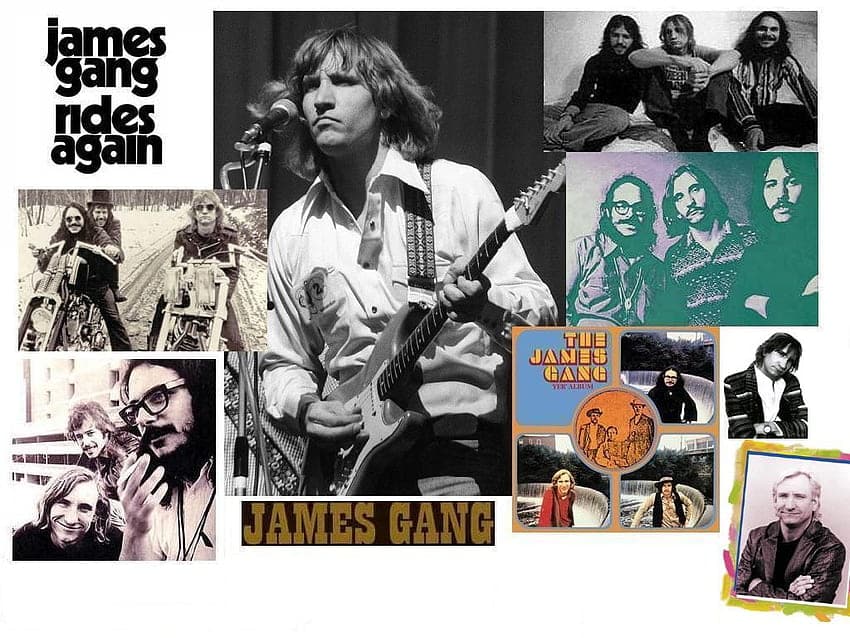
The Quiet Edge of Longing and Restlessness in “Garden Gate”
On James Gang Rides Again (1970), James Gang unveiled a collection that captured the restless spirit of its era, and nestled within it, “Garden Gate” stands as a delicate, almost meditative counterpoint to the album’s more hard-driving tracks. While not released as a single and therefore absent from mainstream charts, the song has endured in the lore of classic rock enthusiasts for its understated emotional resonance, offering a glimpse into a softer, introspective side of a band often celebrated for its electrifying guitar work and raw energy.
“Garden Gate” opens with an acoustic sensibility that immediately signals intimacy, a hushed invitation to listen closely. The guitar interplay, led by Joe Walsh’s subtle yet expressive technique, eschews flamboyance for nuance, revealing the narrative’s quiet tension. Lyrically, the song evokes the imagery of a threshold—not merely a physical gate, but a symbolic portal between longing and fulfillment, security and exposure. It captures the perennial tension of desire and restraint, a theme that resonates deeply with listeners attuned to the personal undercurrents of rock music during the early 1970s. This was a period when bands like James Gang were negotiating the divide between their blues-rooted energy and a burgeoning introspective lyricism inspired by folk and singer-songwriter movements.
The song’s narrative voice suggests a contemplative wanderer, pausing at a metaphorical gate, reflecting on choices made and paths yet untraveled. Walsh’s voice, simultaneously earthy and fragile, imparts a vulnerability that contrasts with his reputation for guitar virtuosity, reminding the audience that the power of a rock band is as much in restraint as in intensity. Musically, the arrangement’s subtle dynamics—gentle shifts in chord voicings, tender melodic lines—mirror the lyric’s introspective tone, crafting an atmosphere of pensive nostalgia. In this way, “Garden Gate” aligns with the era’s broader exploration of emotional depth within rock, bridging the rawness of hard rock with a lyricism more often associated with folk and country contemporaries.
Though overshadowed commercially by tracks like “Funk #49”, “Garden Gate” endures as a quiet testament to James Gang’s versatility. It offers a moment of reflection amid the raucous energy of the album, highlighting the band’s capacity for emotional nuance and musical subtlety. For the listener attuned to the hidden layers of classic rock, “Garden Gate” is not merely a track on a 1970 album—it is a contemplative doorway into the internal landscapes of a band navigating both the public roar and the private pulse of their music. Its enduring legacy lies in this quiet power, an intimate snapshot of longing framed by the restless creativity of one of rock’s most intriguing ensembles.