
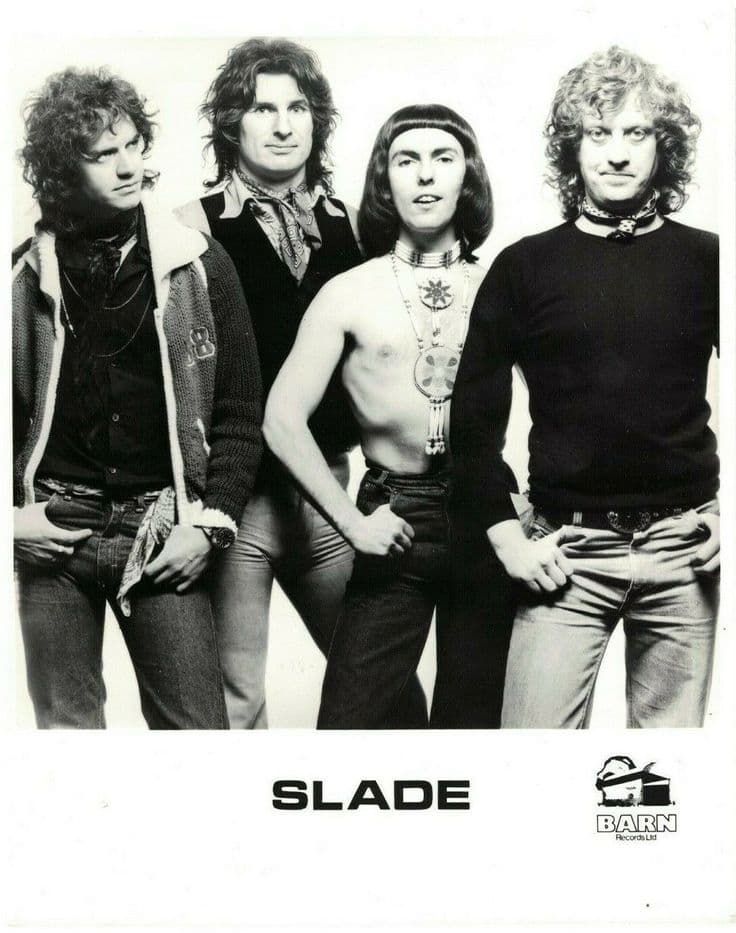
A Relentless Heart That’s Never Satisfied
In Slade’s earliest incarnation as Ambrose Slade, “Everybody’s Next One” appears on their 1969 debut album Beginnings — a covers-heavy collection that didn’t chart upon its release.
Though it might lack the commercial flash that would later define Slade, “Everybody’s Next One”, originally written by John Kay and Gabriel Mekler of Steppenwolf, cuts deeply into the emotional anatomy of longing, regret, and the restless search for connection.
On Beginnings, the song becomes a quiet, haunted centerpiece: a woman who’s been hurt so often by fleeting romance that she fears even her own efforts to be loved may be misguided. The narrator watches her spin through broken relationships, meeting “another one” who knows just how to flatter her, to promise what she yearns for — only for it to unravel, yet again.
Musically, this interpretation is raw but delicate. Ambrose Slade had not yet found the stomping glam-rock identity they would become known for; instead, they explore a spectrum of 60s influences. Beginnings itself is a patchwork of covers — from Zappa to The Beatles to Steppenwolf — that shows the band still feeling their way.
Noddy Holder’s voice, while not yet the thunderous roar of later years, carries a gentle urgency here: it’s as though he’s telling the story but also holding his breath, hoping she’ll realize what she deserves. The arrangement is spare, reflective — letting the emotional weight of the lyrics sit in the air rather than overwhelm.
Lyrically, “Everybody’s Next One” is a portrait of vulnerability disguised as strength. The woman at its center may play the field, but she’s also terrified: afraid of truth, of letting someone in deeply, of being exposed. She performs all the “right things” with the wrong men, while no one seems to see what she really wants — to be understood, to be kept, to be more than “everybody’s next one.”
In the broader context of Slade’s career, this song occupies a poignant space. Beginnings failed to chart — a humble and largely overlooked starting point for a band that would soon explode into glam-rock superstardom. That commercial void, however, belies the emotional authenticity embedded in tracks like “Everybody’s Next One.” Even before they found their defining sound, Slade were already attuned to the darker facets of human longing.
Listening now, this track feels like a time capsule: young musicians stretching their wings, learning the craft, and delivering a deeply empathetic portrait of heartbreak. It’s not the loudest, flashiest moment in Slade’s catalogue — but it may well be one of the most emotionally honest.