
A Quiet Reckoning with Time, Grace, and the Fragile Mercy of Second Chances
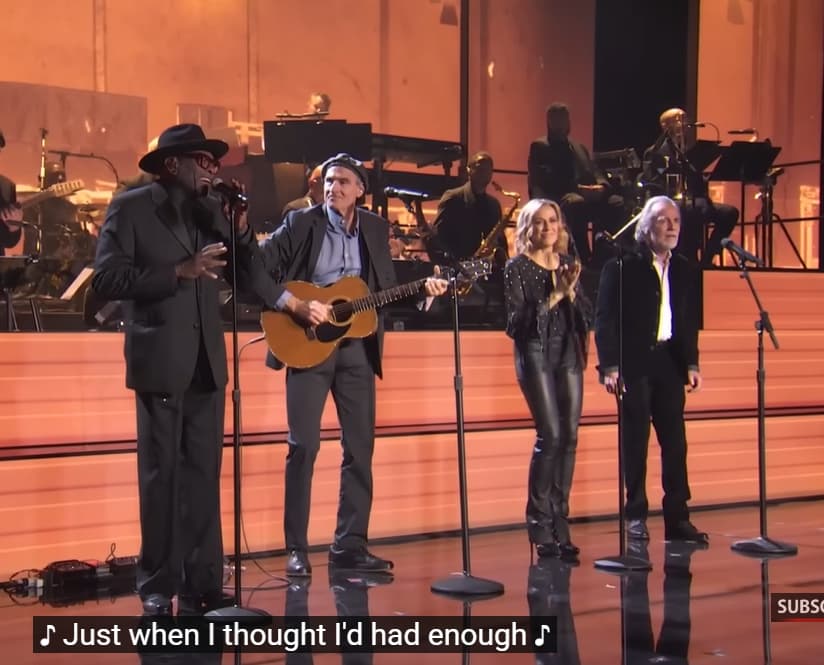
When James Taylor, Jackson Browne, Sheryl Crow, and Arnold McCuller come together to perform “Nick of Time,” they are not presenting a new chart moment, but honoring a song whose history is already deeply etched into American musical consciousness. Originally made famous by Bonnie Raitt on her landmark album Nick of Time, the song reached number one on the Billboard Album chart in 1989 and became a defining statement of adult reflection in popular music. In the hands of these four artists, the song is reborn not as a commercial vehicle, but as a shared meditation shaped by decades of lived experience.
What makes this performance so compelling is the convergence of voices that have each spent a lifetime chronicling emotional truth. James Taylor brings a gentleness that has always suggested wisdom earned quietly. Jackson Browne carries a tone of moral gravity and introspection, shaped by songs that have long confronted time, responsibility, and consequence. Sheryl Crow adds a clarity and emotional directness that bridges generations, while Arnold McCuller, with his gospel-rooted power, grounds the performance in soul and spiritual resonance. Together, they do not compete for attention. They listen to one another, and in doing so, they allow the song’s meaning to deepen.
Lyrically, “Nick of Time” is one of the most honest examinations of aging and emotional survival ever written. It speaks to the moment when youth’s illusions fall away and love is no longer about urgency or conquest, but about presence and endurance. The song does not romanticize regret, nor does it wallow in it. Instead, it acknowledges the quiet relief of arriving at wisdom just before it is too late. That tension between loss and gratitude sits at the heart of this performance, and each voice seems to occupy a different chapter of that realization.
Musically, the arrangement remains restrained, honoring the song’s original intimacy. Acoustic textures dominate, leaving space for phrasing, breath, and silence. This restraint is crucial. The song thrives not on dramatic crescendos, but on emotional precision. Each line feels weighed, considered, and offered with care. The harmonies do not polish away the song’s vulnerability. Instead, they reinforce the idea that understanding often comes through shared experience.
There is also a cultural weight to hearing these artists together. They represent a lineage of American songwriting that values craft over spectacle, meaning over immediacy. Their performance of “Nick of Time” feels like a quiet conversation among peers who have all stood on the same long road, watching ambition mellow into perspective. It is a reminder that great songs do not age out of relevance. They age into truth.
In this rendition, “Nick of Time” becomes more than a song about personal reckoning. It becomes a communal acknowledgment that life rarely grants perfect timing, only narrow windows of clarity. What matters is recognizing those moments when they arrive, and having the courage to speak honestly when they do.