
A Playful Stutter That Became a Defiant Promise and a Rock and Roll Calling Card
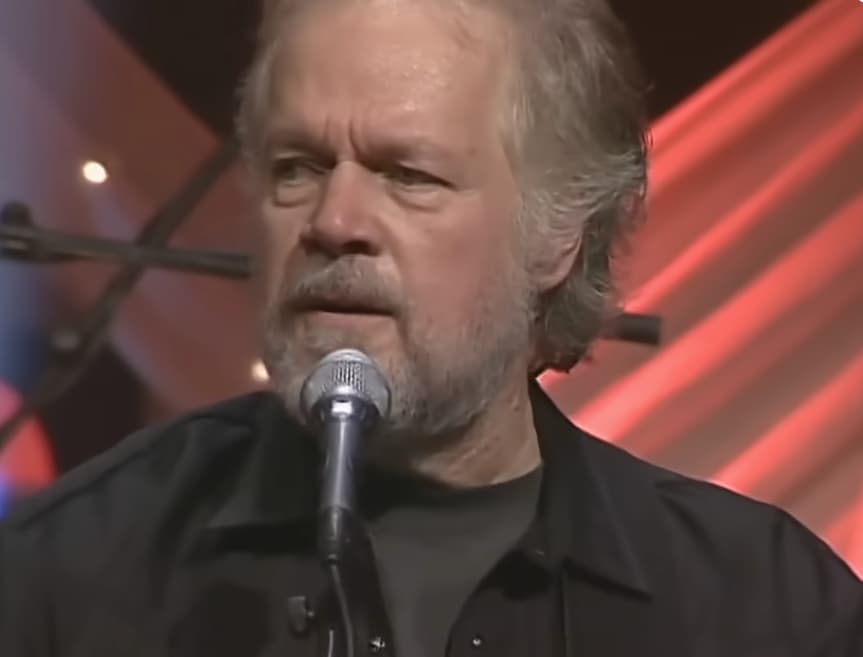
When Randy Bachman revisited “You Ain’t Seen Nothing Yet” during his Every Song Tells a Story performance, recorded live at the Vancouver East Cultural Centre on April 12, 2002, he was returning to one of the most successful singles of his career. Originally released by Bachman-Turner Overdrive in 1974, the song famously reached number one on the Billboard Hot 100 and also topped the UK Singles Chart, securing its place as an enduring rock anthem. Though this later live rendition did not aim for chart glory, it carried something equally powerful: reflection, memory, and the voice of an artist revisiting his own legend with clarity and affection.
In this live setting, Randy Bachman strips the song of its arena-sized bravado and reframes it as a story told by the man who lived it. The performance is rooted in narrative as much as music, aligning perfectly with the concept of Every Song Tells a Story. Bachman has long explained that the song’s now iconic stutter was never intended as a hook. It began as a private joke, recorded as a playful reference to his brother Gary, who had a speech impediment. What was meant as a placeholder became the emotional center of the track, transforming vulnerability into confidence, humor into defiance.
Musically, even in this live retelling, the core of “You Ain’t Seen Nothing Yet” remains intact. The riff still punches forward with muscular simplicity, driven by a blues-based structure that reflects Bachman’s deep grounding in classic rock and roll. Yet the tone here is warmer, more conversational. The song breathes differently when guided by memory rather than adrenaline. Bachman’s delivery carries the authority of experience, turning each familiar line into a knowing wink between performer and audience.
Lyrically, the song has always thrived on contrast. The narrator projects bravado while revealing insecurity, confidence while exposing a crack beneath the surface. In the context of this 2002 performance, those layers feel even richer. The repeated declaration that “you ain’t seen nothing yet” takes on new meaning when spoken by an artist looking back on decades of music, success, missteps, and survival. It no longer sounds like youthful bravado. It sounds like perspective earned over time.
What makes this performance particularly resonant is Bachman’s openness. He invites the audience into the song’s origin, allowing them to understand not just how it sounded, but why it existed. In doing so, he reframes a radio staple as something deeply human. The stutter is no longer a novelty. It becomes a symbol of acceptance, a reminder that imperfections can become defining strengths.
In the larger arc of rock history, “You Ain’t Seen Nothing Yet” stands as proof that the most enduring songs often arrive accidentally. Heard through Bachman’s reflective lens at the Vancouver East Cultural Centre, it becomes more than a hit single. It becomes a chapter in a life devoted to music, storytelling, and the quiet courage to leave something imperfect exactly as it is.