
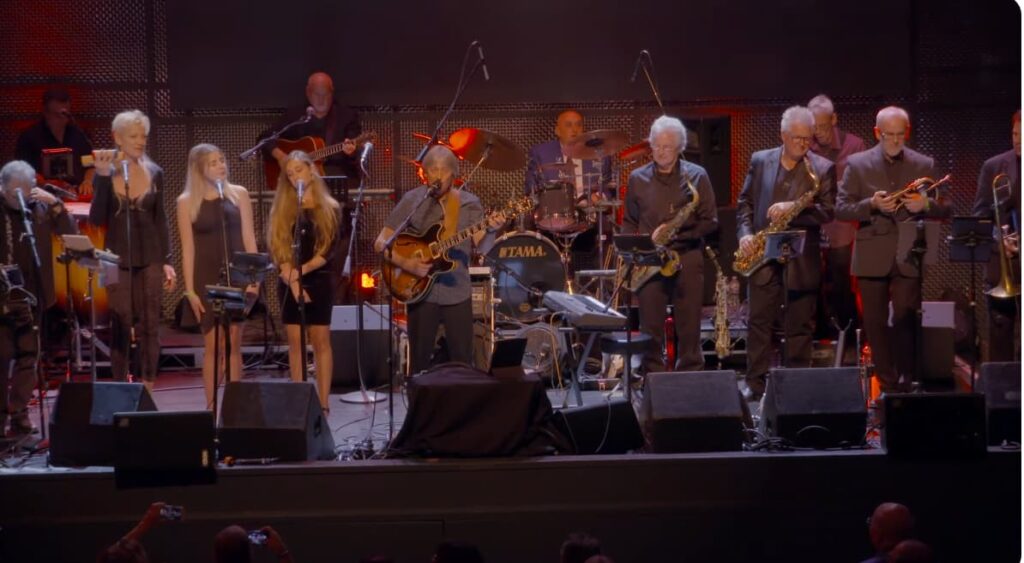
A Late Night Confession Reborn on Stage as Jazz, Regret, and Romantic Defiance
When The Steely Damned performed “Deacon Blues” live at the Music Box in San Diego on December 29, 2017, they were stepping into the long shadow of one of Steely Dan’s most revered compositions. Originally released in 1977 on the album Aja, “Deacon Blues” peaked at number 19 on the Billboard Hot 100 and helped propel Aja to a number 3 position on the Billboard 200, securing its place as a cornerstone of late 1970s American rock. In this live interpretation, captured years later by a devoted tribute ensemble, the song emerges not as nostalgia, but as living testimony to its enduring emotional and musical power.
At its core, “Deacon Blues” has always been a song about choosing one’s own mythology. Written by Donald Fagen and Walter Becker, it gives voice to an outsider who rejects conventional success and instead embraces a romanticized vision of failure, artistry, and late-night solitude. The narrator does not dream of trophies or applause. He dreams of a saxophone crying into the dark, of smoky rooms and small hours where meaning is found not in victory, but in expression. This philosophy resonates deeply with musicians, particularly those who revere Steely Dan’s meticulous craft and emotional restraint.
The 2017 Music Box performance by The Steely Damned honors that spirit with care and reverence. Live, the song breathes differently. The tempo stretches slightly, allowing the harmonic sophistication to unfold naturally. The chord changes feel less like a technical exercise and more like a slow confession. The vocals carry a reflective maturity, suggesting not imitation, but understanding. This is not a band trying to recreate a record. It is a band inhabiting a story that has aged alongside its listeners.
Musically, “Deacon Blues” thrives on subtle tension. Its jazz-inflected progressions resist easy resolution, mirroring the internal conflict of the narrator himself. In a live setting, these elements become even more pronounced. The saxophone lines do not merely decorate the arrangement; they act as emotional punctuation, sighing and lingering where words fall short. Each phrase feels like a memory recalled rather than a note executed.
What makes this performance particularly compelling is its setting. The Music Box, an intimate venue, echoes the song’s themes of small stages and personal moments. This environment strips away spectacle and returns the song to its essence. A man, a band, and an audience quietly agreeing that there is dignity in choosing your own version of success. The applause that follows is not explosive. It is appreciative, knowing, and deeply human.
Decades after its release, “Deacon Blues” continues to speak to those who stand slightly apart from the center of the room. In the hands of The Steely Damned, the song reaffirms its timeless relevance. It reminds us that some music is not meant to conquer charts or eras. It is meant to linger after midnight, whispering truths to those still listening.