
A luminous meditation on devotion and distance, sung from the quiet edge of glam rock’s brightest stage
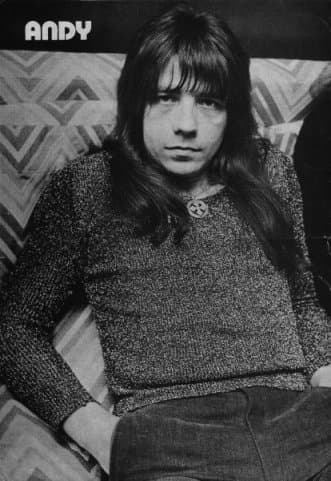
When Andy Scott performed “Lady Starlight” on the British television program Supersonic on 13 December 1975, he was revisiting one of the most introspective moments in the Sweet catalog. The song originally appeared on the band’s 1974 album Desolation Boulevard, a record that reached the Top 10 on both sides of the Atlantic and helped cement Sweet as one of the defining forces of mid-1970s glam rock. While “Lady Starlight” was never released as a single and carried no chart position of its own, its presence on such a commercially and culturally successful album gave it a lasting resonance. This televised performance, presented by Mike Mansfield, strips the song of spectacle and places it firmly in the realm of quiet reflection.
Unlike Sweet’s more explosive anthems, “Lady Starlight” has always occupied a more inward-facing space. Written by Andy Scott, the song unfolds as a gentle confession, shaped by melody rather than volume. In the Supersonic performance, Scott delivers the song with a calm assurance that underscores its emotional restraint. There is no attempt to overpower the listener. Instead, the song invites attention through subtlety, through a measured vocal line and a sense of distance that feels deliberate and meaningful.
Lyrically, “Lady Starlight” reads as a meditation on admiration and separation. The narrator observes rather than possesses, addressing a figure who feels elevated, almost untouchable. The imagery suggests a woman who exists slightly out of reach, admired from afar, glowing with an inner light that the singer both reveres and accepts he may never fully claim. This emotional tension gives the song its quiet power. It is not about conquest or heartbreak, but about the ache of longing that remains dignified, even restrained.
Musically, the composition reflects that emotional stance. The arrangement is understated, allowing space to breathe between the notes. Scott’s guitar work is elegant and controlled, supporting the melody rather than dominating it. In the Supersonic setting, without the layered production of the studio version, the song’s structure becomes even clearer. What emerges is a piece built on balance and poise, a reminder that glam rock at its best was not only about volume and glitter, but also about atmosphere and feeling.
This performance also highlights Andy Scott’s role as one of Sweet’s most thoughtful architects. While the band was often associated with high-energy choruses and stomping rhythms, Scott consistently brought a melodic sensitivity to their work. “Lady Starlight” stands as evidence of that sensibility, a song that values emotional clarity over excess. Seeing him perform it alone on Supersonic reinforces the sense that this was a personal statement, one rooted in songwriting craft rather than image.
Today, this 1975 television appearance feels like a preserved moment of stillness within an otherwise noisy era. “Lady Starlight” remains a reminder that even at the height of glam rock’s flamboyance, there was room for quiet admiration and reflective songwriting. In Scott’s hands, the song becomes a soft glow rather than a flash, lingering not through force, but through grace.