
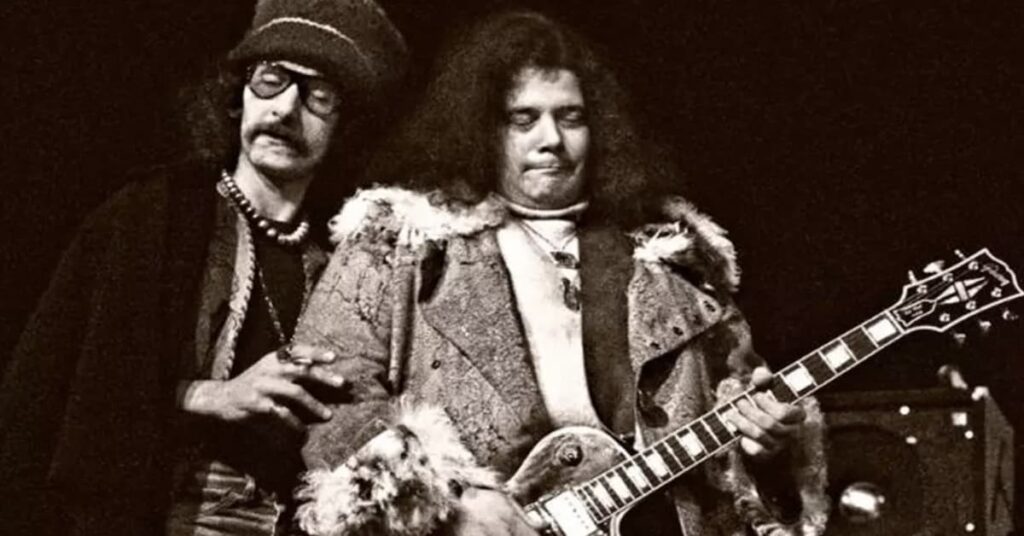
Leslie West on Felix Pappalardi, Creative Tension, and the Birth of Mountain in Part Three
Part Three of the Living Legends Music interview series continues seamlessly from the self-discovery and musical influences explored in the earlier chapters, turning now to one of the most decisive professional relationships in Leslie West’s career: his collaboration with producer and musician Felix Pappalardi. Recorded at the House of Blues in 2008, this segment sheds light on how mentorship, uncertainty, and creative conflict ultimately led to the formation of Mountain.
West recalls first working with Pappalardi during his time with The Vagrants, describing the producer as a man of vast musical knowledge whose background ranged from classical orchestration to cutting-edge rock production. At the time, West admits, the imbalance between what Pappalardi knew and what he himself did not was precisely what made the partnership effective. Looking back, he speaks candidly about his early playing, describing it as raw and undeveloped, but necessary as a starting point.
The interview then traces a turbulent transitional period following the breakup of Cream, when Pappalardi’s commitments left West uncertain about his own future. Encouraged to dissolve The Vagrants and begin again, West found himself emotionally shaken but determined to continue. As Pappalardi moved on to work with Jack Bruce, West began assembling a new band in New York, experimenting with unconventional lineups that included organ and jazz-influenced drumming.
When Pappalardi eventually re-entered the picture, his instincts again proved decisive. Dissatisfied with the group’s chemistry, he pushed West to start over once more, retaining only organist Norman Landsberg, who would later help write “Long Red.” That song, West notes with some amazement, would go on to enjoy an afterlife far beyond its original era, sampled decades later by major hip-hop artists and embedded in popular culture.
The turning point came when Pappalardi stepped out from behind the producer’s role and picked up the bass, resulting in West’s first solo album, Leslie West Mountain. Though reluctant to tour at first, Pappalardi’s involvement helped solidify a sound that was heavier, more focused, and unmistakably new. West reflects on the unusual dynamic of a producer becoming a band member, crediting Pappalardi with teaching him both what to do and what to avoid.
The segment does not shy away from darker realities. West acknowledges that drugs eventually eroded their working relationship, derailing momentum just as his career was gaining traction. Still, the lessons endured. The interview closes with West recounting his move to England, renewed connections with Jack Bruce, and early performances that would soon attract the attention of Atlantic Records’ Ahmet Ertegun and Jerry Wexler, setting the stage for Mountain’s ascent.
Together, Part Three reinforces the series’ overarching narrative: Leslie West’s career was forged through trial, mentorship, and repeated reinvention. It is a chapter about risk and resilience, showing how instability, when paired with vision, can give rise to something lasting.