
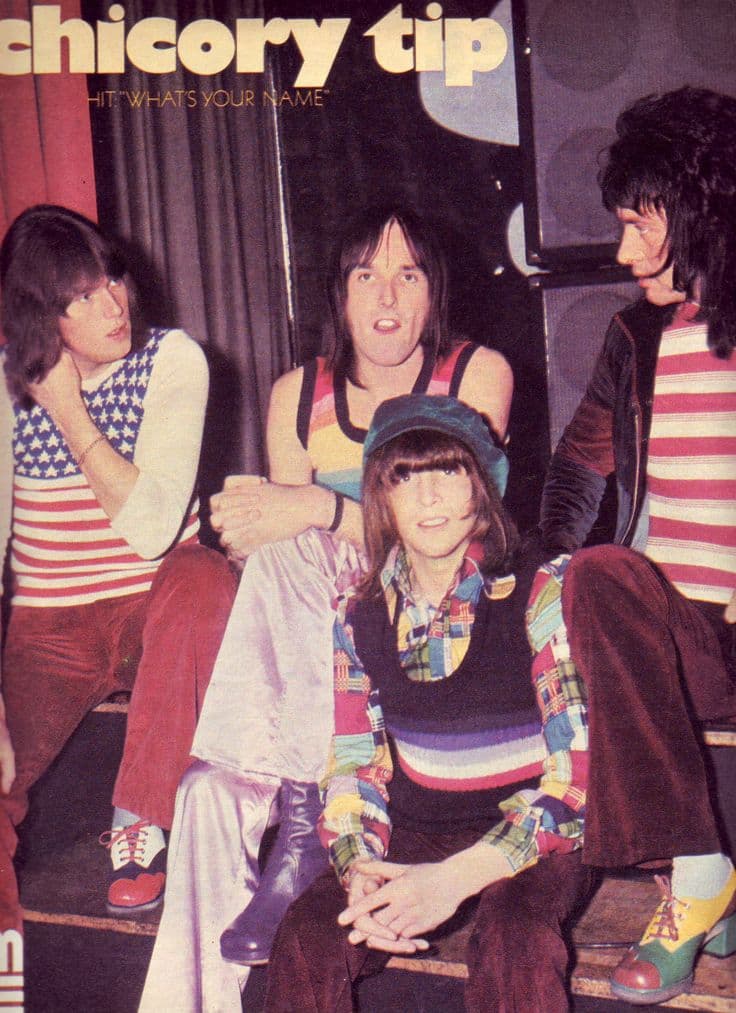
A Final Bow That Turns Nostalgia into Quiet Triumph
When Chicory Tip performed “Son of My Father” on The Clive James Show for ITV in 1999, it carried the weight of history behind it. Originally released in 1972, the song became a cultural landmark by reaching number one on the UK Singles Chart, firmly securing its place in British pop history. Drawn from the album Son of My Father, the track was already synonymous with early synthesizer-driven pop. This late television appearance transformed it into something deeper: a reflective closing chapter for a band whose moment in the spotlight had long since passed, yet whose legacy remained intact.
What makes this performance extraordinary is its context. Sourced from the private collection of Rick Foster, it captures a rare reunion of Chicory Tip’s classic hit-making lineup: Peter Hewson, Rick Foster, Barry Mayger, and Brian Shearer. By 1999, such a full reunion was almost unthinkable. Their appearance on the Carlton ITV broadcast, alongside a program featuring actor Liam Neeson, gave the band a final opportunity to step back into the public eye, not as relics, but as craftsmen revisiting the work that defined them.
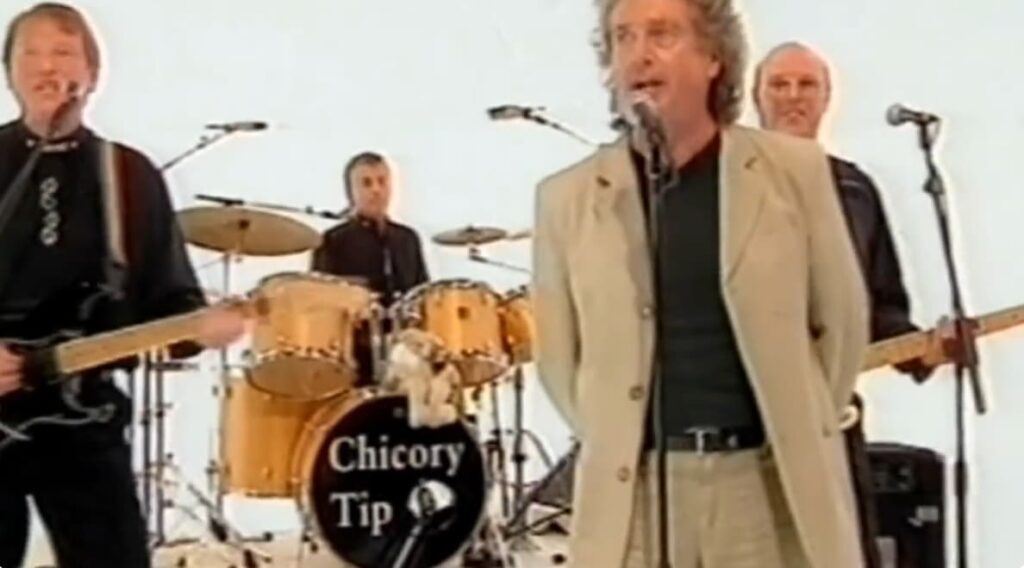
The performance itself is deliberately restrained. “Son of My Father” is presented in a shortened form, supported by an orchestra with a prominent horn section. This choice subtly reframes the song. In its original incarnation, the track was striking for its use of the Moog synthesizer, which helped usher electronic textures into mainstream British pop. Here, the orchestral backing adds warmth and gravity, replacing futuristic novelty with seasoned elegance. The melody remains instantly recognizable, but it now carries the patina of time.
Lyrically, the song has always carried a sense of generational reckoning. The narrator wrestles with identity, inheritance, and the uneasy realization that he is becoming what he once observed from a distance. In 1972, this theme resonated as youthful curiosity and apprehension. In 1999, sung by men who had lived those years, it becomes reflective and quietly profound. The words no longer feel hypothetical. They feel lived in.
Vocally, Peter Hewson delivers the song with composure rather than bravado. There is no attempt to recreate youthful urgency. Instead, the performance leans into clarity and sincerity. The band members stand not as pop stars chasing relevance, but as musicians honoring a shared past. That distinction matters. It transforms the appearance into an act of closure rather than revival.
Culturally, this moment serves as a reminder of Chicory Tip’s unique place in pop history. They were pioneers without spectacle, innovators who let the song carry the innovation. “Son of My Father” helped bridge traditional pop songwriting with emerging electronic soundscapes, influencing a generation that followed. Seeing the original lineup reunite for one last television appearance underscores how enduring that contribution was.
This performance does not shout for attention. It does not attempt reinvention. Instead, it stands quietly confident, a dignified farewell that trusts the song’s history to speak for itself. In that trust lies its emotional power.