
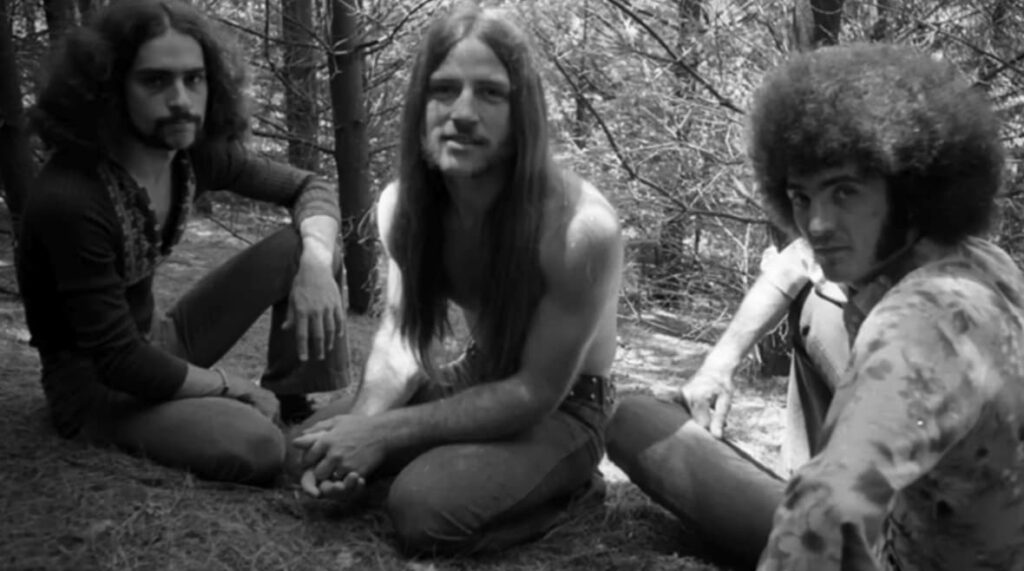
Grand Funk Railroad The Silenced Roar of American Rock
Rock history is rarely written by the crowds who filled the arenas. More often, it is shaped by critics, institutions, and industry gatekeepers. In that process, some of the loudest and most successful bands are quietly pushed aside. The story of Grand Funk Railroad stands as one of the clearest examples of this contradiction in American rock history.
Rising from Flint, Michigan, Grand Funk Railroad represented a raw and uncompromising voice of the working class. As a power trio built on guitar, bass, and drums, their sound was direct, physical, and unapologetically loud. At the dawn of the 1970s, this approach struck a deep chord with American audiences who recognized themselves in the band’s energy, honesty, and refusal to soften their edges.
Their ascent was astonishing. After a breakout performance at the Atlanta International Pop Festival in 1969, the band signed with Capitol Records and moved at a speed few could match. In 1971, they sold fifty five thousand tickets at Shea Stadium in just seventy two hours, surpassing a record previously held by The Beatles. Between 1969 and 1970 alone, they released four massively successful albums and went on to achieve ten consecutive platinum records. By every commercial measure, Grand Funk Railroad was one of the biggest bands in the United States. They earned the nickname the people’s band not through image but through sheer connection.
Yet while audiences embraced them, the critical establishment reacted with open hostility. Major publications dismissed the band as crude and unsophisticated. Some critics went as far as labeling them the worst band in the world, mocking their sound as oversized noise rather than music. This rejection went beyond taste. It reflected a cultural and class divide. Grand Funk Railroad spoke to mass audiences without intellectual framing, and that made them uncomfortable to those who believed rock should be curated rather than felt.
Their manager Terry Knight initially intensified this divide by keeping the band distant from the press. Tensions exploded when the band publicly responded to critical attacks with a now famous advertisement showing them raising a middle finger at their detractors. It was a bold declaration of independence but also a direct challenge to the industry hierarchy.
Internal conflict soon followed. Knight exerted heavy control over the band’s creative direction, including censoring lyrics written by Mark Farner that addressed political and environmental concerns. Financial disputes revealed an even deeper problem. Despite selling millions of records, the band saw little of the revenue. In 1972, they fired Knight. His retaliation was swift and brutal. He filed a fifty seven million dollar lawsuit, seized their equipment after a Madison Square Garden concert, and temporarily stripped them of the rights to their music and even their own name.
For a moment, Grand Funk Railroad appeared finished.
Instead, they regrouped. Performing briefly under the shortened name Grand Funk, they added keyboardist Craig Frost and adapted to survive. Working with producer Todd Rundgren, they refined their sound to meet radio demands. The result was We’re an American Band in 1973, a number one album that reestablished their presence and delivered some of their most enduring hits, including The Loco Motion.
But the success came with a price. Many early fans felt that the raw intensity of the band’s original sound had been sacrificed for accessibility. It was the classic dilemma of rock music. Remain pure or adapt to endure.
The band dissolved in 1976, leaving behind a legacy that remains deeply contested. Despite massive sales, cultural impact, and an undeniable connection with audiences, Grand Funk Railroad has never been inducted into the Rock and Roll Hall of Fame, despite being eligible for decades. Mark Farner has openly attributed this omission to industry politics, arguing that the band never played by establishment rules.
Their absence extends beyond awards. They are often missing from major documentaries and official retrospectives, especially when compared to contemporaries who were once criticized but later fully embraced by history. The case of Grand Funk Railroad raises an uncomfortable question about who gets remembered and who gets erased.
Their roar was never silenced by lack of success. It was muted by a narrative they refused to obey. And for those who experienced their power firsthand, that roar still burns far beyond the pages of official rock history.