
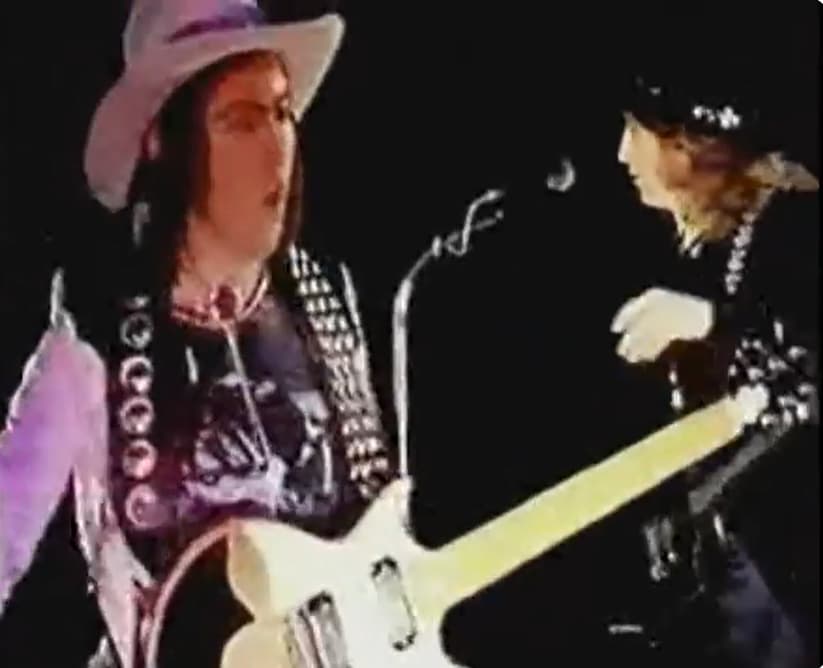
Dizzy Mama on Stage Slade Channeling American Blues Rock in 1981
Slade’s live performance of Dizzy Mama in Petersborough in 1981 captures the band at a confident and transitional moment in their career. Recorded during a period when Slade were reconnecting with harder rock roots, the performance stands as a clear example of how the group absorbed external influences while maintaining their own unmistakable identity.
Dizzy Mama is widely recognized by fans as Slade’s deliberate nod to the blues rock energy popularized by ZZ Top, particularly the driving groove and riff based approach associated with Tush. Rather than hiding the influence, Slade leaned into it, reshaping the style through their own lens of volume, swagger, and direct audience engagement. In live performance, this influence became even more pronounced, with the song expanding into a raw and muscular statement.
The Petersborough performance shows Slade operating as a seasoned live band. Noddy Holder’s vocal delivery is powerful and commanding, pushing the song forward with grit rather than polish. Dave Hill’s guitar work stays close to the song’s core riff, focusing on rhythm and attitude instead of extended solos. Jim Lea and Don Powell provide a solid and driving foundation, giving the performance a tight but forceful feel that reflects Slade’s long standing reputation as a formidable live act.
This version of Dizzy Mama later found renewed attention through its inclusion on the remastered and reissued album Well Bring the House Down. Originally released in 1981, the album marked a return to heavier rock sounds after a period when Slade’s output had leaned more toward pop oriented singles. Dizzy Mama fit naturally within that context, reinforcing the band’s connection to straightforward hard rock at a time when musical trends were rapidly shifting.
The live video from Petersborough is particularly valuable because it presents Slade without studio embellishment. There are no visual tricks or layered effects, only performance and presence. The band’s enjoyment of the song is evident, and the audience response confirms its effectiveness in a live setting. It is less about technical complexity and more about momentum and shared energy.
From a historical standpoint, this performance highlights Slade’s ability to adapt while staying true to their strengths. By openly embracing an American blues rock influence and filtering it through their own sound, they demonstrated confidence rather than imitation. Dizzy Mama in Petersborough remains a strong document of Slade in the early nineteen eighties, grounded, loud, and fully committed to the power of live rock music.