
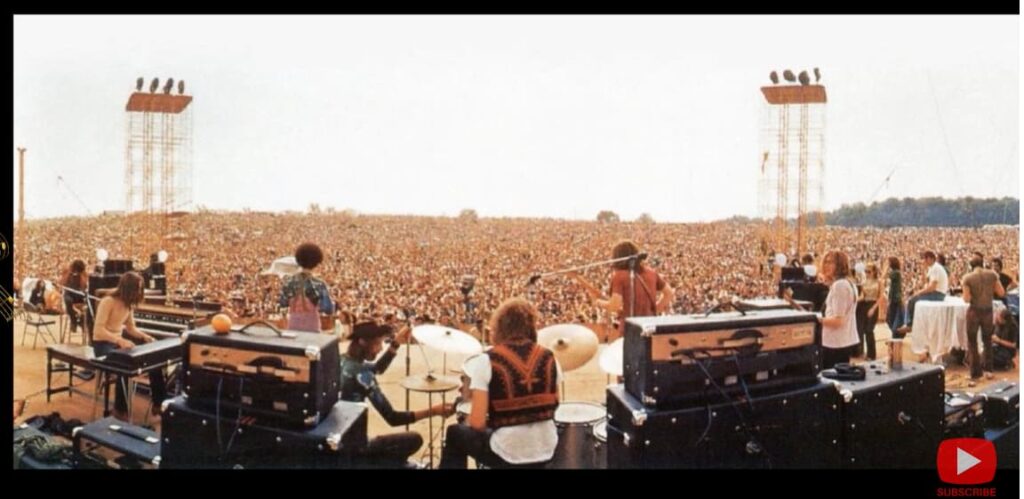
Crosby Stills and Nash at Woodstock 1969 A Nervous Debut on the World’s Most Famous Stage
The appearance of Crosby Stills and Nash at the Woodstock Music and Art Fair in August nineteen sixty nine stands as one of the most revealing moments of the historic festival. While Woodstock is often remembered for confident and fully formed performances, the set by David Crosby Stephen Stills and Graham Nash offered something different. It showed a newly formed group stepping onto a massive stage before they had fully found their footing.
Crosby Stills and Nash came together in nineteen sixty eight following the breakup of their previous bands. Crosby had departed The Byrds Stills had recently left Buffalo Springfield and Nash had moved on from The Hollies. Their debut album Crosby Stills and Nash was released in May nineteen sixty nine and was immediately met with strong critical and commercial response. The harmonies and songwriting marked them as a major new force in American folk rock.
Shortly after the album’s release Neil Young joined the trio expanding the group into a quartet. Although the lineup that would later be known as Crosby Stills Nash and Young achieved enormous success the musicians remained deeply invested in their individual solo careers. This balance between collaboration and independence would define much of their future work.
Woodstock arrived at a pivotal moment. The group had performed live only once before the festival making their appearance at Woodstock just their second concert in front of an audience. Stephen Stills openly acknowledged the tension of the moment when he addressed the crowd stating that it was only the second time they had ever played in front of people and that they were extremely nervous. This honesty set the tone for a performance marked by caution focus and vulnerability.
The set included both acoustic and electric segments reflecting the dual nature of their sound. The acoustic portion highlighted the intricate vocal harmonies that had already become their signature while the electric songs introduced a heavier edge that hinted at where the group was heading with Neil Young’s involvement. Rather than a flawless or triumphant performance the set felt tentative and human which made it all the more compelling.
In the context of Woodstock the appearance of Crosby Stills and Nash carried symbolic weight. It represented the emergence of a new collective voice at a time of cultural and musical change. Despite the nerves and limited live experience the performance confirmed the strength of their songwriting and the emotional power of their harmonies.
Today their Woodstock set is remembered not for spectacle but for authenticity. It captured a rare moment when future icons stood before a massive audience still uncertain still exposed and still becoming who they would soon be.