
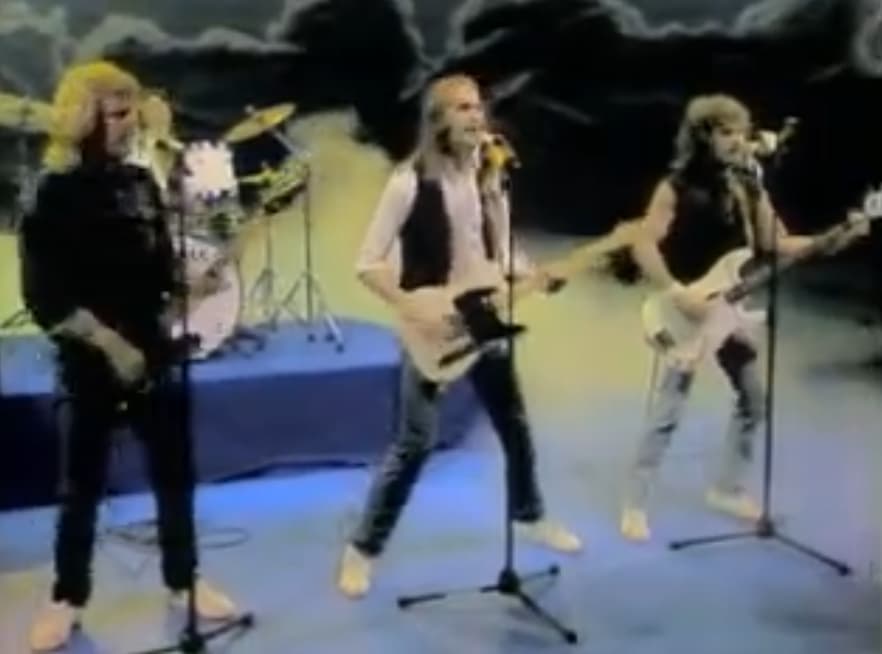
Status Quo Dear John A Snapshot of Early Eighties Rock
Status Quo’s single Dear John occupies a distinctive place in the band’s long and varied catalogue. Released on the nineteenth of March nineteen eighty two, the song was the lead single from the album 1+9+8+2 and reflects both continuity and change in the group’s sound at a time of personnel shifts and evolving musical trends.
Written by Jackie McAuley and John Gustafson rather than by members of the band themselves, Dear John stands out from much of Status Quo’s output for its lyrical directness and melodic focus. The phrase “Dear John” traditionally refers to a breakup letter, and the song’s narrative embraces that emotional terrain, blending regret and resolution in a manner that felt relatable to listeners. Although it retained the rock driven energy Quo were known for, it also invited a more reflective response from audiences at the time.
The single found commercial success, reaching the top ten on the United Kingdom singles chart, peaking at number ten and maintaining presence in the rankings for several weeks. This performance was significant during a period when Status Quo were marking their twentieth anniversary as a band and adjusting to the departure of longtime drummer John Coghlan, with Pete Kircher stepping in and keyboardist Andy Bown becoming a full member.
Musically, Dear John fits within the classic Quo style of steady rhythm guitar, strong hook lines, and clear vocal delivery, yet its lyrical structure lends it a slightly different texture compared with some of the band’s more boogie focused singles. Francis Rossi’s vocal presence captures the resigned tone of the lyrics, while Rick Parfitt’s guitar contributions support the sense of directness that defines the track.
The song has continued to attract attention from both long time fans and collectors of classic rock. While it may not be as frequently anthologized as some of Status Quo’s biggest hits, it remains on compilations that focus on the breadth of their singles output, demonstrating its role in the band’s evolution during the early nineteen eighties.
In the decades following its release, Dear John has been appreciated not just as a period piece, but as a song that reflects the band’s ability to combine rock tradition with emotional storytelling. It stands as a reminder that even within a catalogue defined by rhythmic drive and iconic riffs, there was room for thoughtful lyrical expression and melodic clarity.