
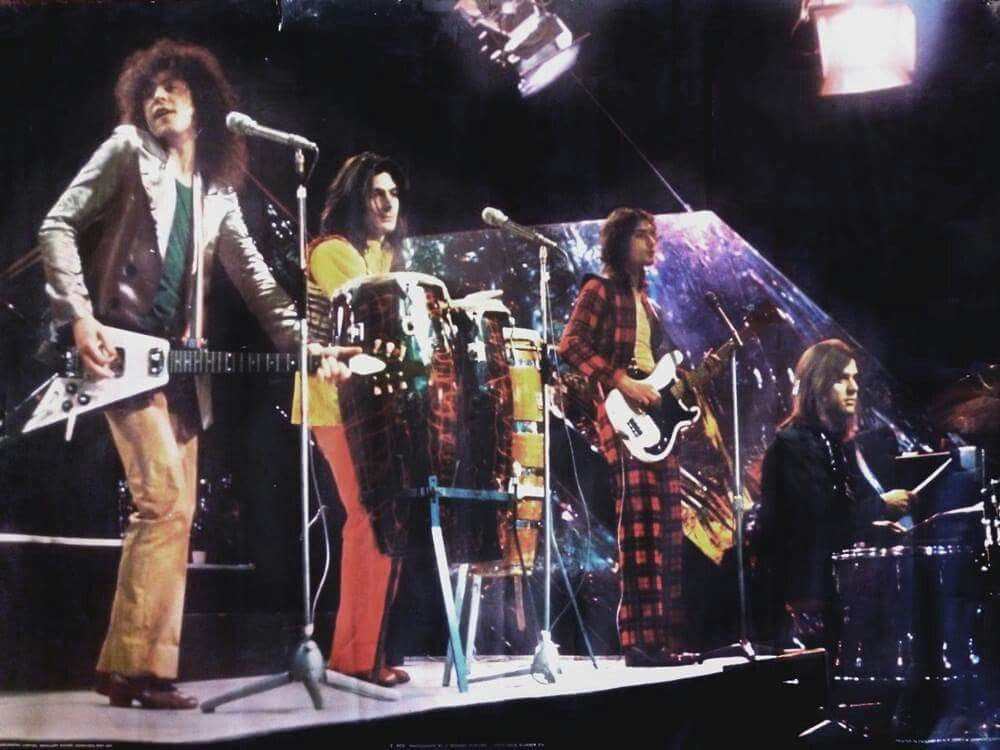
T Rex Summertime Blues at Wembley 1972 A Snapshot of Glam Rock Energy
On the evening of March 18 1972, T Rex delivered a performance at Wembley Empire Pool in London that has since been regarded as a key live moment in the band’s career. Among the setlist that evening, the cover of Summertime Blues by Eddie Cochran stood out as a spirited high-energy conclusion to a show that encapsulated T Rex at the height of their influence in the UK rock scene. This performance was part of the Electric Warrior tour, by then one of the most popular rock acts in Britain and Europe.
Originally written and recorded by Cochran in the late 1950s, Summertime Blues had become a staple rock anthem embraced by generations of artists. T Rex’s inclusion of the song as an encore at Wembley demonstrated both the band’s connection to classic rock’n’roll roots and their ability to reinterpret it with their distinctive glam rock swagger. The track was not part of their standard charting singles, but the live rendition captured a raw performance energy that reflected the group’s status on stage.
The Wembley show itself was professionally filmed and recorded, directed by Ringo Starr with an Apple Films crew, and engineered by producer Tony Visconti using the Rolling Stones’ mobile recording equipment. This made the London concerts among the few surviving complete professional recordings of T Rex’s early peak period, giving historians and fans a rare window into the live dynamics of the band in nineteen seventy two.
The set that night featured a mix of hits and fan favourites, including classics like Get It On, Hot Love, and Jeepster, reflecting the band’s dominance on the charts and in live venues. Placing Summertime Blues toward the end of the set underscored T Rex’s affection for rock’n’roll tradition even as they helped define the glam rock movement.
Marc Bolan’s performance throughout the show demonstrated his flair as a frontman who combined charismatic showmanship with tight musical execution. His guitar work and vocal delivery during Summertime Blues kept the original’s rebellious spirit intact while infusing it with the band’s heavier rhythmic drive.
Today, the Wembley footage of Summertime Blues remains an important historical document for fans and scholars alike. It preserves not only a spirited cover version of a classic rock staple, but also a snapshot of a band at its commercial and artistic peak, confidently bridging rock’n’roll heritage and the emerging glam rock sound of the early nineteen seventies.