
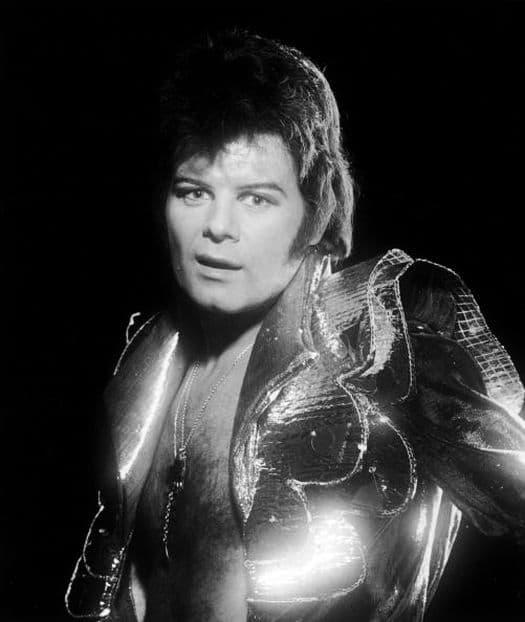
Rock and Roll Part 2 at Its Origins A Defining 1972 Glam Rock Moment
Gary Glitter’s Rock and Roll Part 2 remains one of the most widely recognized instrumental tracks to emerge from the early seventies glam rock movement. Originally released in March 1972 as the second half of the Rock and Roll single, the recording was co-written by Glitter and producer Mike Leander for his debut album Glitter.
Unlike most pop singles of its time, Rock and Roll Part 2 features minimal lyrical content, relying instead on a simple instrumental groove punctuated by repeated exclamations of the word “hey”. This stripped-down structure became a defining element of its appeal. In the United Kingdom it helped fuel the single to number two on the official charts, and it also became one of the few British glam rock records to break into the American Top Ten, peaking at number seven on the Billboard Hot 100.
Originally paired with Rock and Roll Part 1, a vocal track celebrating the history of rock music, the instrumental segment quickly gained its own identity in live performance and broadcast contexts. In concerts, Glitter and his backing band often fused the two parts into a single extended rendition that emphasized the driving rhythm and crowd engagement features of the piece.
The song’s rhythmic pulse and catchy crowd participation moments led to its adoption outside traditional record channels. In North America especially, the instrumental version became firmly associated with major sporting events throughout the late twentieth century. Professional teams across hockey, basketball, and football regularly used the recording to energize audiences during games and celebrations, particularly during scoring sequences and pivotal moments.
Over the decades, Rock and Roll Part 2 has appeared in a number of film soundtracks, highlighting its broad cultural impact beyond the pop charts. It was featured prominently in films such as Happy Gilmore, Meet the Fockers, and others, often used to evoke high energy or celebratory scenes.
At the time of its release, the song represented both a stylistic statement by a rising figure in British glam rock and a broader shift in how simple, rhythm-driven tracks could become cultural fixtures. While Rock and Roll Part 2 has carried complex associations in later years due to the personal controversies surrounding Gary Glitter, its musical footprint in the early nineteen seventies remains a notable chapter in rock history.